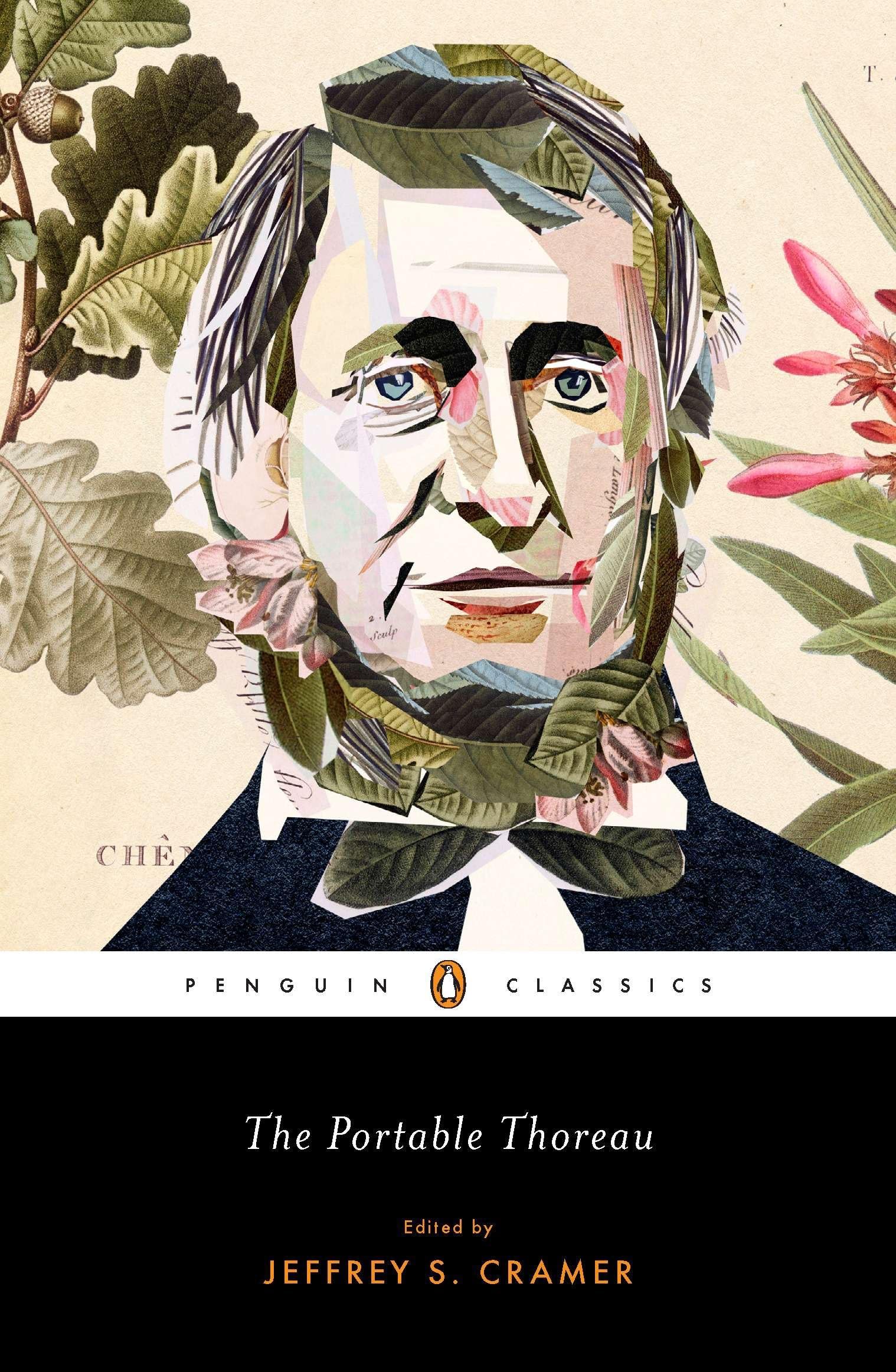



An updated edition of Thoreau's most widely read works Self-described as "a mystic, a transcendentalist, and a natural philosopher to boot," Henry David Thoreau dedicated his life to preserving his freedom as a man and as an artist. Nature was the fountainhead of his inspiration and his refuge from what he considered the follies of society. Heedless of his friends' advice to live in a more orthodox manner, he determinedly pursued his own inner bent-that of a poet-philosopher-in prose and verse. Edited by noted Thoreau scholar Jeffrey S. Cramer, this edition promises to be the new standard for those interested in discovering the great thinker's influential ideas about everything from environmentalism to limited government. For more than seventy years, Penguin has been the leading publisher of classic literature in the English-speaking world. With more than 1,700 titles, Penguin Classics represents a global bookshelf of the best works throughout history and across genres and disciplines. Readers trust the series to provide authoritative texts enhanced by introductions and notes by distinguished scholars and contemporary authors, as well as up-to-date translations by award-winning translators. Henry David Thoreau was born in Concord, Massachusetts in 1817. He graduated from Harvard in 1837, the same year he began his lifelong Journal. Inspired by Ralph Waldo Emerson, Thoreau became a key member of the Transcendentalist movement that included Margaret Fuller and Bronson Alcott. The Transcendentalists' faith in nature was tested by Thoreau between 1845 and 1847 when he lived for twenty-six months in a homemade hut at Walden Pond. While living at Walden, Thoreau worked on the two books published during his lifetime: Walden (1854) and A Week on the Concord and Merrimack Rivers (1849). Several of his other works, including The Maine Woods, Cape Cod , and Excursions , were published posthumously. Thoreau died in Concord, at the age of forty-four, in 1862. Jeffrey S. Cramer is the Curator of Collections at the Thoreau Institute at Walden Woods. He is the editor of the award-winning Walden: A Fully Annotated Edition, The Quotable Thoreau, among other books. He lives in Maynard, Massachusetts. How vain it is to sit down to write when you have not stood up to live! Methinks that the moment my legs begin to move, my thoughts begin to flow… —THOREAU IN HIS JOURNAL, AUGUST 19, 18511 When Thoreau moved from Concord to New York in 1843, ostensibly to be the tutor for the children of Ralph Waldo Emerson’s brother, William, he was situating himself in the center of the American publishing world. Although for various reasons, including an overwhelming sense of homesickness, he returned to Concord and remained there for the rest of his life, it is clear that at this point Thoreau was determined to be a writer. Whatever else he may have been—social reformer, naturalist, surveyor, pencil-maker, teacher—his work, as he would write in his journal on October 18, 1856, “is writing, and I do not hesitate, though I know that no subject is too trivial for me, tried by ordinary standards.”2 Henry David Thoreau was born David Henry Thoreau on July 12, 1817, in Concord, and he died in Concord on May 6, 1862. During his forty-four years, or, more precisely, during the twenty-four years when he was actively writing, he wrote works that have become classics of American literature— Walden , a book on deliberate and purposeful living; “Civil Disobedience,” a treatise on a person’s rights and duties in relation to an unjust government; and “Walking,” a piece on man’s place in Nature—in addition to writing a two-million-word journal. Thoreau’s success as a writer lies in the truth he utters. The questions he asks himself are the questions every individual, at his or her most attentive and sentient moments, asks. As he wrote, “These same questions that disturb and puzzle and confound us have in their turn occurred to all the wise men; not one has been omitted; and each has answered them, according to his ability, by his words and his life.”3 Because the answers change, however, not only from generation to generation but for each individual from year to year, his writings are works to which we return, texts constantly reflecting our own evolution. “To read well, that is, to read true books in a true spirit,” Thoreau wrote in the “Reading” chapter of Walden , “is a noble exercise, and one that will task the reader more than any exercise which the customs of the day esteem. It requires a training such as the athletes underwent, the steady intention almost of the whole life to this object. Books must be read as deliberately and reservedly as they were written.”4 Reading in the way Thoreau meant, you will meet with a realization that many other readers will fail to achieve, which ultimately means that a good book must not only be written by a good writer but that it must be read by a good reader. One way to be a