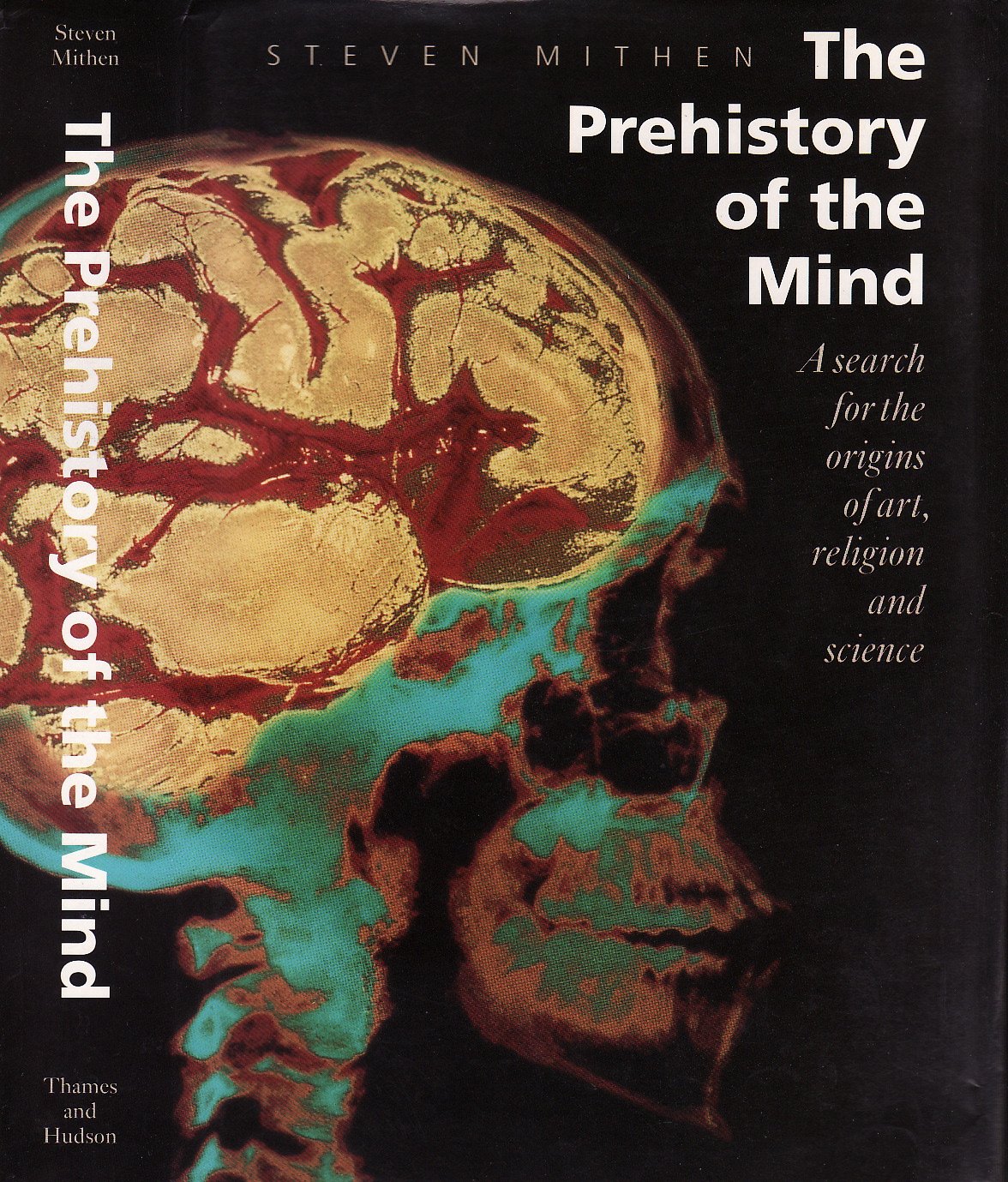
The Prehistory of the Mind: The Cognitive Origins of Art, Religion and Science
$31.19
by Steven Mithen



"A truly pioneering work, perhaps the first by a practicing archaeologist to review coherently the evolution of human cognitive abilities." ―Colin Renfrew, author of Before Civilization and Archaeology and Language Here is an exhilarating intellectual performance, in the tradition of Roger Penrose's The Emperor's New Mind and Steven Pinker's The Language Instinct . On the way to showing how the world of our ancient ancestors shaped our modern modular mind, Steven Mithen shares one provocative insight after another as he answers a series of fascinating questions: Were our brains hard-wired in the Pleistocene Era by the needs of hunter-gatherers? - When did religious beliefs first emerge? - Why were the first paintings made by humankind so technically accomplished and expressive? - What can the sexual habits of chimpanzees tell us about the prehistory of the modern mind? This is the first archaeological account to support the new modular concept of the mind. The concept, promulgated by cognitive and evolutionary psychologists, views the mind as a collection of specialized intelligences or "cognitive domains," somewhat like a Swiss army knife with its specialized blades and tools. Arguing that only archaeology can answer many of the key questions raised by the new concept, Mithen delineates a three-phase sequence for the mind's evolution over six million years―from early Homo in Africa to the ice-age Neanderthals to our modern modular minds. The Prehistory of the Mind is an intriguing and challenging explanation of what it means to be human, a bold new theory about the origins and nature of the mind. 70 illustrations Mithen (archaeology, Univ. of Reading) here speculates on the origin of the human mind. Viewing the past six million years as a four-act drama performed with shadowy lighting and insufficient props, Mithen suggests that the precursor of our modern mind was characterized by a general intelligence supplemented by specialized modules for social intelligence, natural history, and technology. Once these formerly independent modules began to communicate with one another, art, religion, and agriculture became possible. Mithen skillfully integrates the ideas of evolutionary psychologists with archaeological evidence and studies on primate behavior to create a plausible, albeit speculative, theory of mental evolution. For academic and special collections.?Laurie Bartolini, Legislative Research, Springfield, Ill. Copyright 1996 Reed Business Information, Inc. Steven Mithen is a Professor of Archaeology at the University of Reading. His other books include The Singing Neanderthals and Thoughtful Foragers: A Study of Prehistoric Decision Making .