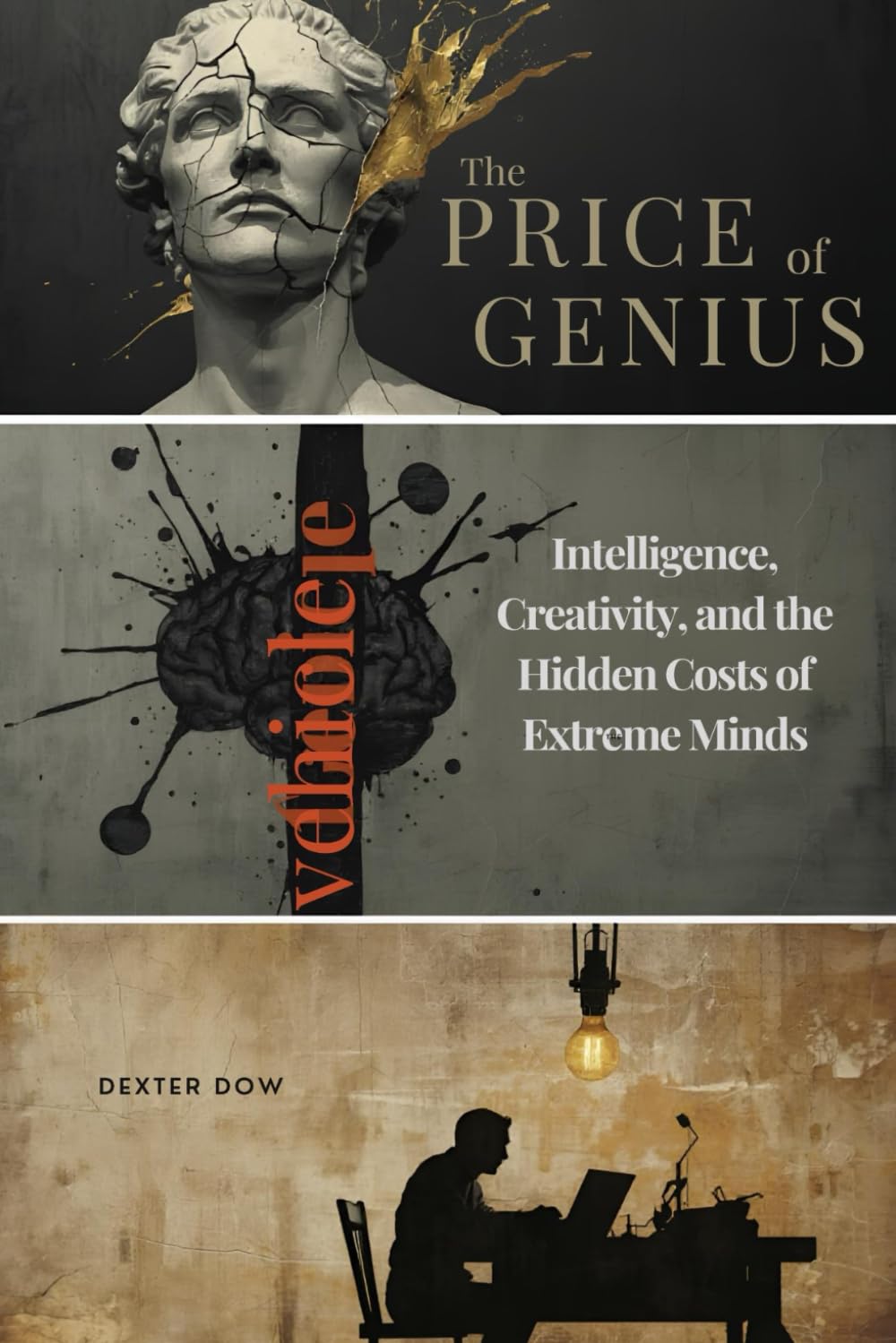
The Price of Genius: Intelligence, Creativity, and the Hidden Costs of Extreme Minds
$19.99
by Dexter Dow



Genius is not a gift. It is a structural condition of the brain—one that carries measurable neurological, psychological, and social costs that modern society systematically refuses to acknowledge. The Price of Genius dismantles two myths that have dominated the conversation about extreme intelligence for centuries. The first is the romantic myth: that suffering is the crucible of greatness, that madness fuels masterpieces, and that the price is worth paying. The second is the denial myth: that high intelligence is simply an advantage, that any difficulties are personal failings, and that the well-adjusted genius is the norm rather than the survivorship-biased exception. In place of both, this book offers something the field has lacked: precision. Drawing on cognitive neuroscience, psychometrics, psychiatric epidemiology, and evolutionary psychology, Dexter Dow maps the actual architecture of extreme cognition—and traces, with unflinching clarity, what that architecture costs. The same neural configurations that enable extraordinary pattern recognition and creative insight also destabilize emotional regulation, sleep, and self-referential processing. The same hyper-connectivity that produces originality also produces overload. The same reduced latent inhibition that allows novel associations also floods the system with stimuli it was never designed to manage. These are not metaphors. They are measurable, documented, and consequential. Across thirty-eight chapters and eight parts, The Price of Genius follows the full trajectory of that consequence: from the neurological load of an overactive default mode network and disrupted dopaminergic systems, through depression, substance dependence, and suicide risk, through the social alienation that begins in childhood and compounds through misdiagnosis, workplace burnout, and relational failure, to the boundary between creativity and psychosis where the architecture's risks become most acute. Then the book turns its attention outward—to the institutions that harvest the outputs of exceptional minds while providing no support for the people who produce them. Schools that punish cognitive hunger. Workplaces that extract until depletion and replace without remorse. Clinical systems that pathologize the architecture rather than understanding it. And a culture that tells the depleted person to be more resilient rather than questioning why the system that depleted them faces no accountability. This is not an inspirational book about the wonders of giftedness. It is not a self-help guide dressed in neuroscience. It is a research-grounded, deliberately blunt examination of what extreme intelligence actually does to the people who possess it—and an indictment of the systems that profit from their capacity while ignoring their destruction. The book closes not with salvation but with survival: what actually helps, what doesn't, and what humane systems would look like if society chose to build them. It argues that the real price of genius is not paid by the gifted alone—it is paid by everyone, in innovations never made, problems never solved, and irreplaceable human beings quietly consumed by a world that wanted their output but never their well-being. The price of genius begins with misunderstanding. This book ends it.