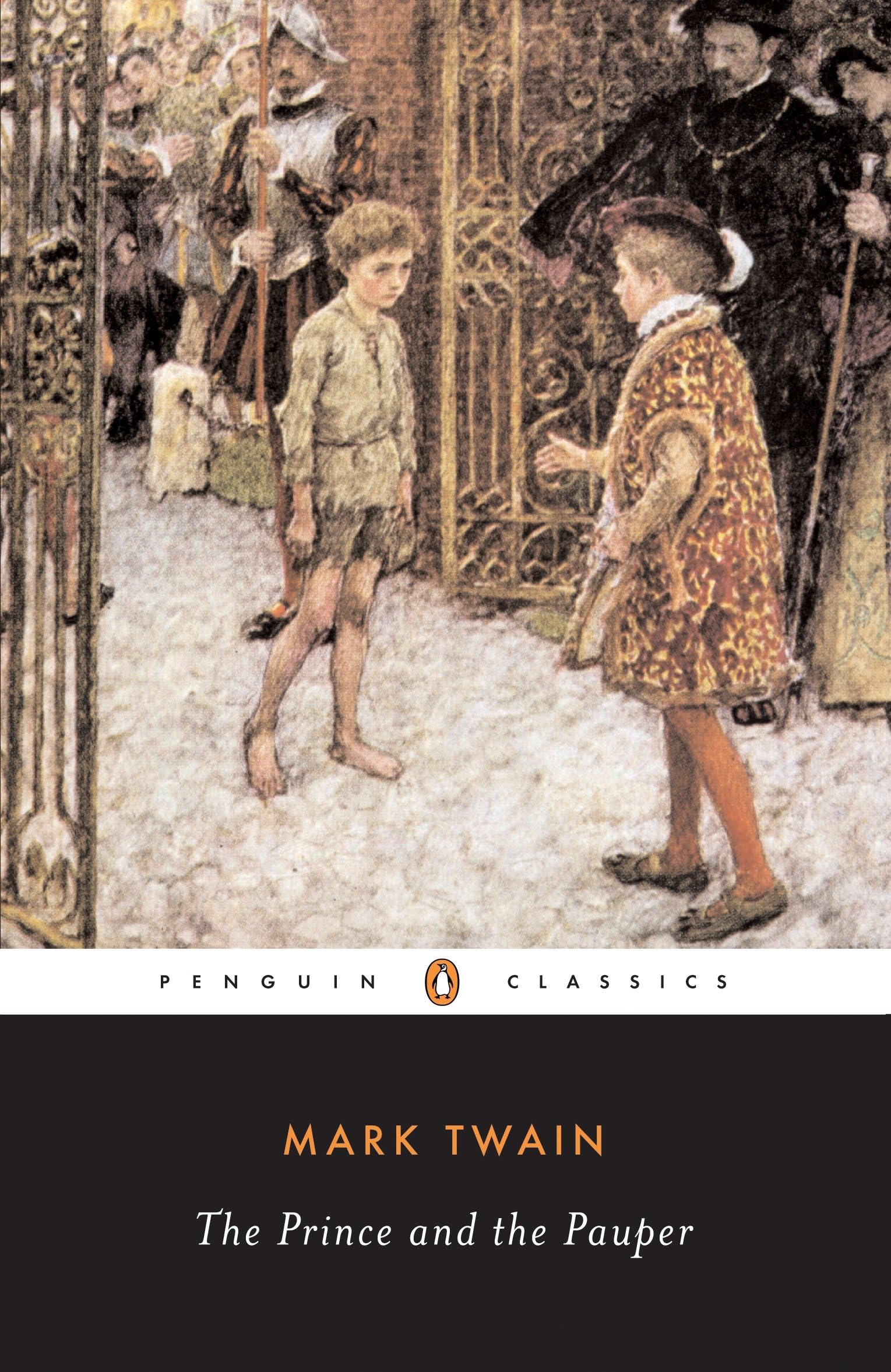



Tom Canty and Edward Tudor could have been identical twins. Their birthdays match, their faces match, but there the likeness stops. For Edward is a prince, heir to King Henry VIII, whilst Tom is a miserable pauper. But when fate intervenes, Edward is thrown out of the palace in rags, leaving ignorant Tom to play the part of a royal prince. Even those who have never read the novel will be familiar with Twain's classic tale of mistaken identity: at once an adventure story and a fantasy of timeless appeal. For more than seventy years, Penguin has been the leading publisher of classic literature in the English-speaking world. With more than 1,700 titles, Penguin Classics represents a global bookshelf of the best works throughout history and across genres and disciplines. Readers trust the series to provide authoritative texts enhanced by introductions and notes by distinguished scholars and contemporary authors, as well as up-to-date translations by award-winning translators. “Twain was . . . enough of a genius to build his morality into his books, with humor and wit and—in the case of The Prince and the Pauper —wonderful plotting.” —E. L. Doctorow First published in 1881, The Prince and the Pauper is the story of a poor boy, Tom Canty, who exchanges clothes and identities with Edward Tudor, Prince of England. It is at once an adventure story, a fantasy of timeless appeal, and an intriguing example of the author's abiding interest in separating the true from the false, the genuine from the impostor. With characteristic humor and color, Twain brings to life the sixteenth-century royal court, the crowded, boisterous streets inhabited by London's hoi polloi, and the behavior of two young boys who are in many ways smarter than their elders. In spinning his tale, he draws on themes from ancient mythology, the Bible, familiar fairy tales, and popular children's literature of the period. Making a compelling case for the novel's relevance for readers today, Griswold shows how the novel reveals Twain's preoccupation with the elusive nature of identity - an issue that not only recurs in his work but also haunted his life. Also included in this volume is the story "A Boy's Adventure", originally written as part of the novel but published separately. Mark Twain's (1835-1910) idyllic childhood in Missouri on the Mississippi river is reflected in his best known books, The Adventures of Huckleberry Finn and Tom Sawyer. His great skills as a novelist, journalist and social observer assure him a central place in American literary history. Jerry Griswold is Professor of English & Comparative Literature at San Diego State University and is the author of The Classic American Children's Story. Chapter I The Birth of the Prince and the Pauper In the ancient city of London, on a certain autumn day in the second quarter of the sixteenth century, a boy was born to a poor family of the name of Canty, who did not want him. On the same day another English child was born to a rich family of the name of Tudor, who did want him. All England wanted him, too. England had so longed for him, and hoped for him, and prayed God for him, that now that he was really come, the people went nearly mad for joy. Mere acquaintances hugged and kissed each other and cried; everybody took a holiday, and high and low, rich and poor, feasted and danced, and sang, and got very mellow?and they kept this up for days and nights together. By day, London was a sight to see, with gay banners waving from every balcony and house-top, and splendid pageants marching along. By night it was again a sight to see, with its great bonfires at every corner and its troops of revelers making merry around them. There was no talk in all England but of the new baby, Edward Tudor, Prince of Wales, who lay lapped in silks and satins, unconscious of all this fuss, and not knowing that great lords and ladies were tending him and watching over him?and not caring, either. But there was no talk about the other baby, Tom Canty, lapped in his poor rags, except among the family of paupers whom he had just come to trouble with his presence. Chapter II Tom's Early Life Let us skip a number of years. London was fifteen hundred years old, and was a great town-for that day. It had a hundred thousand inhabitants-some think double as many. The streets were very narrow, and crooked, and dirty, especially in the part where Tom Canty lived, which was not far from London Bridge. The houses were of wood, with the second story projecting over the first, and the third sticking its elbows out beyond the second. The higher the houses grew, the broader they grew. They were skeletons of strong criss-cross beams, with solid material between, coated with plaster. The beams were painted red or blue or black, according to the owner's taste, and this gave the houses a very picturesque look. The windows were small, glazed with little diamond-shaped panes, and they opened outward, on hinges, like doors.