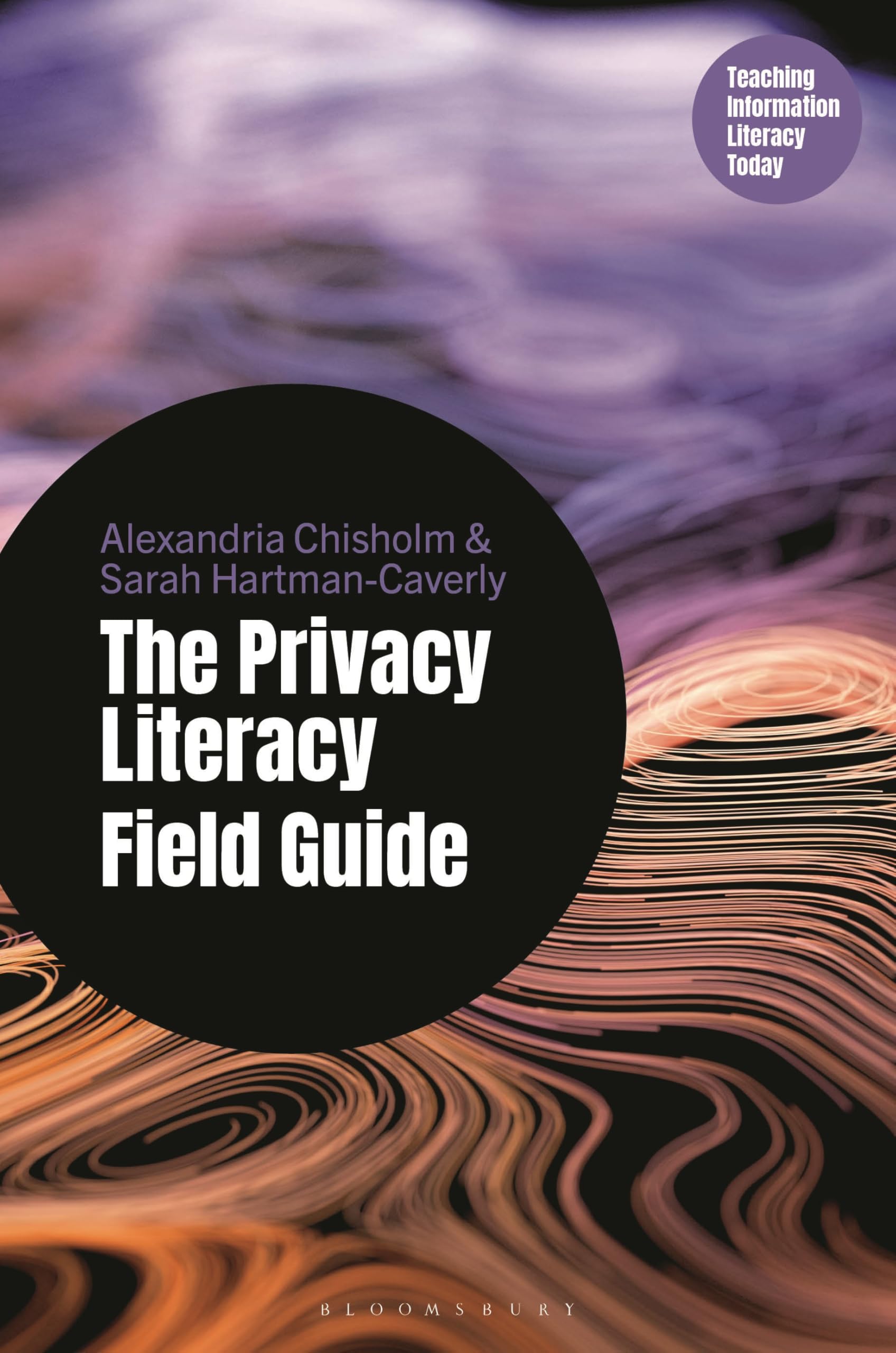
The Privacy Literacy Field Guide (Libraries Unlimited Series for Teaching Information Literacy Today)
$74.95
by Alexandria Chisholm



Answering a need for practical and theory-informed approaches to privacy literacy practices, The Privacy Literacy Field Guide responds to the challenges that practitioners experience. By offering privacy literacy programming, libraries can broaden and enhance their impact in an emerging area of societal importance, while leveraging librarians' unique expertise in data flows and ethical commitment to privacy. The Privacy Literacy Field Guide provides a roadmap for academic librarians to navigate the rapidly evolving information ecosystem, build professional self-efficacy, and implement privacy literacy learning experiences into instructional, student engagement, and outreach programming. Arranged in three sections, this volume supports librarians in establishing professional privacy knowledge, designing privacy literacy learning experiences, and implementing privacy literacy in their instruction, outreach, and engagement work. The foundations section delivers an introduction to privacy theory, guides readers in the development of a personal privacy current awareness action plan, and discusses pedagogical and learning design considerations-including a chapter on how not to teach privacy literacy. The approaches section reviews contemporary topical approaches to privacy literacy instruction informed by the authors' award-winning privacy workshop series, introducing learning experiences for the digital footprint, digital professionalism and digital citizenship, digital wellness, algorithmic literacy, generative AI, and privacy and social justice. The applications section delivers practical advice on developing privacy literacy programming, collaborating with campus and external partners, and assessing and advocating for privacy literacy work. Each chapter concludes with reflection questions, activities, and supplemental resources to support readers in applying concepts to their work. Alexandria Chisholm is an associate librarian at Penn State Berks and liaison to the campus' first year experience program and science division. She has over a decade of reference and instruction experience at both private and public baccalaureate- and doctoral-degree granting institutions. Her research focuses on privacy literacy, with special attention on digital wellness and algorithmic transparency, as well as information literacy and student engagement. Sarah Hartman-Caverly is an academic reference and instruction librarian at Penn State Berks, where she liaises with engineering, business, and computing division programs. She delivered her first privacy literacy workshop, “Is Big Data Big Brother?” in 2014 and co-facilitated professional learning communities on privacy topics in 2017 and 2021. Her research examines the compatibility of human and machine autonomy from the perspective of intellectual freedom, and she has published and presented on privacy literacy as part of this work.