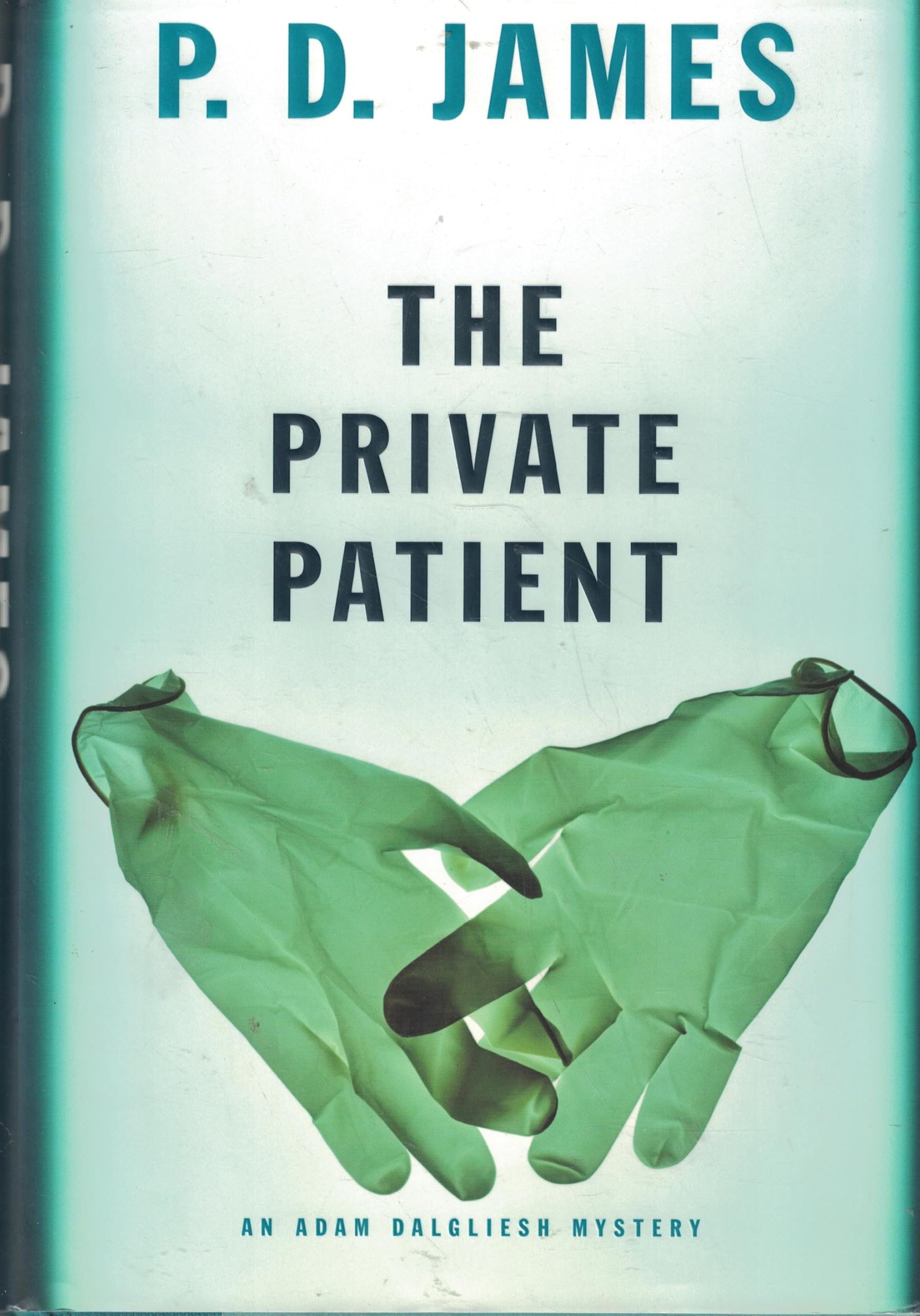



Cheverell Manor is a lovely old house in deepest Dorset, now a private clinic belonging to the famous plastic surgeon George Chandler-Powell. When investigative journalist Rhoda Gradwyn arrived there one late autumn afternoon, scheduled to have a disfiguring and long-standing facial scar removed, she had every expectation of a successful operation and a pleasant week recuperating. Two days later she was dead, the victim of murder. To Commander Adam Dalgliesh, who with his team is called in to investigate the case, the mystery at first seems absolute. Few things about it make sense. Yet as the detectives begin probing the lives and backgrounds of those connected with the dead woman—the surgeon, members of the manor staff, close acquaintances—suspects multiply all too rapidly. New confusions arise, including strange historical overtones of madness and a lynching 350 years in the past. Then there is a second murder, and Dalgliesh finds himself confronted by issues even more challenging than innocence or guilt. P. D. James has gained an enviable reputation for creating detective stories of uncommon depth and intricacy, combined with the sort of humanity and perceptiveness found only in the finest novelists. The Private Patient ranks among her very best. Both P. D. James and Adam Dalgliesh, both in their 80s, have aged like fine wine. Critics agreed that if The Private Patient , a closed-room mystery, is not among the best in the series, it nonetheless outranks most crime fiction. James brings her usual intellect to bear on this novel: literary references and philosophical discussions; an elegant, leisurely style; a highly atmospheric setting; suspicious distant relatives; and meaningful coincidences. Reviewers diverged, however, on the characterization and plotting. Some thought the characters were psychologically complex, while others thought they—along with the plot—were "reduced to a kind of box-ticking" ( Guardian ). Finally, Dalgliesh didn't seem completely present—perhaps in anticipation of his imminent retirement and marriage. Copyright 2009 Bookmarks Publishing LLC At 88, P. D. James has written her eighteenth novel, a feat in itself. Inevitably, there is plenty of summing up going on here, as Commander Adam Dalgleish approaches marriage and contemplates retirement from Scotland Yard. But before either of those life-changing events can take place, there is another case to solve, and Dalgleish’s special investigating team, their murder bags packed, are on the road to a remote corner of Dorset, where a well-known investigative journalist has been killed following surgery at a private clinic. As usual, James places Dalgleish, Inspector Kate Miskin, and Sergeant Francis Benton-Smith within an insular community and asks them to restore order to a tightly circumscribed world jarred by unnatural death. We follow the process of interviews with the staff at Cheverell Manor, a grand Tudor home converted to a clinic by a famous plastic surgeon, and we once again begin to formulate our list of suspects along with Dalgleish and the team. This time, though, James pays a bit less attention to the lives of the suspects and more to Dalgleish’s inner turmoil (and, to some extent, that of Miskin and Benton-Smith). Longtime readers will be fine with this subtle switch in emphasis, as we sense the winding down of the landmark series and crave every possible insight into a character who has meant so much not only to his fans but also to the mystery genre itself. If this is the last Dalgleish novel, James has struck a fine valedictory note for her hero. --Bill Ott "Brilliant. . . . A jewel in [James's] crown." — Pittsburg-Post Gazette "No one is better than James at maintaining this tension between the cozy and the frightful." — The Washington Post "[James is] a master. . . . Nothing is as it first appears." — The Boston Globe "[I]intricately plotted and suspenseful.... James' clear-eyed, often sardonic prose describes rooms and people exactly as she sees them." — Providence Journal "Elegant . . . compelling. . . . Continues the James tradition. . . . She comfortably tackles timeless concerns." — Chicago Tribune "The ghost of literature past haunts P.D. James' newest novel. . . . The novel's pointed descriptions, its gothic settings, and its theme exploring the insidious legacies of family and class violence suggest Charles Dickens may have rested a hand on James' shoulder while she wrote this terrific literary mystery." — Milwaukee Journal Sentinel "James is a wonderful writer." — Chicago Sun-Times "James is in excellent form. . . . [She] offers her readers intelligence, wisdom, dry humor, knowledge both deep and wide-ranging, humanity, compassion, understanding and a wonderful way with words. . . . James is one of Britain's greatest living writers." — St. Louis Post-Dispatch From the Trade Paperback edition. P. D. James is the author of nineteen previous books, many of which have been adapted for