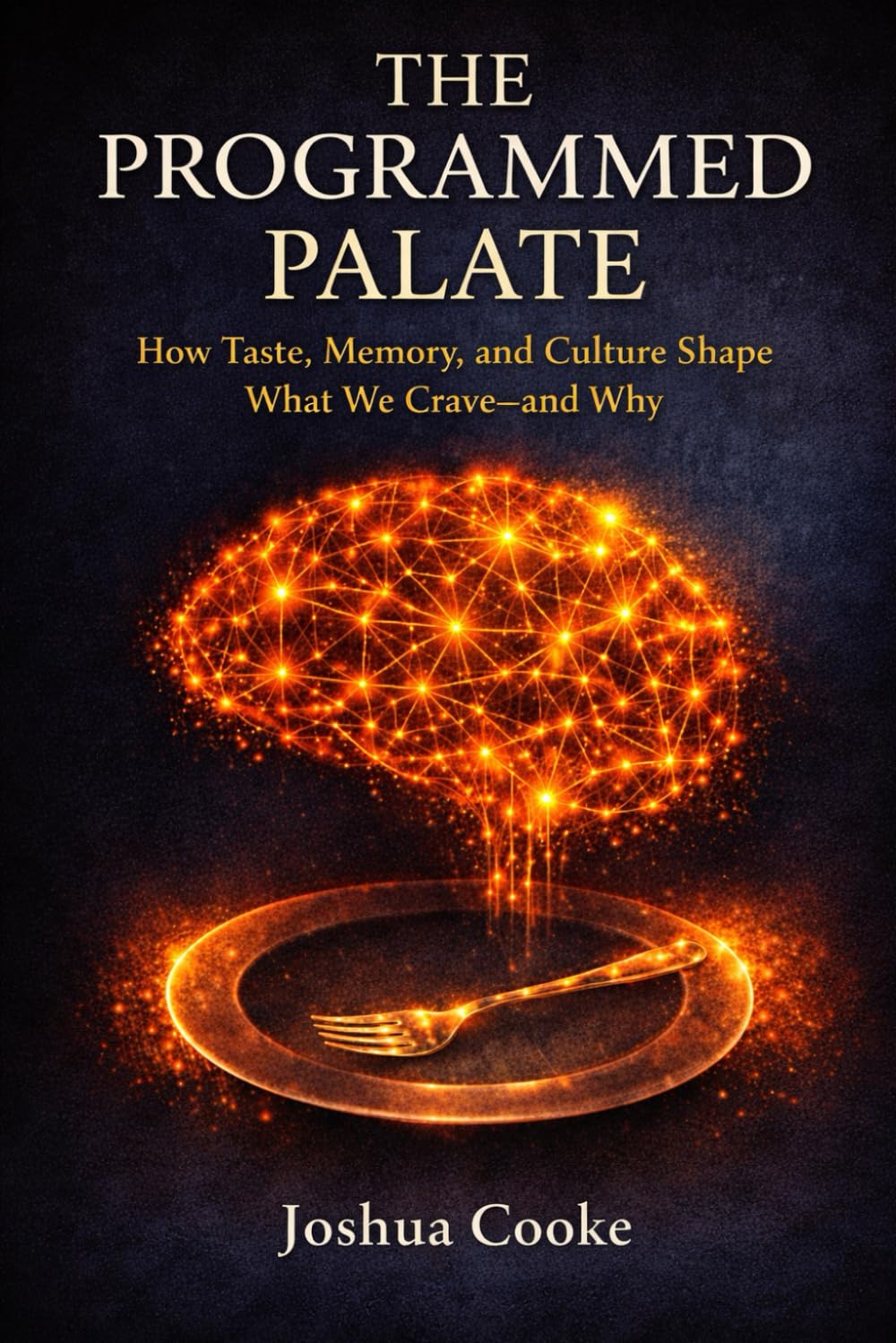
The Programmed Palate: How Taste, Memory, and Culture Shape What We Crave-and Why
$7.99
by Joshua Cooke



Why do we crave what we crave? And why do some tastes feel instinctive—while others change over time? In The Programmed Palate , Joshua Cooke explores taste not as a fixed preference, but as a learned experience—shaped quietly by memory, culture, language, and repetition. Drawing from psychology, neuroscience, and real-world observation, this book reveals how much of what we enjoy is constructed long before we’re aware of it. Taste doesn’t begin on the tongue. It begins in the mind. From childhood rituals and cultural norms to expectation, context, and emotional association, The Programmed Palate examines how flavor becomes meaning—and how those meanings can shift. Rather than telling readers what to eat or how to change, the book invites awareness: a way of seeing taste as something flexible instead of fixed. This is not a diet book. It’s not a cookbook. And it’s not about restriction. It’s about understanding how perception is formed—and how noticing that process can quietly expand choice, curiosity, and experience. For readers interested in: Taste and sensory perception - Psychology and human behavior - Habit formation and craving - Culture, memory, and identity The Programmed Palate offers a thoughtful starting point—one that asks not what you like, but how you learned to like it.