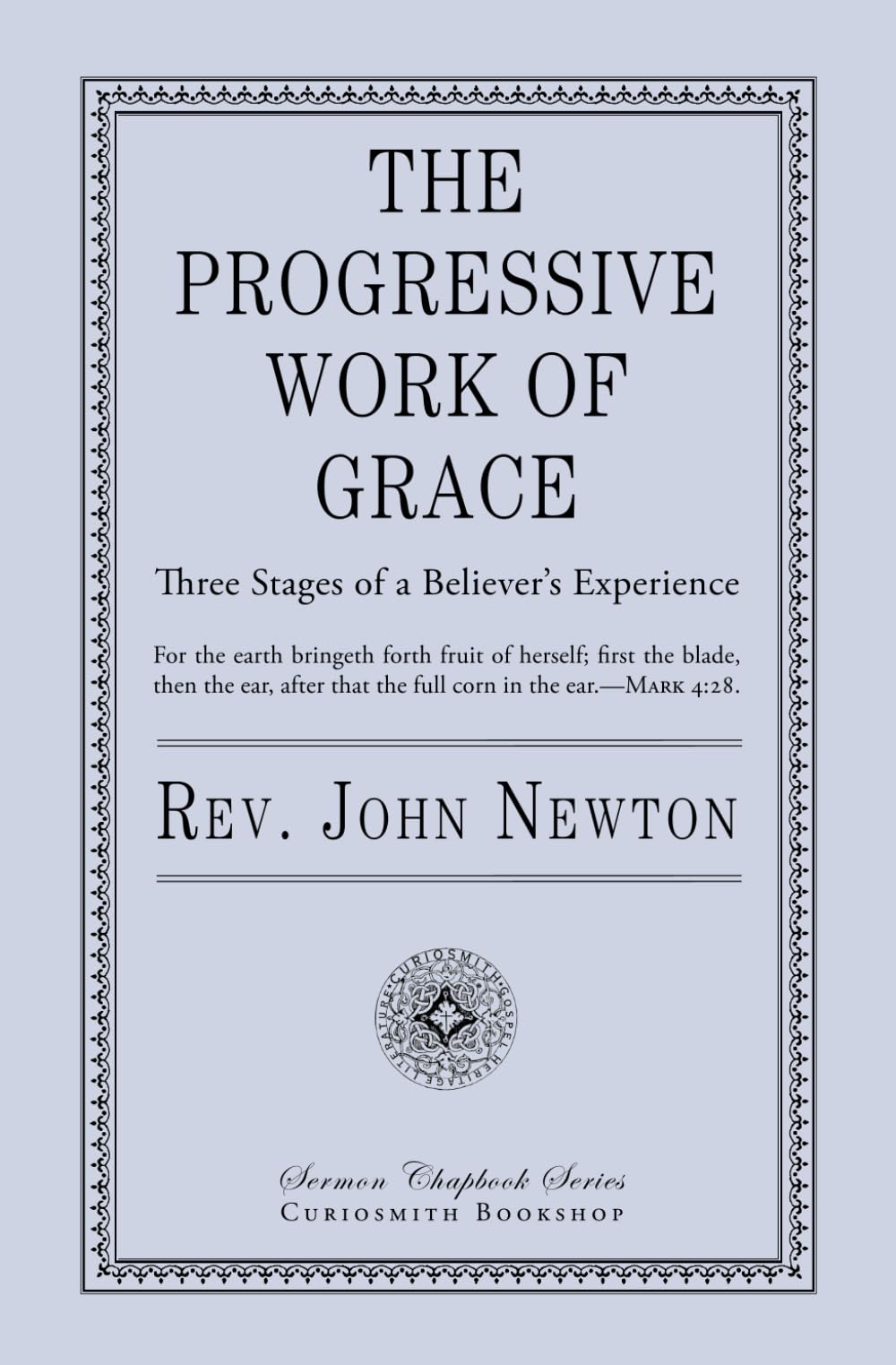
The Progressive Work of Grace: Three Stages of a Believer's Experience
$5.95
by John Newton



Rev. John Newton describes how God’s grace changes a person during the three stages of spiritual maturity found in Mark 4:28, of the Blade, the Ear, and the Full Corn in the Ear. The “Blade’s” characteristic is “desire,” or eagerness in his new life. The “Ear’s” characteristic is “conflict,” with many trials. The “Full corn in the ear’s” characteristic is “contemplation,” drawing upon much experience. Using this outline a believer can identify general states of sanctification to help work out their own salvation, as God works in them. Author JOHN NEWTON (1725–1807) was born in London, England. His father was a sailor and John also spent many years on the sea. Mary Catlett became his wife in 1750. He worked as a commandeer of a slave ship and then he became a tide surveyor in 1755. He started studying Greek and Hebrew and was sworn in as a deacon in 1764, and became curate at Olney. He was a swaying influence for many lives. He wrote a book of hymns together with William Cowper called the Olney Hymns which was published in 1779. He is most known for writing the hymn "Amazing Grace." JOHN NEWTON (1725-1807) was born in London, England. His father was a sailor with whom he spent many years at sea. Early in his life he enjoyed sin which degraded him to be a slave of a slave-trader who was treated poorly. After a stormy night at sea he turned his heart toward God and started a new life of prayer and Bible reading. Mary Catlett became his wife in 1750. He worked as a commandeer of a slave ship and then he became a tide surveyor in 1755. He started studying Greek and Hebrew and was sworn in as a deacon in 1764. He became the curate at Olney, England and later moved to London. He was a swaying influence in the lives of many famous people. He wrote hymns together with William Cowper which contains his famous "Amazing Grace."