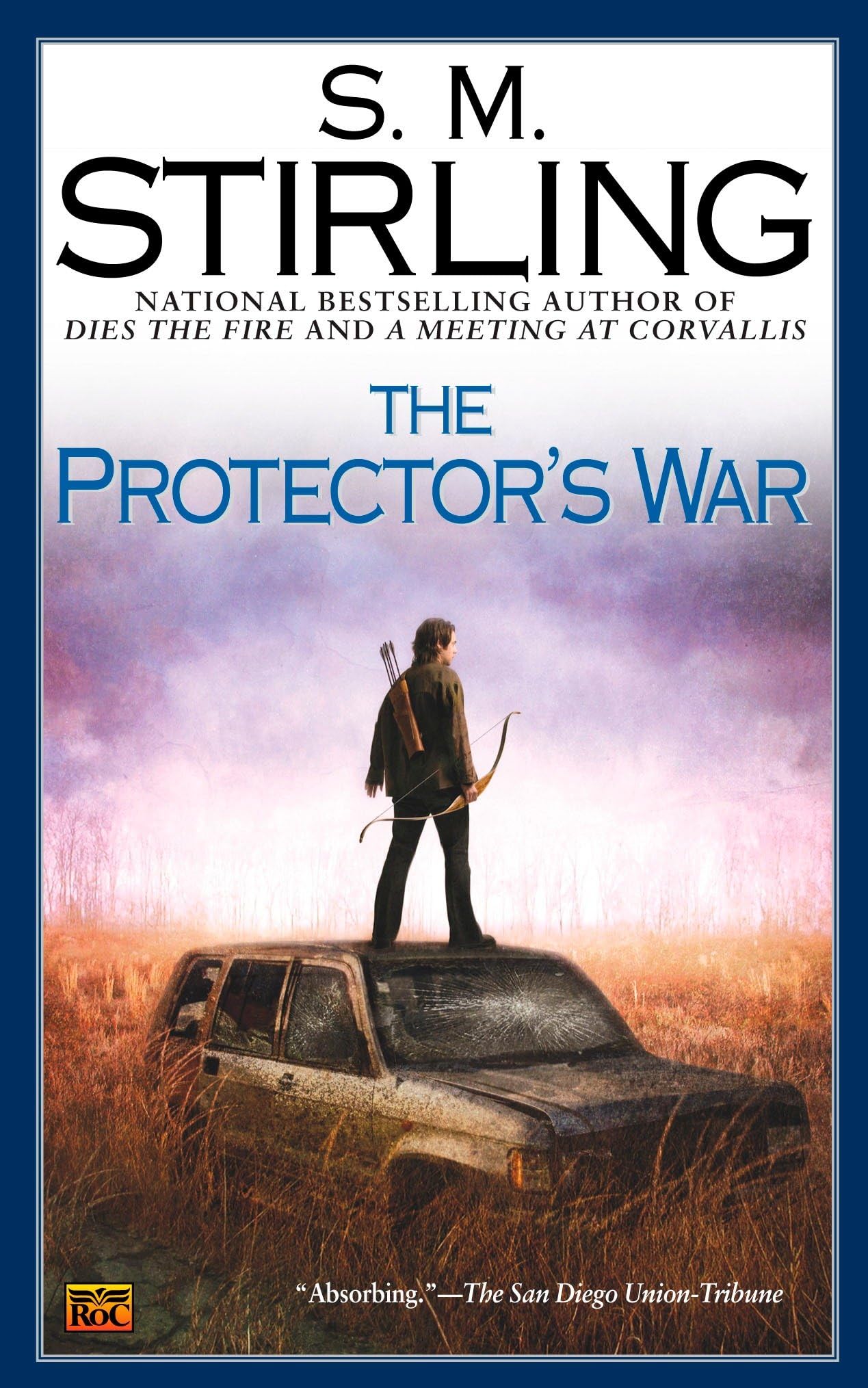



It’s been eight years since the Change rendered technology inoperable across the globe. Rising from the ashes of the computer and industrial ages is a brave new world. Survivors have banded together in tribal communities, committed to rebuilding society. In Oregon’s Willamette Valley, former pilot Michael Havel’s Bearkillers are warriors of renown. Their closest ally, the mystical Clan Mackenzie, is led by Wiccan folksinger Juniper Mackenzie. Their leadership has saved countless lives. But not every leader has altruistic aspirations. Norman Arminger, medieval scholar, rules the Protectorate. He has enslaved civilians, built an army, and spread his forces from Portland through most of western Washington State. Now he wants the Willamette Valley farmland, and he’s willing to wage war to conquer it. And unknown to both factions is the imminent arrival of a ship from Tasmania bearing British soldiers... “Readers who relish a battle between the forces of light and darkness, along with many frissons about what civilization means, are in for a rousing good time.” – Science Fiction Weekly “Reminds me of Poul Anderson at his best.” – David Drake “Rousing…a stirring tale.” – John Ringo, New York Times Bestselling Author “[A] vivid portrait of a world gone insane.” – Statesman Journal (Salem, OR) “Absorbing.” – The San Diego Union-Tribune S. M. Stirling is the New York Time s bestselling author of many science fiction and fantasy novels, including the Novels of the Change (including Prince of Outcasts, The Desert and the Blade, The Golden Princess, The Given Sacrifice, Lord of Mountains ) and the Shadowspawn series ( A Taint in the Blood, The Council of Shadows, Shadows of Falling Night ). CHAPTER ONE Woburn Abbey/Aspley Wood/Rasta Bob’s Farm Bedfordshire/Buckinghamshire, England August 12th, 2006 AD—Change Year Eight I’ve been here before, John Hordle suddenly realized, his thumb moving over the leather that covered the grip of his bow. The moon was up, and it glittered on the ruffled surface of the water to his left, where swans and ducks slept or swam lazily. But there was still little light under the three tall yews and the big oak; the night around him was still save for night birds, the whoo-whit of tawny owls and the screech of the barn type. Seven armed men lay grimly silent behind brush and waist-high grass, watching the great country house a quarter mile to the northeast. Candles and lantern lights flickered and blinked out behind the windows as the servants and garrison sought their beds. The pale limestone of it still glowed in the light of moon and stars. When was that? Before the Change, of course, but when? In summer, I think. Woburn Abbey was old; it began as a great Cistercian monastery, in the year when the first Plantagenet was crowned King of England. Henry VIII hung the last abbot from an oak tree on the monastery grounds when he broke with Rome and declared himself head of the Church, and granted the estate to a favorite of his named John Russell. The fortunes of the Russell family waxed and waned with those of the English aristocracy and England herself. In the palmy years of the eighteenth century the fifth duke rebuilt the country house in Palladian magnificence and surrounded it with a pleasance—deer park and gardens covering five square miles—very convenient with London only thirty miles to the south. In 1953 the eleventh duke had opened it to the paying public, complete with golf course, pub, guided tours and antique shop—and avoided the forced sales which so many of his peers suffered after the Second World War. Came on a day-trip, I did, drove up the M1. After I enlisted, but before I did the SAS selection…August of 1996, ten years ago to the month. Me first leave…who was the girl? Blond all over, she was, I remember that for certain. And she giggled. In England the Change had struck in the early hours of the morning on March 18, 1998: the owner’s family and Woburn’s staff had only begun to realize what the failure of electricity and motors and explosives meant when the first spray of refugees from Milton Keynes and Luton arrived in the area two days later. The last duke’s heir set up emergency quarters in the buildings and in tents in the great park, doing his best to organize supplies and sanitation. That ended when the last of the deer were eaten or escaped; by then most of the animals in the attached Safari Park had been released, before the keepers realized that even lion and timber wolves, tiger and rhino were edible when the other choice was death. Shortly thereafter the hordes fleeing north from London met those from the midland cities moving south, and the great dying was well under way. A cannibal gang from the south side of Milton Keynes used the buildings as a headquarters for a time, roasting the meat of their catches in the fireplaces over blazes fed by the Regency furniture, rutting in the beds where Victoria and Albert had slept, and sitting beneath the Cana