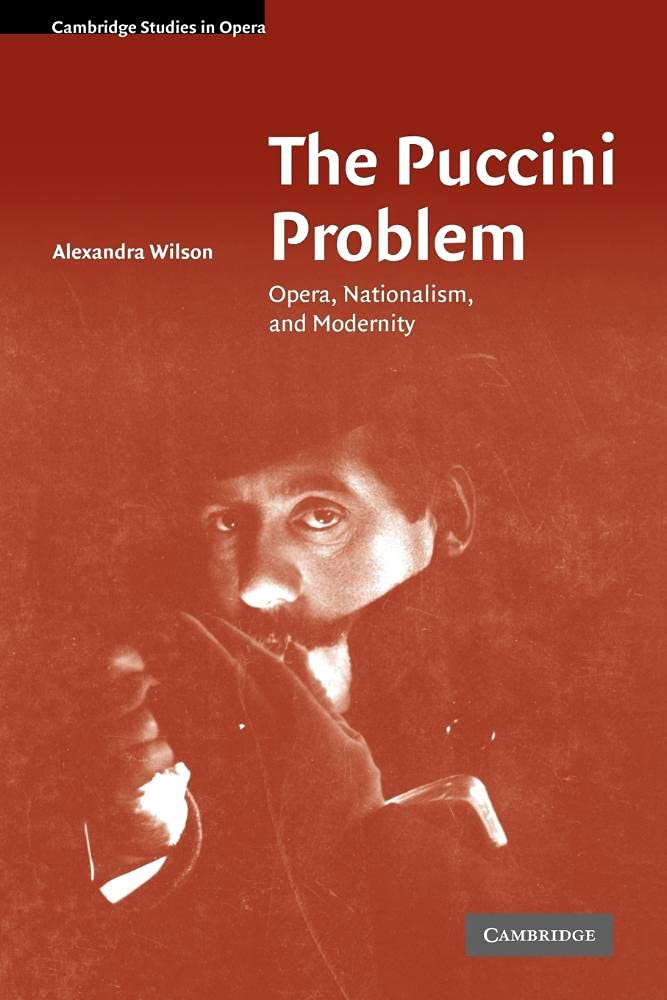
The Puccini Problem: Opera, Nationalism, and Modernity (Cambridge Studies in Opera)
$25.44
by Alexandra Wilson



A detailed investigation of the reception and cultural contexts of Puccini's music, this book offers a fresh view of this historically important but frequently overlooked composer. Wilson's study explores the ways in which Puccini's music and persona were held up as both the antidote to and the embodiment of the decadence widely felt to be afflicting late nineteenth- and early twentieth-century Italy, a nation which although politically unified remained culturally divided. The book focuses upon two central, related questions that were debated throughout Puccini's career: his status as a national or international composer, and his status as a traditionalist or modernist. In addition, Wilson examines how Puccini's operas became caught up in a wide range of extra-musical controversies concerning such issues as gender and class. This book makes a major contribution to our understanding of both the history of opera and of the wider artistic and intellectual life of turn-of-the-century Italy. "As accessible as Puccini's music itself...a book that can engage both scholars and the opera-going public" Musical Times<'i> "Extensively researched and intelligently argued...a fine addition to the Puccini bibliography" Opera Magazine "There is no better time...for a historical reflection on what Alexandra Wilson describes in her excellent new book as The Puccini Problem...Wilson's book on the cultural context of Puccini's music and the response to it presents a very welcome contribution to the field." --The Opera Quarterly "A very enjoyable read...Wilson's The Puccini Problem is a rich investigation of how a major cultural figure's impact cannot be divorced from a complex and dynamic understanding of his time. As such, it is a compelling book not only for musicologists and music critics, but for anyone interested in the history and culture of modern Italy in its European context'. --Cambridge Opera Journal A study of the reception and contexts of Puccini's music. Alexandra Wilson is Lecturer in Musicology at Oxford Brookes University.