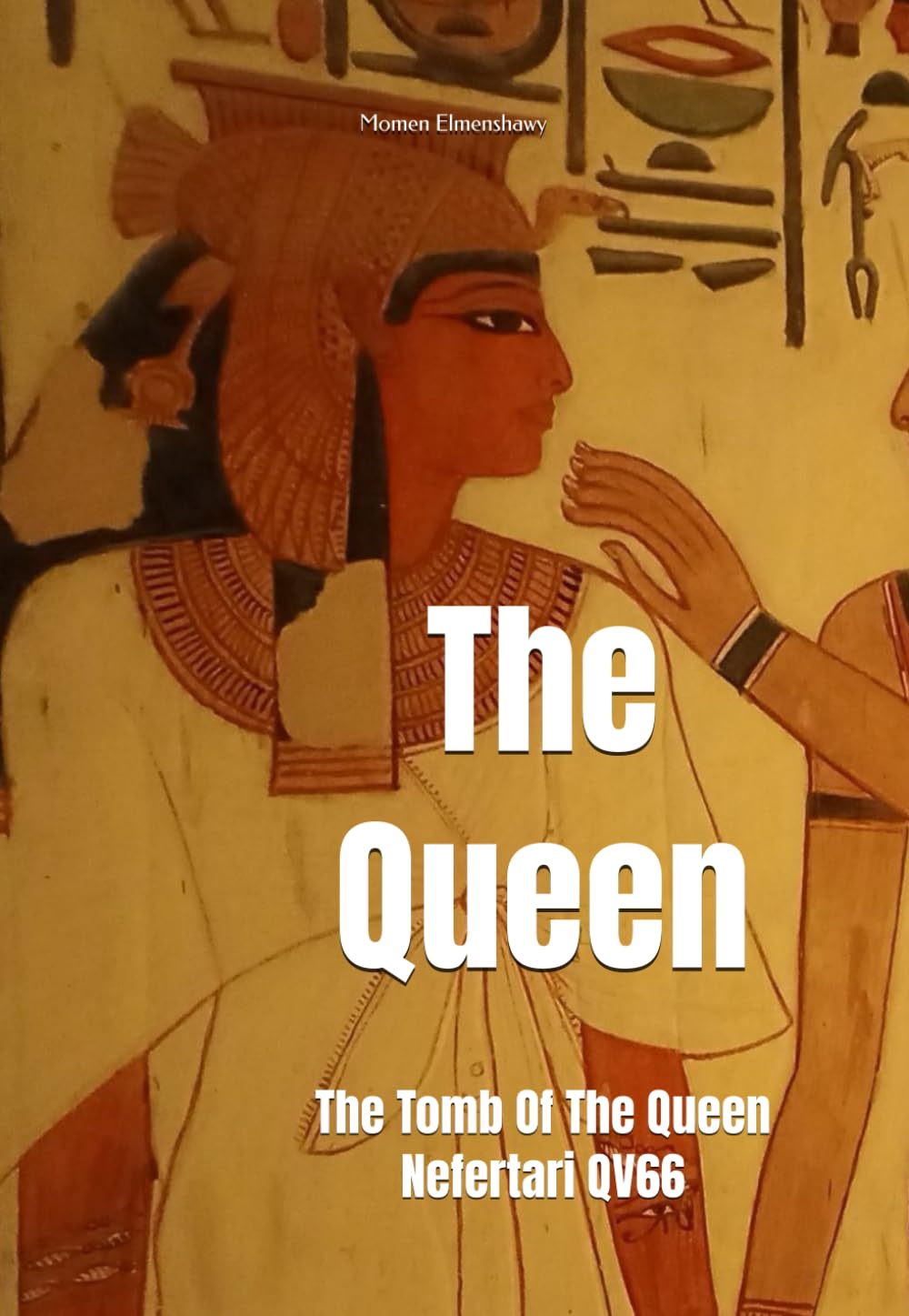



This Book Speak About the tomb of Queen Nefertari in Queen's Valley In Luxor.Queen Nefertari's tomb, located in the Valley of the Queens in Egypt, is one of the most famous and well-preserved royal tombs from ancient Egypt. Nefertari was the Great Royal Wife of Pharaoh Ramses II, also known as Ramses the Great, who reigned from 1279 to 1213 BCE during the 19th Dynasty of the New Kingdom. Nefertari's tomb (designated QV66) is celebrated for its stunning artwork and intricate design, which provide a glimpse into the religious and artistic life of ancient Egypt. Key Facts about Queen Nefertari's Tomb: Location : The tomb is located in the Valley of the Queens, on the western bank of the Nile near Luxor. The Valley of the Queens is where many royal wives, children, and lesser-known members of the royal family were buried during the New Kingdom. - Discovery : Nefertari’s tomb was discovered in 1904 by the Italian archaeologist Ernesto Schiaparelli. The tomb was relatively intact when it was found, although it had been looted in antiquity, like many other tombs in the Valley. - Tomb Architecture : The tomb consists of a series of chambers and corridors, all decorated with vibrant and detailed wall paintings. It is designed in a traditional Egyptian style, with a descending corridor that leads to a series of rooms. The burial chamber is the most important room, where the tomb's decorations and hieroglyphs are particularly elaborate. - Artwork and Decoration : The tomb is renowned for its exquisite murals and frescoes, which depict scenes from the Book of the Dead , as well as various gods, goddesses, and religious rituals meant to assist Nefertari in the afterlife. The walls of the tomb showcase an extraordinary level of artistry, with vivid colors that have survived remarkably well over thousands of years. Scenes Depicted : Among the most notable images are Nefertari being embraced by the goddess Hathor, as well as scenes of her in the afterlife being led by various deities. The tomb also features scenes of Nefertari and Ramses II, which highlight their close relationship. - Unique Style : The wall paintings in Nefertari’s tomb are particularly celebrated for their high level of realism and refinement, representing an idealized but lifelike portrayal of the queen. - Tomb's Inscription and Rituals : Several inscriptions and texts from the Book of the Dead are found throughout the tomb, designed to help the queen in her journey through the afterlife. The tomb is one of the most important sources of information about Egyptian funerary practices and beliefs. - Nefertari’s Significance : Nefertari was not only the chief wife of Ramses II but also one of the most beloved, as evidenced by the many monuments and inscriptions dedicated to her. Ramses II referred to her as "the one who is beloved" in inscriptions and even built a temple at Abu Simbel in her honor, alongside one for himself. Her tomb reflects her high status and the affection Ramses had for her. - Preservation : The tomb has been carefully restored and conserved due to its fragile and delicate nature. The colors in the paintings, which are famous for their intensity, have been preserved due to the relatively dry climate of the tomb, although some fading has occurred over time.