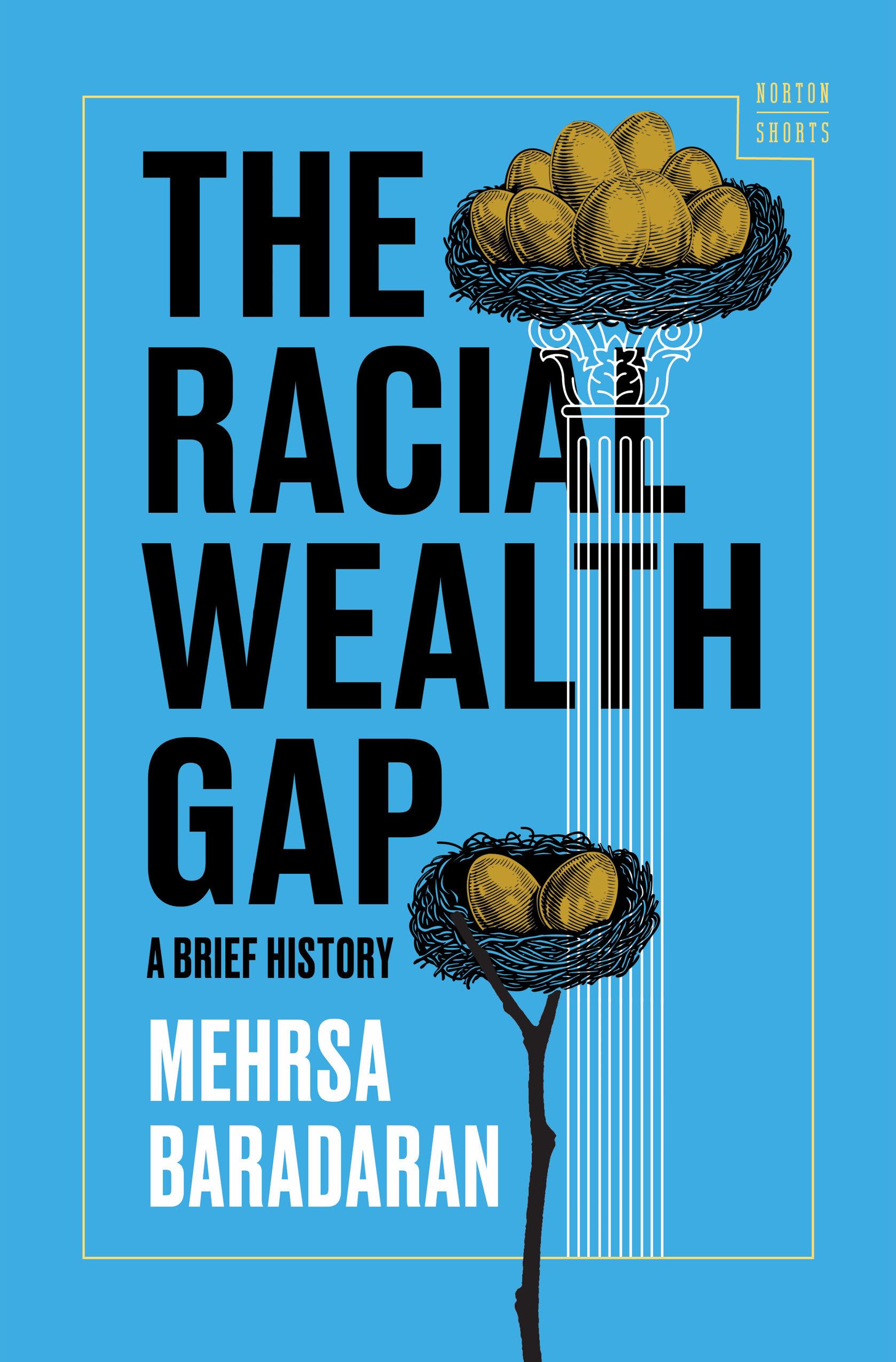



A concise history that uncovers the roots of this most pernicious American divide and makes an urgent call for reparations. Why has the racial wealth gap between the median white households and median Black households remained stagnant over the past century, never narrowing below six to one? Leading expert on race and financial equality Mehrsa Baradaran attempts to answer this question in this sweeping yet accessible history. She shows how decades of the laws rooted in white supremacy―from slavery and the broken Reconstruction-era promise of “40 acres and a mule,” to the racist policies of the Jim Crow and New Deal eras―have restricted Black access to capital, credit, homeownership, and other mechanisms of wealth creation while subsidizing the rising economic fortunes of white families. In The Racial Wealth Gap , Baradaran outlines two tectonic forces that have driven apart the economic fortunes of white and Black families: wealth creation for white Americans, who have been systematically receiving financial subsidies in the century and a half since emancipation, and wealth destruction for Black Americans―either by vigilante violence or by official means, such as allowing Black banks to collapse or building highways through segregated Black communities. These forces, combined with the racist notion that Black communities fail to rise because of their own moral, intellectual, or economic shortcomings, have kept Black families behind their white counterparts, despite decades of civil rights activism and national economic growth―a deep injustice that can only be achieved through reparations. An infuriating and compelling read, The Racial Wealth Gap offers a devastating analysis of one of America’s most pressing systemic issues. 1 chart "Legal scholar Baradaran lays out a concise and erudite case that today’s staggering racial wealth gap is the result of decades of carefully crafted government policy… Baradaran’s quietly furious prose deftly guides readers through the labyrinthine world of American monetary policy and financial history, with breathtaking moments of clarity striking like lightning… Readers will be fired up." ― Publishers Weekly Praise for The Color of Money “Extraordinary. . . . [Mehrsa] Baradaran focuses on a part of the American story that’s often ignored: the way African Americans were locked out of the financial engines that create wealth in America, and the way the rhetoric of equal treatment under the law was weaponized, as soon as slavery ended, against efforts to achieve economic equality.” ― Ezra Klein, The Ezra Klein Show “Read this book. It explains so much about the moment. . . . Beautiful, heartbreaking work." ― Ta-Nehisi Coates, best-selling author of the National Book Award Winner Between the World and Me Praise for How the Other Half Banks “In a society built on credit as a means to wealth, low-income families deserve a much better deal, [Mehrsa] Baradaran argues. People do not opt for expensive products because they do not know any better, or are somehow reckless or irresponsible. They do so because they have no choice. And that is a national embarrassment.” ― Ben McLannahan, Financial Times “Well researched and clearly written. . . . The bankers who fully understand the system are heavily invested in it. Books like this are written for the rest of us.” ― Nancy Folbre, New York Times Book Review Mehrsa Baradaran is a law professor at University of California, Irvine, and the acclaimed author of The Color of Money and How the Other Half Banks . She lives in Irvine, California.