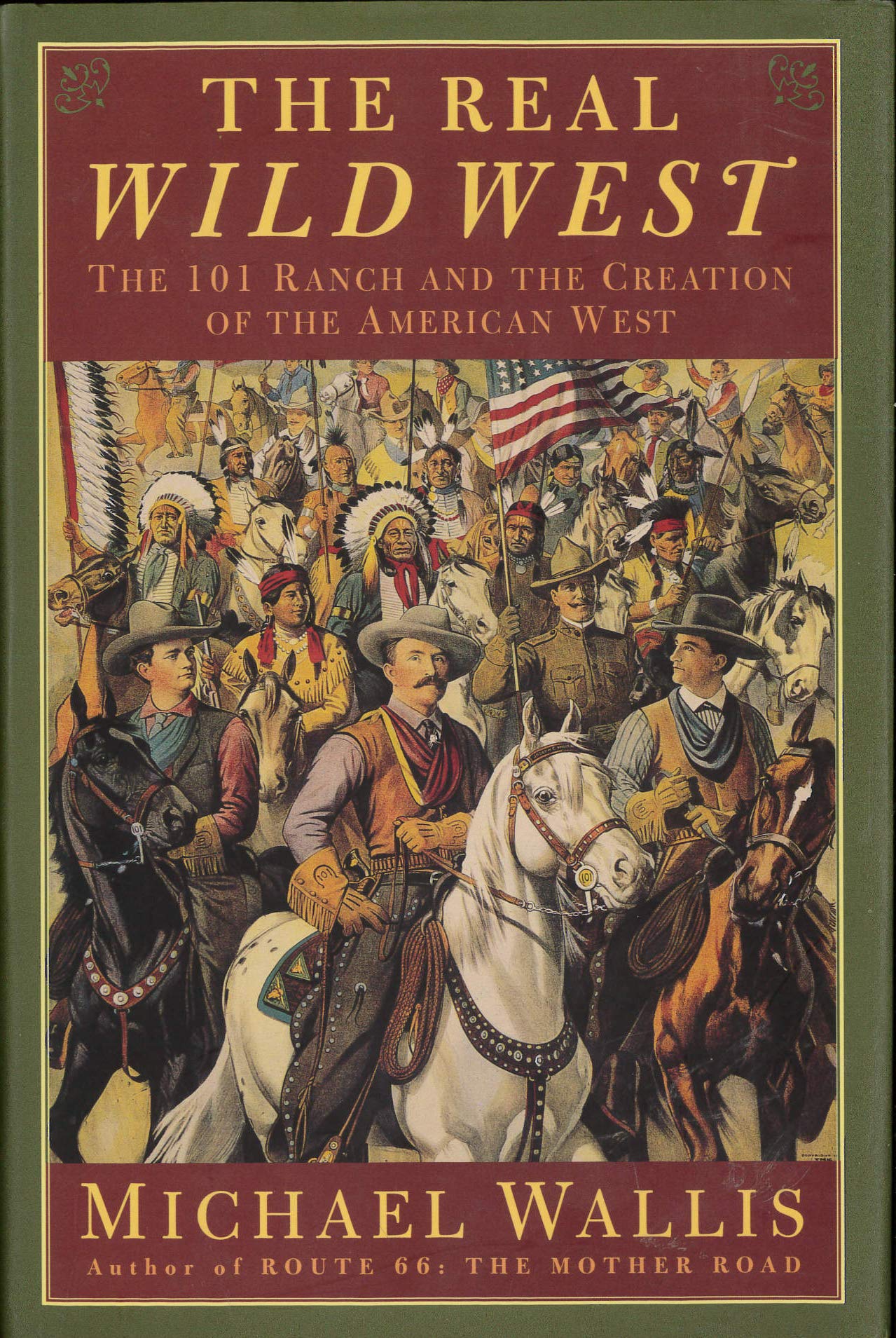
The Real Wild West: The 101 Ranch and the Creation of the American West
$39.97
by Michael Wallis



Founded in 1893, the 101 Ranch was famous across the country for its touring Wild West shows, which featured countless cowboys and cowgirls, including Buffalo Bill, Geronimo, and Bill Picket. Playing to packed arenas from coast to coast, and even in Europe, the 101 Ranch show came to embody the spirit of the frontier for the entire nation. The Miller brothers, who owned the ranch, also found themselves involved in the formation of Hollywood and western movies, and the ranch produced many of the earliest western film stars, including Tom Mix and Buck Jones. Ten years in the making, this epic story of the 101 Ranch is nothing less than a sweeping history of the West of myth and reality. Indeed, the history of the ranch begins in Kentucky in the early 1840s and continues through most of the first half of the twentieth century. Describing the legendary cattle drives from San Antonio along the fabled Chisholm Trail, as well as the hardscrabble life of cattlemen, Michael Wallis paints an indelible portrait of the frontier as it expanded westward in the middle of the nineteenth century. Colonel George Washington Miller, the founder of the 101, participated in these cattle drives, and Wallis follows Miller from Kentucky through Missouri and Kansas and into the Cherokee Outlet in northern Oklahoma, where he founded the 101 Ranch on the banks of the Salt Fork of the Arkansas River. Although the 101 was an enormous, viable ranch that produced huge profits for the Millers, the family became best known for its touring shows, in which ranch hands showed off the kind of bronc-busting activities they performed on the ranch. Their re-creation of life in the West captured the imaginations of Americans across the country who longed to preserve the frontier, even as it began to disappear. The massive popular interest in the West, evidenced by the crowds at the 101 Ranch shows, also sparked a growth in western movies, and the Miller brothers were there to participate. Dozens of Hollywood's earliest films were shot on location at the ranch, and man of the 101 Ranch cowboys starred in these motion pictures. Following the Miller brothers through their barnstorming years, Wallis also portrays the origins of the mass entertainment industry that flourishes today, and shows how this industry helped to undo the West of reality and preserve it as a popular mythology. Full of incredible characters and unbelievable stories, this is an evocative reflection of the story of America itself, in all its grandeur and all its foibles. Although not as renowned as Buffalo Bill Cody, Joseph Miller and his brothers were in many ways as impressive as impresarios. Their Wild West shows, which competed with Cody's show and the Ringling Brothers' circuses, featured talent like Will Rogers and Tom Mix and significantly influenced American mass entertainment. In The Real Wild West , Michael Wallis makes a case that the Millers didn't just invent the romantic West but lived it as well. Like Cody before them, the Millers took their cues from the frontier, largely because they played a significant part in its conquest. The family's rambunctious Kentuckian patriarch, George Washington Miller, abandoned the bluegrass of his home state to raise cattle on the greener pastures of the plains. His sons followed suit, but in 1905, a rodeo at the 101, their 100,000-acre-plus Oklahoma ranch, for the National Editorial Association led to a new career in popular entertainment. Within a decade, film producer Thomas Ince had set up shop nearby, utilizing talent from the 101 for his westerns. (It was Ince's mysterious death, combined with revelations of financial chicanery, that ultimately destroyed the enterprise in the 1920s.) Wallis doesn't sugarcoat accusations of murder and illegal financial maneuverings on the part of the Millers, instead making interesting parallels between their ruthlessness and business acumen and the romantic vision of the West they presented to early-20th-century audiences. His account is also notable for its numerous biographies of 101 performers--people like Princess Wenona, the Native American rival to Annie Oakley, and Bill Pickett, an African American cowhand who founded most of the events on the professional rodeo circuit--and conveys the enthusiasm many must have felt during the Wild West shows' heyday. --John M. Anderson After fighting for the Confederacy in the Civil War, George Washington Miller left his native Kentucky and, like many other Southerners, set out West. Building a new fortune by bringing up herds of cattle from Texas, he and his sons eventually established the 101 RanchAone of the biggest, most famous, and longest-lived of the old WestAnear the present Ponca City, OK. The Miller brothers were early pioneers in the rodeo business; Bill Pickett, the famous black cowboy who created the sport of steer wrestling, rode and performed for the 101, which ran a renowned Wild West show for many years that included nearby Pon