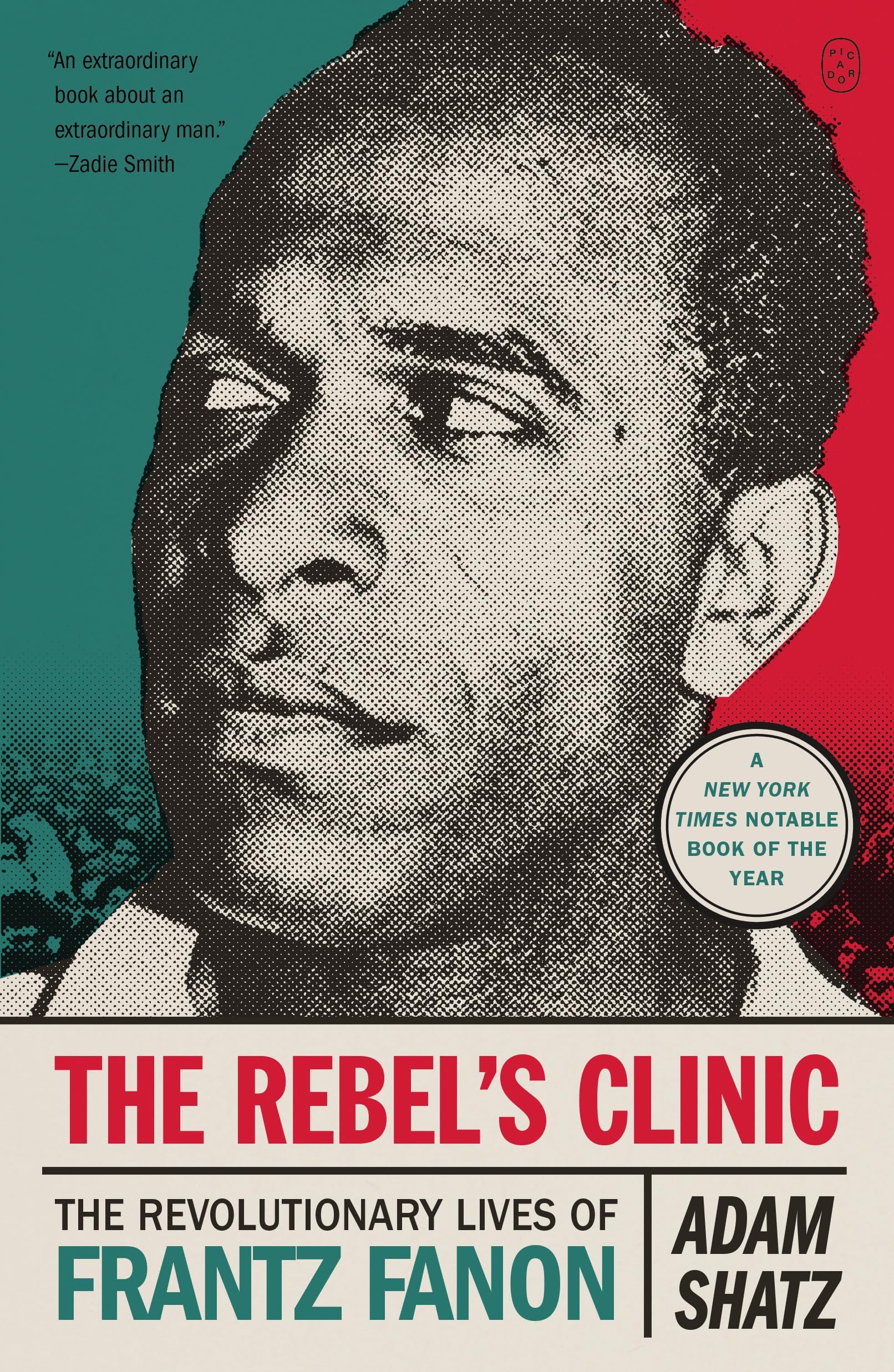



One of The New York Times 's 100 Notable Books of 2024 One of the Washington Post 's 50 Best Nonfiction Books of 2024 Longlisted for the National Book Critics Circle Award for Biography Named a best book of 2024 by The New Yorker
Vulture
Los Angeles Review of Books
Foreign Affairs
The New Republic Longlisted for the 2024 Baillie Gifford Prize for Non-Fiction Shortlisted for the 2025 Elizabeth Longford Prize for Historical Biography “Nimble and engrossing . . . [An] exemplary work of public intellectualism.” ―Becca Rothfeld, The Washington Post "Undoubtedly the best [biography of Fanon] . . . A remarkable achievement." ―Robert J. C. Young, Los Angeles Review of Books A revelatory biography of the writer-activist who inspired today’s movements for social and racial justice. In the era of Black Lives Matter, Frantz Fanon’s shadow looms larger than ever. He was the intellectual activist of the postcolonial era, and his writings about race, revolution, and the psychology of power continue to shape radical movements across the world. In this searching biography, Adam Shatz tells the story of Fanon’s stunning journey, which has all the twists of a Cold War–era thriller. Fanon left his modest home in Martinique to fight in the French Army during World War II; when the war was over, he fell under the influence of Existentialism while studying medicine in Lyon and trying to make sense of his experiences as a Black man in a white city. Fanon went on to practice a novel psychiatry of “dis-alienation” in rural France and Algeria, and then join the Algerian independence struggle, where he became a spokesman, diplomat, and clandestine strategist. He died in 1961, while under the care of the CIA in a Maryland hospital. Today, Fanon’s Black Skin, White Masks and The Wretched of the Earth have become canonical texts of the Black and global radical imagination, comparable to James Baldwin’s essays in their influence. And yet they are little understood. In The Rebel’s Clinic , Shatz offers a dramatic reconstruction of Fanon’s extraordinary life―and a guide to the books that underlie today’s most vital efforts to challenge white supremacy and racial capitalism. Includes 8 pages of black-and-white photographs "[A] nimble and engrossing new book . . . As Shatz shows in this exemplary work of public intellectualism, in which he does not sugarcoat or simplify, [Fanon] was every bit as much a victim of empire as the patients he worked to heal." ―Becca Rothfeld, The Washington Post "Absorbing . . . Shatz [. . .] is a mostly steady hand in turbulent waters. His chosen title highlights a side of Fanon that often gets eclipsed by the larger-than-life image of the zealous partisan ― that of the caring doctor . . . What gives The Rebel’s Clinic its intellectual heft is Shatz’s willingness to write into such tensions." ―Jennifer Szalai, The New York Times Book Review "Undoubtedly the best [biography of Fanon] . . . With The Rebel’s Clinic , Shatz for the first time puts psychiatry in its rightful place in Fanon’s life and thought―at the center . . . A remarkable achievement." ―Robert J. C. Young, Los Angeles Review of Books "Aware on every page of the press of claimants on Fanon’s legacy as the years go by―absorbing and resisting the various readers, trying to reconcile them, admitting the strangeness and multifariousness of the figure they leave behind . . . I came away from The Rebel’s Clinic admiring its treatment of all these aspects of the man." ―T.J. Clark, London Review of Books "Adam Shatz goes beyond crass simplifications of both Fanon and his legacy and gives us back the man in full: political radical, expansive humanist, philosophical existentialist, practising psychiatrist, freedom fighter, father, husband, son. Fanon did more with his 36 years than most of us could manage in three lifetimes. An extraordinary book about an extraordinary man." ―Zadie Smith, author of The Fraud "The Rebel’s Clinic is unsparing in its exposure of Fanon’s illusions; his illuminations are more difficult to define. The achievement of Shatz’s book is to show how mistaken Fanon was about decolonization―profoundly and damagingly mistaken, at times―while also making the case for him as a crucial thinker for the present . . . Rather than conceiving of Fanon’s oeuvre as a series of memorable declarations and uncompromising (at times admirable) stances, Shatz highlights the provisional nature of Fanon’s writings, the space they make for a multitude of styles, modes of address, and political positions that aren’t easily reconciled." ―Robyn Creswell, Raritan “Excellent and thought-provoking . . . All too timely . . . The Rebel’s Clinic should be read by anyone who wants a deeper understanding of the intellectual origins of today’s ‘decolonial left,’ whether they sympathize with it or not.” ―Adam Kirsch, Air Mail "Shatz [is] a writer and editor with a rare gift for tak
Vulture
Los Angeles Review of Books
Foreign Affairs
The New Republic Longlisted for the 2024 Baillie Gifford Prize for Non-Fiction Shortlisted for the 2025 Elizabeth Longford Prize for Historical Biography “Nimble and engrossing . . . [An] exemplary work of public intellectualism.” ―Becca Rothfeld, The Washington Post "Undoubtedly the best [biography of Fanon] . . . A remarkable achievement." ―Robert J. C. Young, Los Angeles Review of Books A revelatory biography of the writer-activist who inspired today’s movements for social and racial justice. In the era of Black Lives Matter, Frantz Fanon’s shadow looms larger than ever. He was the intellectual activist of the postcolonial era, and his writings about race, revolution, and the psychology of power continue to shape radical movements across the world. In this searching biography, Adam Shatz tells the story of Fanon’s stunning journey, which has all the twists of a Cold War–era thriller. Fanon left his modest home in Martinique to fight in the French Army during World War II; when the war was over, he fell under the influence of Existentialism while studying medicine in Lyon and trying to make sense of his experiences as a Black man in a white city. Fanon went on to practice a novel psychiatry of “dis-alienation” in rural France and Algeria, and then join the Algerian independence struggle, where he became a spokesman, diplomat, and clandestine strategist. He died in 1961, while under the care of the CIA in a Maryland hospital. Today, Fanon’s Black Skin, White Masks and The Wretched of the Earth have become canonical texts of the Black and global radical imagination, comparable to James Baldwin’s essays in their influence. And yet they are little understood. In The Rebel’s Clinic , Shatz offers a dramatic reconstruction of Fanon’s extraordinary life―and a guide to the books that underlie today’s most vital efforts to challenge white supremacy and racial capitalism. Includes 8 pages of black-and-white photographs "[A] nimble and engrossing new book . . . As Shatz shows in this exemplary work of public intellectualism, in which he does not sugarcoat or simplify, [Fanon] was every bit as much a victim of empire as the patients he worked to heal." ―Becca Rothfeld, The Washington Post "Absorbing . . . Shatz [. . .] is a mostly steady hand in turbulent waters. His chosen title highlights a side of Fanon that often gets eclipsed by the larger-than-life image of the zealous partisan ― that of the caring doctor . . . What gives The Rebel’s Clinic its intellectual heft is Shatz’s willingness to write into such tensions." ―Jennifer Szalai, The New York Times Book Review "Undoubtedly the best [biography of Fanon] . . . With The Rebel’s Clinic , Shatz for the first time puts psychiatry in its rightful place in Fanon’s life and thought―at the center . . . A remarkable achievement." ―Robert J. C. Young, Los Angeles Review of Books "Aware on every page of the press of claimants on Fanon’s legacy as the years go by―absorbing and resisting the various readers, trying to reconcile them, admitting the strangeness and multifariousness of the figure they leave behind . . . I came away from The Rebel’s Clinic admiring its treatment of all these aspects of the man." ―T.J. Clark, London Review of Books "Adam Shatz goes beyond crass simplifications of both Fanon and his legacy and gives us back the man in full: political radical, expansive humanist, philosophical existentialist, practising psychiatrist, freedom fighter, father, husband, son. Fanon did more with his 36 years than most of us could manage in three lifetimes. An extraordinary book about an extraordinary man." ―Zadie Smith, author of The Fraud "The Rebel’s Clinic is unsparing in its exposure of Fanon’s illusions; his illuminations are more difficult to define. The achievement of Shatz’s book is to show how mistaken Fanon was about decolonization―profoundly and damagingly mistaken, at times―while also making the case for him as a crucial thinker for the present . . . Rather than conceiving of Fanon’s oeuvre as a series of memorable declarations and uncompromising (at times admirable) stances, Shatz highlights the provisional nature of Fanon’s writings, the space they make for a multitude of styles, modes of address, and political positions that aren’t easily reconciled." ―Robyn Creswell, Raritan “Excellent and thought-provoking . . . All too timely . . . The Rebel’s Clinic should be read by anyone who wants a deeper understanding of the intellectual origins of today’s ‘decolonial left,’ whether they sympathize with it or not.” ―Adam Kirsch, Air Mail "Shatz [is] a writer and editor with a rare gift for tak