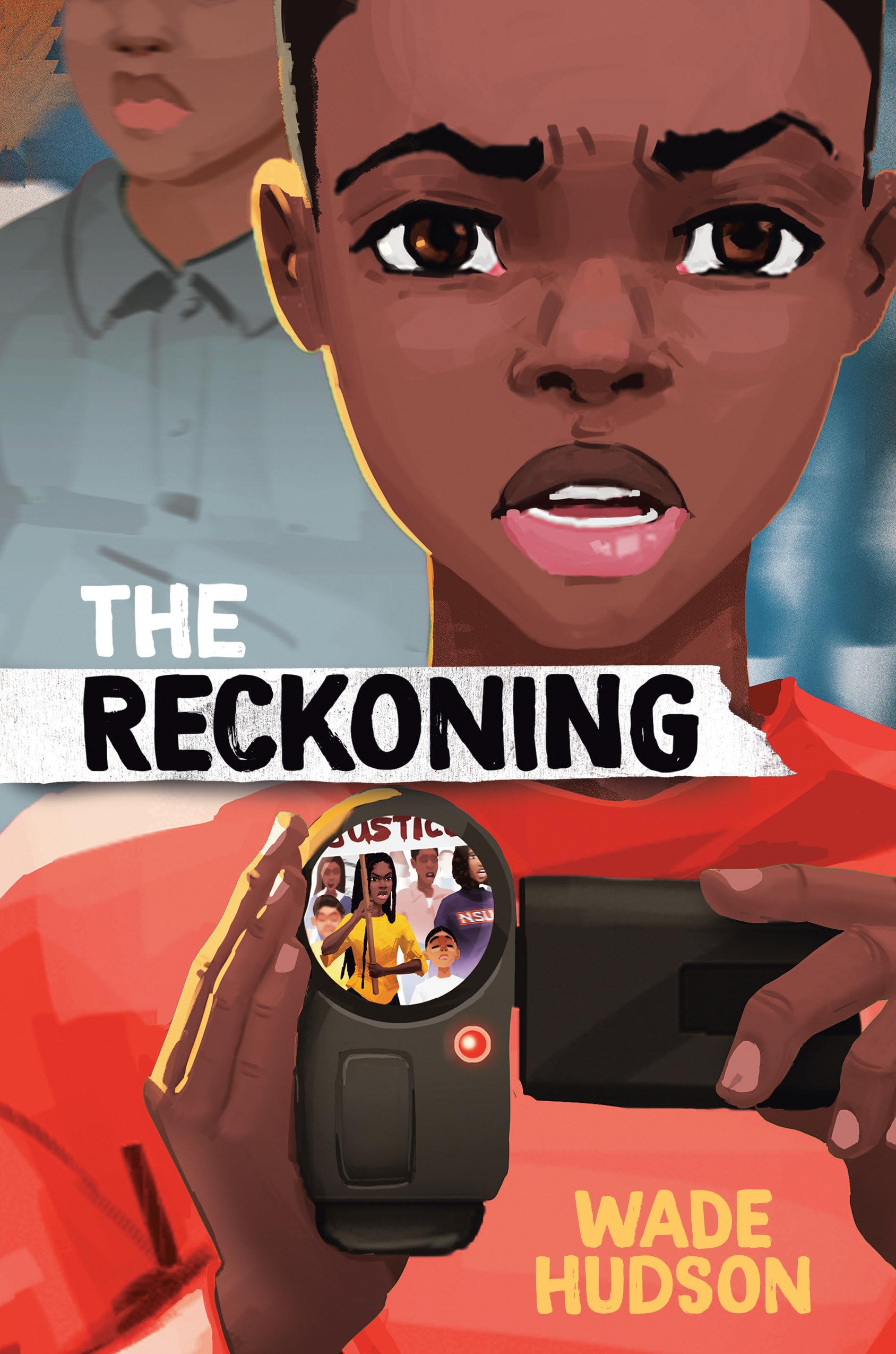



A powerful contemporary novel about an aspiring 12 year-old filmmaker whose world is turned upside down when his grandfather is slain in a senseless and racist act of violence. From the author of the award-winning memoir, Defiant: Growing Up in the Jim Crow South and co-editor of Recognize! An Anthology Honoring and Amplifying Black Life. "A powerful reminder to never stop speaking the truth." - Kirkus Reviews Lamar can’t wait to start his filmmaking career like his idol Spike Lee. And leave behind his small town of Morton, Louisiana. But for now, Lamar has to learn how to be a filmmaker while getting to know his grandfather. When Gramps talks about his activism and Black history, Lamar doesn’t think much about it. Times have changed since the old Civil Rights days! Right? He has a white friend named Jeff who wants to be a filmmaker, too, even though Jeff’s parents never let him go to Lamar’s Black neighborhood. But there’s been progress in town. Right? Then Gramps is killed in a traffic altercation with a white man claiming self-defense. But the Black community knows better: Gramps is another victim of racial violence. Protesters demand justice. So does Lamar. But he is also determined to keep his grandfather's legacy alive in the only way he knows how: recording a documentary about the fight against injustice. From the critically acclaimed author and the publisher of Just Us Books, Wade Hudson comes a riveting, timely, and deeply moving story about a young Black filmmaker whose eyes are opened to racial injustice and becomes inspired to follow in his grandfather's activist footsteps. "A powerful reminder to never stop speaking the truth ." — Kirkus Reviews "An evenly paced story line and clear-eyed narration to explore systemic prejudice.... resulting in a multilayered depiction of segregation and contemporary racism in America." —Publishers Weekly "This story offers an important perspective and is well suited for intergenerational sharing." —Booklist " The power of Black history and activism told simply ; a good start for struggling middle grade readers just introduced to American history." —School Library Journal " An important story about an all-too-common contemporary tragedy and manages to be angry and hopeful at the same time....the book carries the weight of a difficult history and the urgency to carry on the fight." —The Horn Book Wade Hudson is an author, a publisher, and the president and CEO of Just Us Books, Inc., an independent publisher of books for children and young adults. He has published over thirty books, including the anthologies We Rise, We Resist, We Raise Our Voices, which received four starred reviews; The Talk, which earned four starred reviews and was a New York Times Best Book of the Year; and Recognize: Black Lives Matter. These powerful collections were co-edited with his wife, Cheryl Willis Hudson. He also authored the middle grade memoir Defiant: Growing Up in the Jim Crow South, winner of the Malka Penn award. Wade lives in East Orange, New Jersey, with his wife. Chapter 1 Lamar Phillips sat on the front steps of his house on Jones Street, just chilling, trying to decide what to do with his Saturday. He picked up his new video camcorder. Until Gramps helped him buy it, Lamar had been using his iPhone to record videos. He knew that an iPhone wasn’t what real filmmakers used. Neither was a camcorder. Lamar took it everywhere. He practiced recording slow motion, motion detection, time-lapse and self-shooting with it. He used it to interview students and to record football and baseball games at school. That is, when he was allowed to. Adults were always telling him to leave the premises. When he recorded a fire at a house in Morton, the firefighters asked him to move on because he was getting in their way. One day, he reasoned, he would get a 16 MM camera, like the Panasonic AG-CX 350 4 K camcorder he saw in a magazine. It was a real professional camcorder. Lamar knew he could become a big-time director with a camera like that. It cost more than $4,000. That was a lot of money. So, for now, his video camcorder had to do. Lamar held the camcorder up to check it out, to make sure everything was working right. Nothing had really changed since he last held it. The truth was, he just liked holding his first video camcorder. Lamar wanted to be a filmmaker. He had read books about the craft. He had watched as many movies and series as he could, on television, streaming and at the movie theater in Morton. He enjoyed all kinds of movies. Besides those Spike Lee, his role model, had made, his favorites were those that featured superheroes like Miles Morales and Black Panther.He saw the first Black Panther movie five times. He had never before seen so many powerful Black characters on-screen together. Whenever he watched Black Panther, he discovered something new and exciting. When Chadwick Boseman, the actor who portrayed Black Panther in