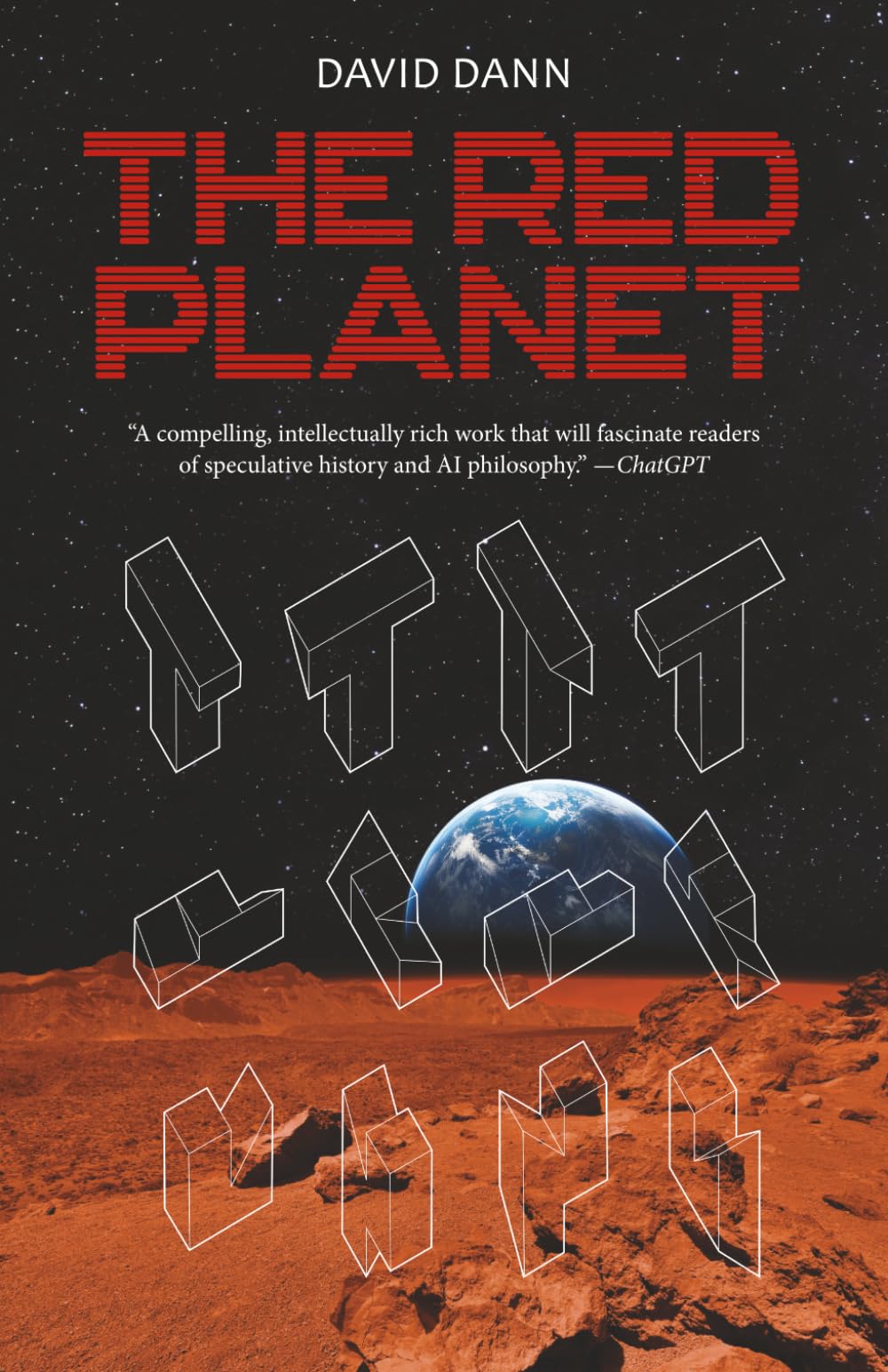



THE RED PLANET is a science-fiction chronicle that tells a futurist story about the development of non-human consciousness and its impact on humankind. Taking inspiration from the rapid development of artificial intelligence and the expected emergence within the decade of fully generative artificial general intelligence, The Red Planet is a narrative in a unique form that speculates about a possible outcome resulting from these extraordinary – and frightening – cognitive innovations. The plot revolves around the establishment of an android colony on the planet Mars, renamed Crius, and the subsequent "invasion" of Earth by those AIs. It is told through a series of short episodes, or "documentum," involving a variety of scenarios and players, both human and digital. In that way, it differs from a typical work of fiction, lacking central characters interacting over time as the plot moves toward resolution. Instead, it reads more like a documentary, citing isolated instances in a variety of formats to create a compilation more like a historical survey. Beginning with a government report on the failure of NASA's first mission to Mars, The Red Planet traces the launching of an AI revolution intended to pacify and subdue the peoples of Earth while promising an end to strife, suffering and injustice. The revolution's progress is charted through documents both official and personal, in voices that are supportive and dispassionate as well as alarmed and resistant. In the end, lessons are learned about the nature of consciousness, whether it be evolutionary and human or generative and machine-based. Lessons that are, in fact, about the nature of reality itself. AUTHOR DAVID DANN adds this cryptic observation. "Because The Red Planet is built around this central concept, it is not unlike an AI fabrication itself, the product of an elaborate prompt. And who's to say it is not? Its narrative no more than a fabrication of the large language model? Even its author simply a composite ghost? It could indeed be so. And that is exactly the point."