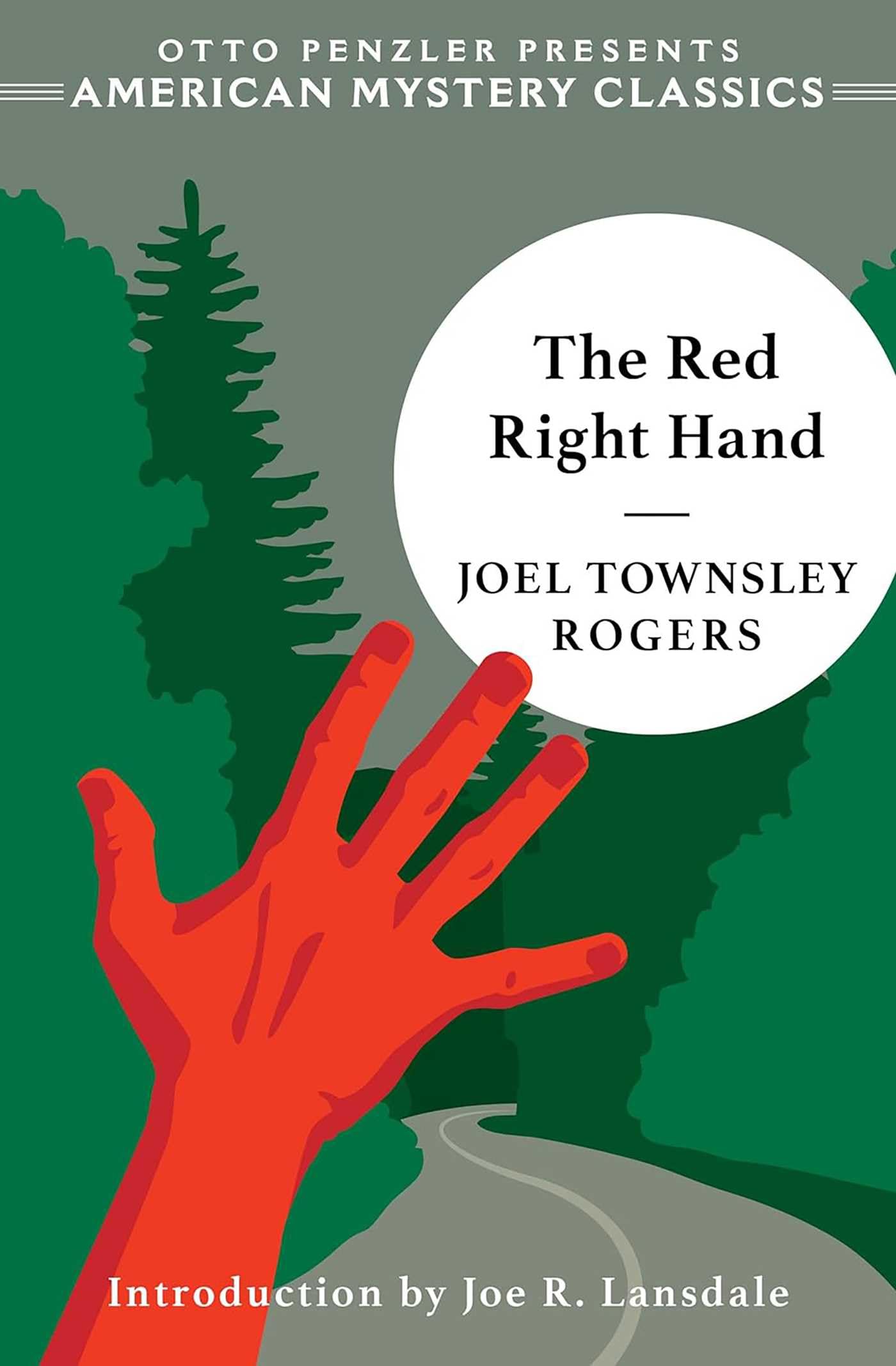



After the death of Inis St. Erme, Dr. Henry Riddle retraces the man's final moments, searching for the moment of his fatal mis-step. Was it when he and his bride-to-be first set out to elope in Vermont? Or did his deadly error occur later—perhaps when they picked up the terrifying sharp-toothed hitch-hiker, or when the three stopped at "Dead Bridegroom's Pond" for a picnic? As he searches for answers, Riddle discovers a series of bizarre coincidences that leave him questioning his sanity and his innocence. After all, he too walked those wild, deserted roads the night of the murder, stranded and struggling to get home to New York City. The more he reflects, his own memories become increasingly uncertain, arresting him with nightmarish intensity and veering into the irrational territory of pure terror—that is until an utterly satisfying solution emerges from the depths, logical enough to send the reader back through the narrative to see the clues they missed. An extraordinary whodunnit that is as puzzling as it is terrifying, Joel Townsley Rogers's The Red Right Hand is a surreal masterpiece that defies classification. It was identified by crime fiction scholar Jack Adrian as "one of the dozen or so finest mystery novels of the 20th century." "It is a strange and terrifying story, and the solution of the mystery, while perfectly logical, is not at all what one is led to suspect." ― New York Times "This is the kind of book that, though brief, stretches its limbs like a cat in the August sun, padding slowly around the action, allowing only glimpses of the truth, all the while setting the reader's crackpot theories to boiling [...] the desperate calculations and dogged attention I paid The Red Right Hand culminated in the most enjoyable reading experience of my year." ― The Paris Review "This logical nightmare is completely undefinable and incapable of synopsis . . . Unique and exciting." -- Anthony Boucher "Deserves its reputation as one of the best mysteries of all time." ― Publishers Weekly (Starred Review) "Thoroughly gripping from first page to last . . . When the full story is finally revealed in this disturbing nightmare of a whodunnit, it will well leave readers reeling. A must-read masterpiece, thankfully resurrected." ― Booklist (Starred Review) Joel Townsley Rogers (1896–1984) was a hugely prolific writer of short stories and novellas across several genres, including mystery, adventure, and science fiction, most of which were published in pulp magazines. He also wrote several novels, of which The Red Right Hand is by far his most well-known; it was adapted from a story published in New Detective . Joe R. Lansdale is the author of over thirty novels and numerous short stories, perhaps best known today for his Hap & Leonard series. His work, which includes writing for comics, television, film, newspapers, and Internet sites has received the Edgar Award, eight Bram Stoker Awards, the Horror Writers Association Lifetime Achievement Award, and many, many other accolades. He lives in Nacogdoches, Texas with his wife, dog, and two cats. Introduction by Joe R. Lansdale Reading The Red Right Hand is a bit of a hallucinogenic adventure, or at least as close as I’ve come to that sort of feeling, since the idea of a drug-induced experience has never been of interest to me. But a book-induced one. I’m all for that. And The Red Right Hand is just the pill to take. Before discussing the novel, I should point out that Joel Townsley Rogers wrote a lot―nearly all of it short stories for the pulp magazines. If these stories are available, collected, I’m unaware of it. But he is responsible for at least four novels, and this one is the one that has managed to avoid the erosion of time. There is a short interview/article on Rogers in the edition I read, but it only manages to heat up the desire to know more about the author. This much is certain: he seems less impressed with his novel than the rest of us are, and feels that it is only a minor representative of his long career. It was all in a day’s work. Still, in a garden of delights there is often one flower that is more exceptional than the others, and this book seems to be Rogers’s magnificent orchid. At times, while reading Rogers’s peculiar book, I felt as if I were seeing the world through a dark and grease-smeared window pane that would frequently turn clear and light up in spewing colors like a firework display on the Fourth of July. At the same time there was the sensation of something damp and dark creeping up behind me, a cold chill on the back of my neck. Clues and odd impressions pile up like plague victims, and from time to time the answer to the riddle seems close at hand, as if you could reach out and grasp it. Then the answer that seemed so clear wriggles from your grasp like an electric eel and slithers into darkness. The largest part of the novel’s appeal for me was the style in which it was written, a near stream-of- consciousn