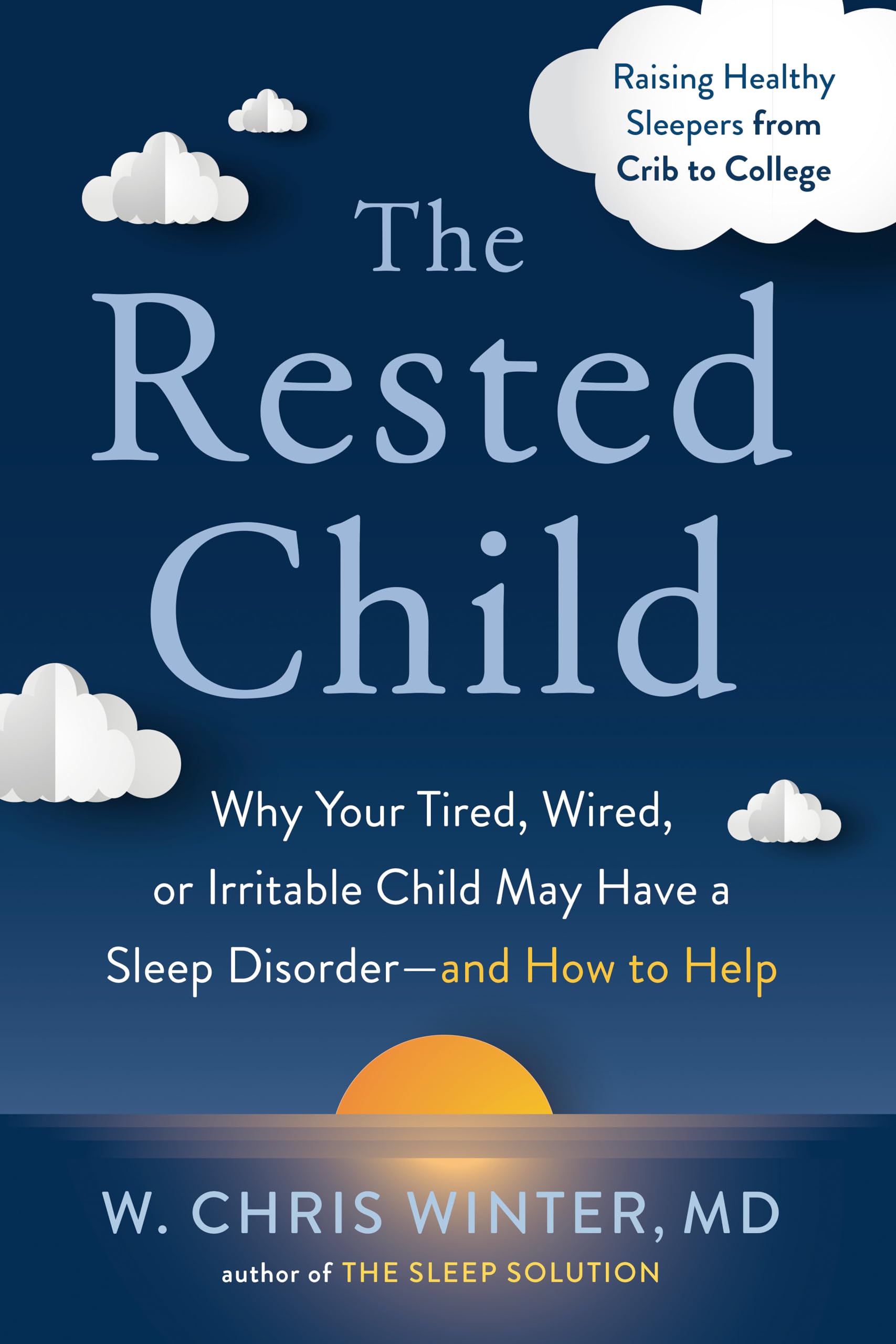
The Rested Child: Why Your Tired, Wired, or Irritable Child May Have a Sleep Disorder--and How to Help
$16.21
by W. Chris Winter M.D



A comprehensive guide to the varied sleep disorders that affect children from infancy to adolescence, many of which are commonly misdiagnosed, offering new wisdom to parents about how to ease their child's troubles. Sleep disorders in children are on the rise. Experts have pronounced sleeplessness a "hidden health crisis" for young people, with 10 percent of children presenting with diagnosable sleep disorders--but well over half are misdiagnosed. Every year, tens of thousands of children are treated for diseases such as diabetes, learning disorders, or chronic pain, when the real root cause of their ailment may actually be a sleep disorder for which they're not being treated. In this groundbreaking guide, neurologist and sleep expert Dr. Chris Winter identifies the signs and symptoms of the most common sleep disorders affecting children today, and he empowers parents and caregivers to understand the steps necessary to address and treat their children's sleep problems. From common issues such as too much screen time and night terrors, to narcolepsy, sleep apnea, and more, The Rested Child leaves no stone unturned. This book pulls back the curtain on the relationship between poor sleep quality and pediatric epidemics related to psychiatric health, rising obesity, ADD/ADHD, pain disorders, and other undiagnosed disorders of sleepiness and fatigue. Finally parents have a resource to help them uncover the root of their children's problems, and, more important, to provide the answers on how to help. Dr. Chris Winter is a board-certified and internationally recognized sleep medicine specialist, as well as a board-certified neurologist. His first book, The Sleep Solution: Why Your Sleep is Broken and How to Fix It , was praised by New York magazine as one of the seven best books on sleep ever written and "The Best Book for Insomnia." He is a highly sought-after speaker and consultant for professional sports organizations, with clients including the Los Angeles Dodgers, the New York Rangers, and the Oklahoma City Thunder. He also regularly consults with U.S. military groups, as well as businesses and large corporations. His writing has been featured in The New York Times , Parenting , O, The Oprah Magazine , Health , CBS News, NPR, and Men's Health magazine. Sleep 101 for Parents How Sleep Works in Your Kid's Brain Two children are sitting under my exam table fighting over an iPad featuring a virtual pet (named Lady Gaga) who requires some type of care or it will die. There is a heated disagreement as to whether it should be fed. An older girl is reading Junie B. Jones Has a Monster Under Her Bed, and seated next to her is Mom, who is nursing child number four. Mom begins: "I thought I had been given the worst sleeper in the world when Emma was born, but Gabe is going to take that title from her, I think." Emma peers up from her book, looks at me with an ashamed expression, and resumes reading. Mom continues to fuss with Gabe, who truly seems to be smiling as he refuses to engage with nursing. Despite his age, it looks like he's trying to get a look at the iPad instead. I listen and jot notes for the next twenty minutes as Mom describes a chaotic home that reminds me of the Herdmans from that book The Best Christmas Pageant Ever. Throughout the conversation about inconsistent sleep schedules, napping disasters, and a house that always seems to have at least one child awake and in some kind of need, Mom does not verbally leave much to the imagination when it comes to how she feels about her kids' sleep. "They have no schedule, just like their father . . . and he wants to have another!" There is nothing more magical than watching a baby sleep. The sight of an infant sleeping quietly, curled into roughly the position he was in when he was inside his mother's womb just days ago, is instantly soothing. Watching the nuanced changes in his facial expression, the sudden muscle twitches, and subtle movements of primitive reflexes quickly reveals to the observer that there is a wealth of changes happening inside his growing brain. As every mother or father sees their newborn sleep for the first time, a dynamic process, hidden from view, is forming the essence of who that child will be. Prenatal Development of Sleep As you can imagine, studying sleep in a preterm fetus is hard since it is deeply tucked away inside a lovely woman who thinks her partner is doing a lousy job rubbing her feet. Because of the technical difficulty in getting a Fitbit around an unborn baby's wrist, it is not easy to gather information on the subject. Most parents know that their baby's heart begins to beat around day twenty-two of gestation. Looking for a relatively simple heartbeat and measuring something as complicated as the genesis of sleeping behaviors are different beasts. Consequently, fetal sleep is a bit of a mystery to sleep researchers. Much of the data we have about the subject comes from studying animals, mainly primates