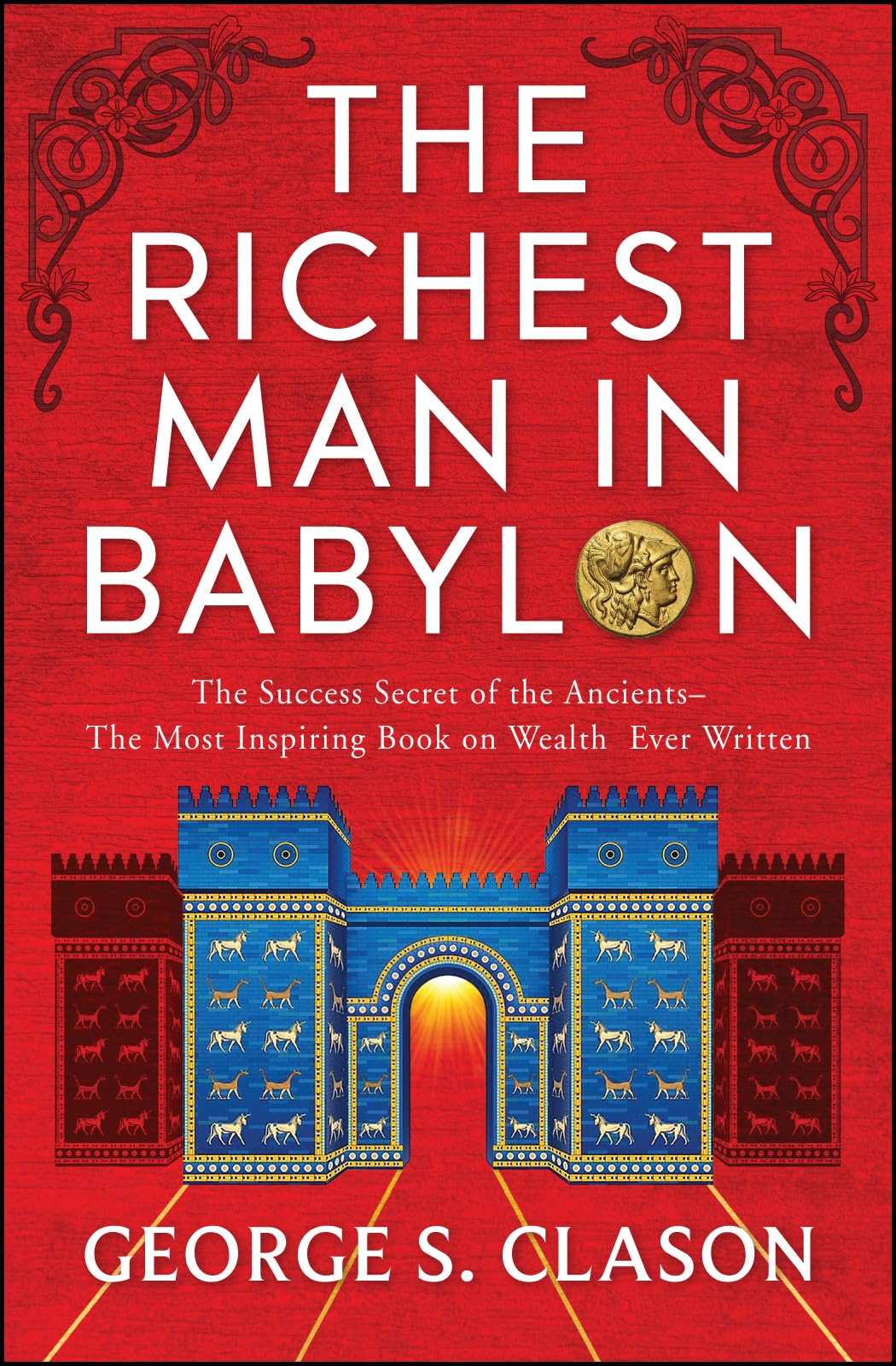
The Richest Man in Babylon (richest man in babylon book | richest man in babylon | richest man | the richest man in babylon hardcover) (100 MustReads
$9.99
by George S. Clason



First published in 1926, 'The Richest Man in Babylon' by George S. Clason is a timeless classic that delivers practical financial wisdom through engaging parables set in ancient Babylon. Clason, known for his clear and accessible writing style, uses the backdrop of one of history’s wealthiest cities to teach fundamental principles of money management and wealth-building. The book follows characters navigating prosperity and hardship, with the central figure, Arkad—the richest man in Babylon—sharing powerful lessons on how anyone can achieve financial success. Through simple, memorable stories, the book explains essential ideas such as saving a portion of all income, living below one’s means, investing wisely, avoiding debt, and learning from knowledgeable mentors. At its heart, the book promotes the foundational rule of “paying yourself first,” encouraging readers to save at least ten percent of their earnings before spending on anything else. These principles, though ancient, remain strikingly relevant because they focus on discipline, consistency, and smart decision-making—values that never go out of style. Blending storytelling with practical advice, The Richest Man in Babylon stands as one of the most influential guides to personal finance, offering readers of all ages a clear path toward financial independence and long-term prosperity. Other Bestsellers in the 100 MustReads Series: • Meditations by Marcus Aurelius
B0G6D4QM99 • The Art of War bt Sun Tzu
B0G6D44T8H • The Little Prince
Antoine De Saint-Exupéry
B0G6D6X82C • The Richest Man in Babylon by George S. Clason
B0G6CV7JP2 The Richest Man in Babylon : : Enjoy Sample Chapters from 100 MustReads An Historical Sketch of Babylon: In the pages of history, there lives no city more enchanting than Babylon. Its very name conjures visions of wealth and splendor. Its treasures of gold and jewels were fabulous. One naturally pictures such a wealthy city as located in a suitable setting of tropical luxury, surrounded by rich natural resources of forests, and mines. But that was not the case. It was located beside the Euphrates River, in a flat, arid valley. It had no forests, no mines and not even stone for building. It was not even located upon a natural trade route. The rainfall was insufficient to raise crops. Babylon is an outstanding example of man’s ability to achieve great objectives, using whatever means are at his disposal. All of the resources supporting this large city were man-developed. All of its riches were man-made. Babylon possessed just two natural resources—a fertile soil and water in the river. With one of the greatest engineering accomplishments of this or any other day, Babylonian engineers diverted the waters from the river by means of dams and immense irrigation canals. Far out across that arid valley went these canals to pour the life-giving waters over the fertile soil. This ranks among the first engineering feats known to history. Abundant crops were the reward of this irrigation system the world had never seen before. Fortunately, during its long existence, Babylon was ruled by successive lines of kings to whom conquest and plunder were but incidental. While it engaged in many wars, most of these were local or defensive against ambitious conquerors from other countries who coveted the fabulous treasures of Babylon. The outstanding rulers of Babylon live in history because of their wisdom, enterprise and justice. Babylon produced no strutting monarchs who sought to conquer the known world that all nations might pay homage to their egotism. As a city, Babylon exists no more. When those energizing human forces that built and maintained the city for thousands of years were withdrawn, it soon became a deserted ruin. The site of the city is in Asia about six hundred miles east of the Suez Canal, just north of the Persian Gulf. The latitude is about thirty degrees above the Equator, practically the same as that of Yuma, Arizona. It possessed a climate similar to that of this American city, hot and dry. Today, this valley of the Euphrates, once a populous irrigated farming district, is again a wind-swept arid waste. Scant grass and desert shrubs strive for existence against the windblown sands. Gone are the fertile fields, the mammoth cities and the long caravans of rich merchandise. Nomadic bands of Arabs, securing a scant living by tending small herds, are the only inhabitants. This has been its state since about the beginning of the Christian era. Dotting this valley are earthen hills. For centuries, they were considered by travelers to be nothing else. The attention of archaeologists was finally attracted to them because of broken pieces of pottery and brick washed down by the occasional rain storms. Expeditions financed by European and American museums were sent here to excavate and see what could be found. Picks and shovels soon proved these hills to be ancient cities. City graves, they might as well be called.
B0G6D4QM99 • The Art of War bt Sun Tzu
B0G6D44T8H • The Little Prince
Antoine De Saint-Exupéry
B0G6D6X82C • The Richest Man in Babylon by George S. Clason
B0G6CV7JP2 The Richest Man in Babylon : : Enjoy Sample Chapters from 100 MustReads An Historical Sketch of Babylon: In the pages of history, there lives no city more enchanting than Babylon. Its very name conjures visions of wealth and splendor. Its treasures of gold and jewels were fabulous. One naturally pictures such a wealthy city as located in a suitable setting of tropical luxury, surrounded by rich natural resources of forests, and mines. But that was not the case. It was located beside the Euphrates River, in a flat, arid valley. It had no forests, no mines and not even stone for building. It was not even located upon a natural trade route. The rainfall was insufficient to raise crops. Babylon is an outstanding example of man’s ability to achieve great objectives, using whatever means are at his disposal. All of the resources supporting this large city were man-developed. All of its riches were man-made. Babylon possessed just two natural resources—a fertile soil and water in the river. With one of the greatest engineering accomplishments of this or any other day, Babylonian engineers diverted the waters from the river by means of dams and immense irrigation canals. Far out across that arid valley went these canals to pour the life-giving waters over the fertile soil. This ranks among the first engineering feats known to history. Abundant crops were the reward of this irrigation system the world had never seen before. Fortunately, during its long existence, Babylon was ruled by successive lines of kings to whom conquest and plunder were but incidental. While it engaged in many wars, most of these were local or defensive against ambitious conquerors from other countries who coveted the fabulous treasures of Babylon. The outstanding rulers of Babylon live in history because of their wisdom, enterprise and justice. Babylon produced no strutting monarchs who sought to conquer the known world that all nations might pay homage to their egotism. As a city, Babylon exists no more. When those energizing human forces that built and maintained the city for thousands of years were withdrawn, it soon became a deserted ruin. The site of the city is in Asia about six hundred miles east of the Suez Canal, just north of the Persian Gulf. The latitude is about thirty degrees above the Equator, practically the same as that of Yuma, Arizona. It possessed a climate similar to that of this American city, hot and dry. Today, this valley of the Euphrates, once a populous irrigated farming district, is again a wind-swept arid waste. Scant grass and desert shrubs strive for existence against the windblown sands. Gone are the fertile fields, the mammoth cities and the long caravans of rich merchandise. Nomadic bands of Arabs, securing a scant living by tending small herds, are the only inhabitants. This has been its state since about the beginning of the Christian era. Dotting this valley are earthen hills. For centuries, they were considered by travelers to be nothing else. The attention of archaeologists was finally attracted to them because of broken pieces of pottery and brick washed down by the occasional rain storms. Expeditions financed by European and American museums were sent here to excavate and see what could be found. Picks and shovels soon proved these hills to be ancient cities. City graves, they might as well be called.