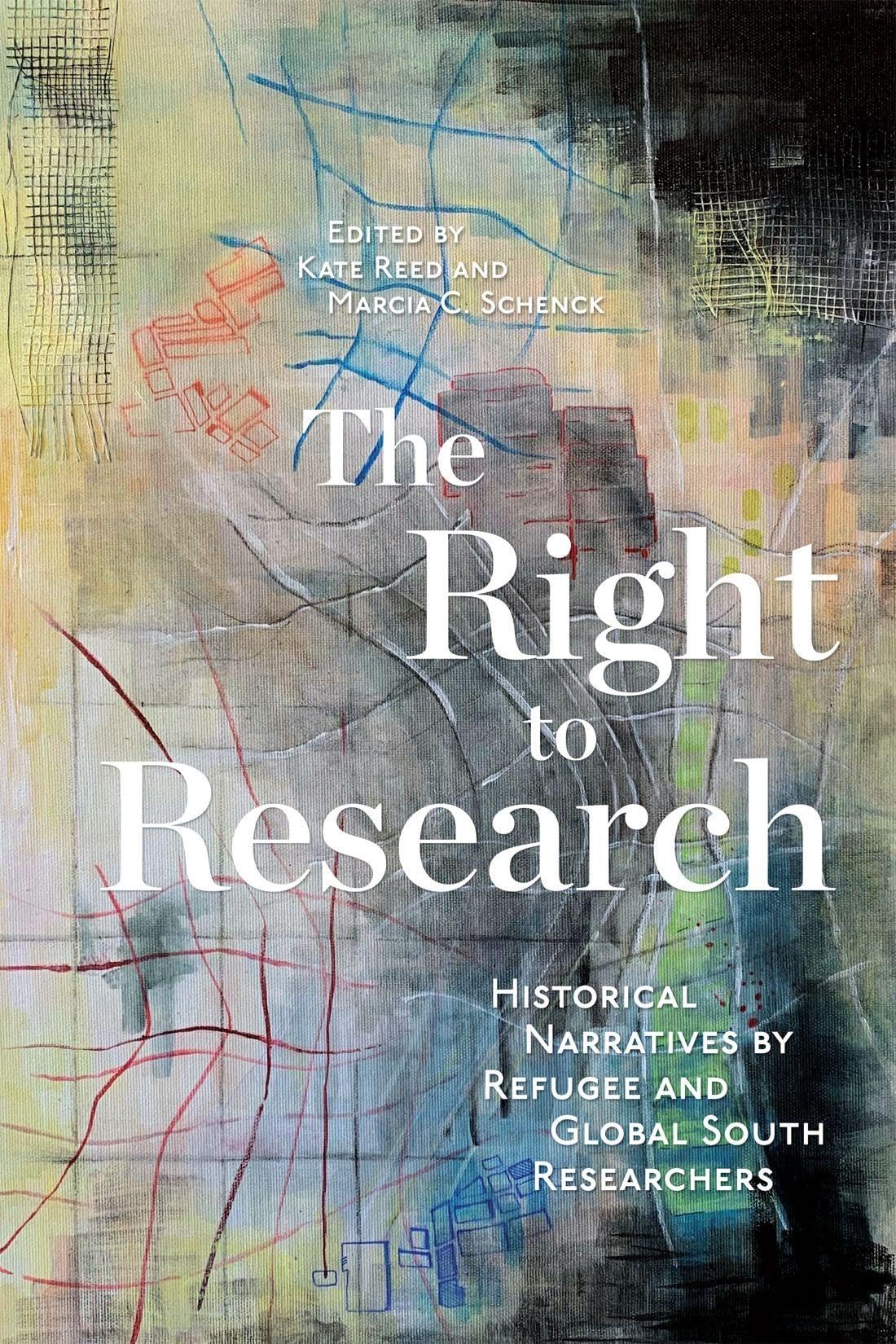



Refugees and displaced people rarely figure as historical actors, and almost never as historical narrators. We often assume a person residing in a refugee camp, lacking funding, training, social networks, and other material resources that enable the research and writing of academic history, cannot be a historian because a historian cannot be a person residing in a refugee camp.The Right to Research disrupts this tautology by featuring nine works by refugee and host-community researchers from across Africa, Europe, and the Middle East. Identifying the intrinsic challenges of making space for diverse voices within a research framework and infrastructure that is inherently unequal, this edited volume offers a critical reflection on what history means, who narrates it, and what happens when those long excluded from authorship bring their knowledge and perspectives to bear. Chapters address topics such as education in Kakuma Refugee Camp, the political power of hip-hop in Rwanda, women migrants to Yemen, and the development of photojournalism in Kurdistan. Exploring what it means to become a researcher, The Right to Research understands historical scholarship as an ongoing conversation – one in which we all have a right to participate. “This ambitious and exciting volume makes a critical intervention in the processes of historical silencing and upsets conventional understandings of historical scholarship. The book reminds us that refugees have not been afforded the right to write history; this is a powerful, poignant, rightfully challenged assertion, and this assertion is timely – if not now, when?” Joanna Tague, Denison University and author of Displaced Mozambicans in Postcolonial Tanzania: Refugee Power, Mobility, Education, and Rural Development How historical scholarship can benefit from refugee voices as historians in their own right. Series editors: Megan Bradley and James Milner Forced migration is a local, national, regional, and global challenge with profound political and social implications. Understanding the causes and consequences of, and possible responses to, forced migration requires careful analysis from a range of disciplinary perspectives, as well as interdisciplinary dialogue. The purpose of the McGill-Queen's Refugee and Forced Migration Studies series is to advance in-depth examination of diverse forms, dimensions, and experiences of displacement, including in the context of conflict and violence, repression and persecution, and disasters and environmental change. The series will explore responses to refugees, internal displacement, and other forms of forced migration to illuminate the dynamics surrounding forced migration in global, national, and local contexts, including Canada, the perspectives of displaced individuals and communities, and the connections to broader patterns of human mobility. Featuring research from fields including politics, international relations, law, anthropology, sociology, geography, and history, the series highlights new and critical areas of enquiry within the field, especially conversations across disciplines and from the perspective of researchers in the global South, where the majority of forced migration unfolds. The series benefits from an international advisory board made up of leading scholars in refugee and forced migration studies. Kate Reed is a PhD student in history at the University of Chicago. Marcia C. Schenck is professor of global history at the University of Potsdam.