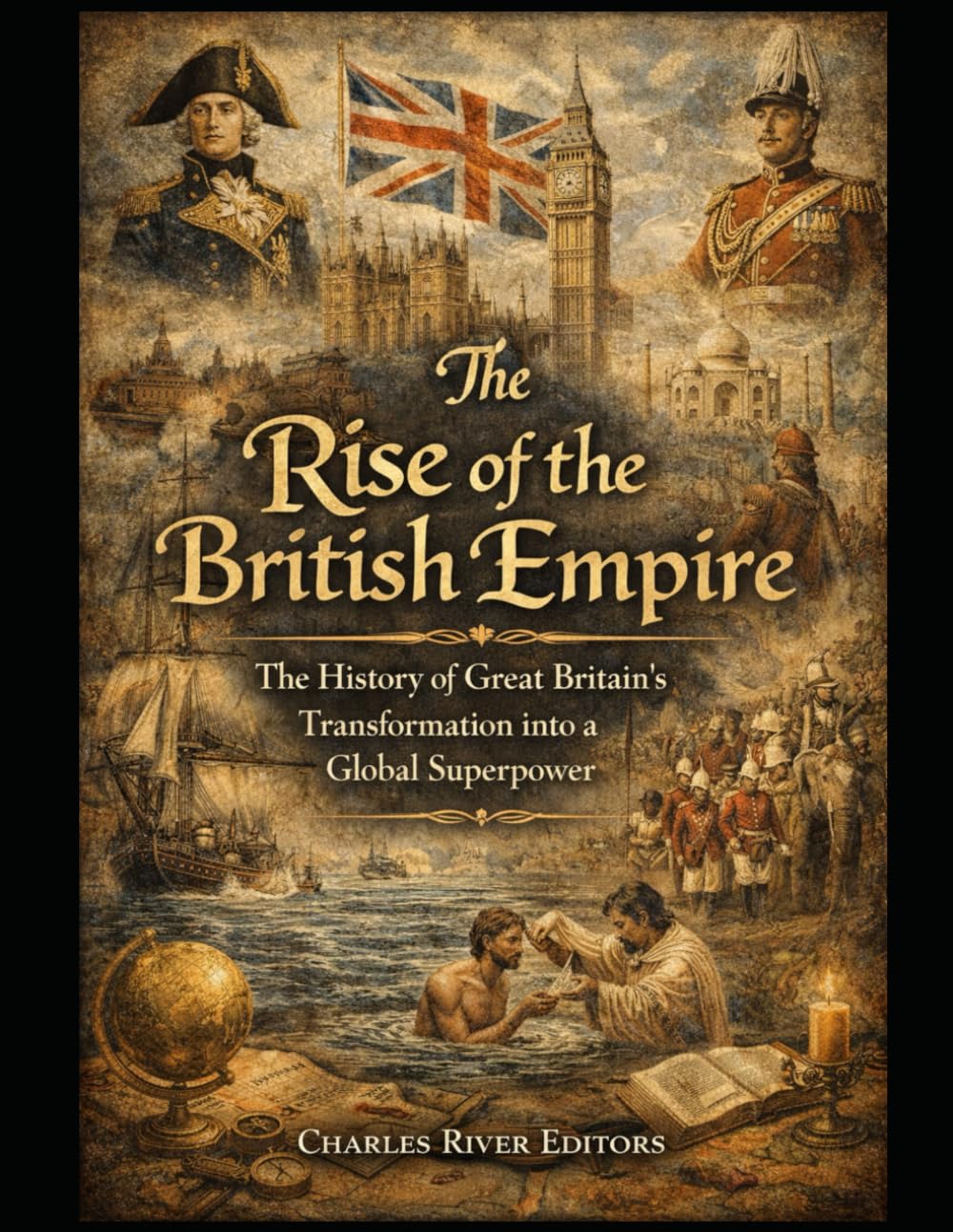
The Rise of the British Empire: The History of Great Britain’s Transformation into a Global Superpower
$14.99
by Charles River Editors



World domination is a vision most kings, queens, and emperors can only dream of, and is a path less visited for good reason. It is one that requires above all, patience, as well as skill, tenacity, and an impenetrable plan of action. The only one to ever come close to this impossible level of prestige is none other than the legendary British Empire. It was under the reign of King Henry VII of England that this ambitious idea of global expansion was first planted. In March of 1496, the king granted an exploratory charter to John Cabot, who would pilot a successful voyage that resulted in the occupation of an uninhabited island in Newfoundland. Though Cabot's second voyage ended in disaster, the courage and will he displayed during these endeavors inspired English explorers to organize more ventures and take to the seas themselves, as they hoped to see just how far they could push the envelope. Though the Virginian colonists had difficulty in the beginning, by the late 1620s the Chesapeake area was thriving, having become a haven for those seeking economic opportunity in the new world. Pressures in England were growing as King Charles I was on the throne. Though Charles I himself was an Anglican, many suspected him of Catholic sympathies, a suspicion not alleviated by Charles I marriage to a French Catholic princess. Many Protestants had a growing desire to practice their faith and conduct their lives away from the mother country, and sought refuge in a destination called New England. The British East India Company served as one of the key players in the formation of the British Empire. From its origins as a trading company struggling to keep up with its superior Dutch, Portuguese, and Spanish competitors to its tenure as the ruling authority of the Indian subcontinent to its eventual hubristic downfall, the East India Company serves as a lens through which to explore the much larger economic and social forces that shaped the formation of a global British Empire. As a private company that became a non-state global power in its own right, the East India Company also serves as a cautionary tale all too relevant to the modern world’s current political and economic situation. On its most basic level, the East India Company played an essential part in the development of long-distance trade between Britain and Asia. The trade in textiles, ceramics, tea, and other goods brought a huge influx of capital into the British economy. This not only fueled the Industrial Revolution, but also created a demand for luxury items amongst the middle classes. The economic growth provided by the East India Company was one factor in Britain’s ascendancy from a middling regional power to the most powerful nation on the planet. By the 19th century, the sun never set on the British Empire, whose holdings spanned the globe, in one form or another. Its naval supremacy linked the Commonwealth of Canada with the colonies in South Africa and India, and through them trade flowed east and west. An integral but underutilized part of this vast trade network included China, a reclusive Asian kingdom closed off from the Western world that desired none of its goods. Unfortunately for China, the British had the might of an empire and economic force, not to mention modern arms, on their side. Breaking into China’s lucrative trade markets nearly destroyed the nation, severely discredited the Chinese dynasty, wreaked havoc on its people, and further propelled Britain’s empire into a dominant economic and military position.