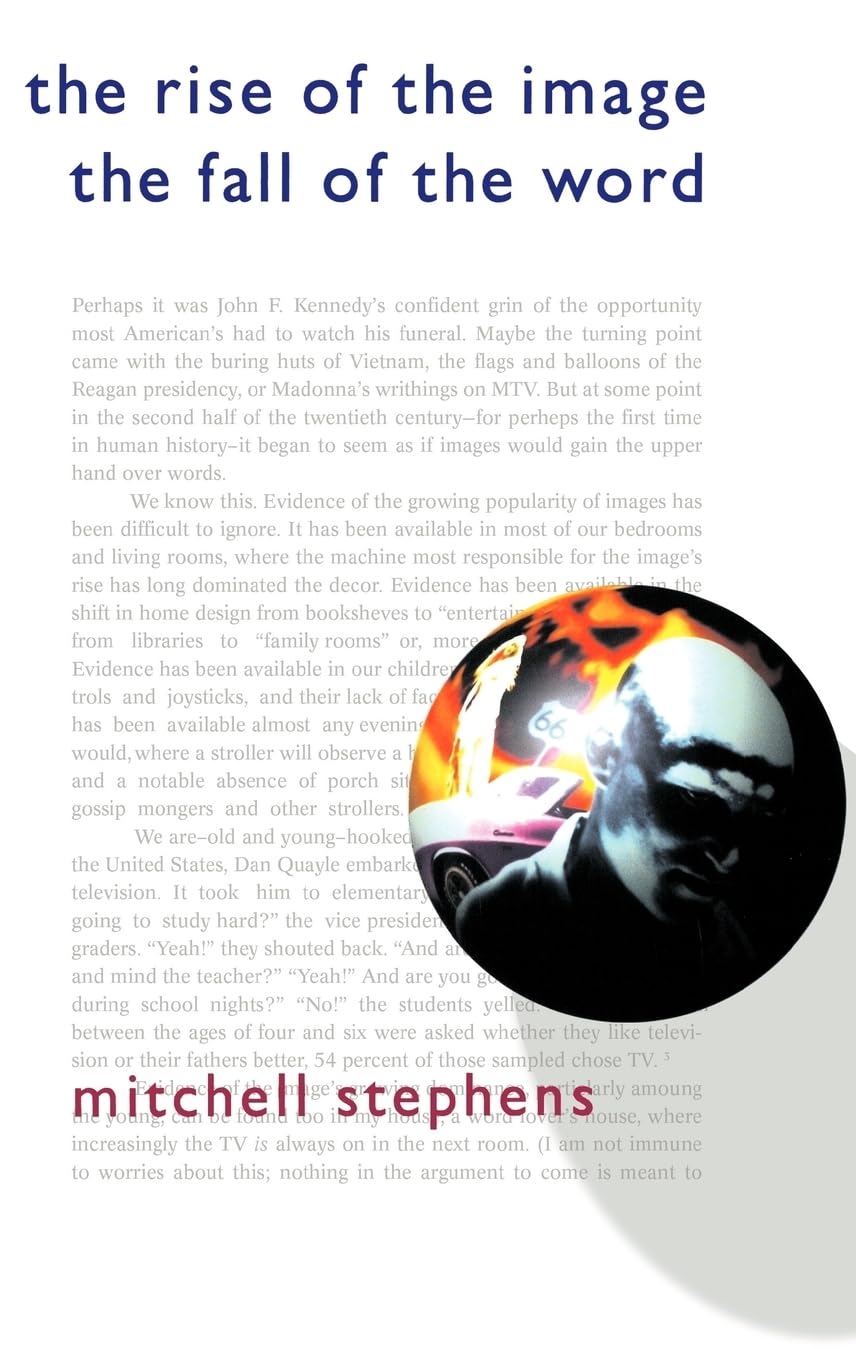



For decades educators and cultural critics have deplored the corrosive effects of electronic media on the national consciousness. The average American reads less often, writes less well. And, numbed by the frenetic image-bombardment of music videos, commercials and sound bites, we may also, it is argued, think less profoundly. But wait. Is it just possible that some good might arise from the ashes of the printed word? Most emphatically yes, argues Mitchell Stephens, who asserts that the moving image is likely to make our thoughts not more feeble but more robust. Through a fascinating overview of previous communications revolutions, Stephens demonstrates that the charges that have been leveled against television have been faced by most new media, including writing and print. Centuries elapsed before most of these new forms of communication would be used to produce works of art and intellect of sufficient stature to overcome this inevitable mistrust and nostalgia. Using examples taken from the history of photography and film, as well as MTV, experimental films, and Pepsi commercials, the author considers the kinds of work that might unleash, in time, the full power of moving images. And he argues that these works--an emerging computer-edited and -distributed "new video"--have the potential to inspire transformations in thought on a level with those inspired by the products of writing and print. Stephens sees in video's complexities, simultaneities, and juxtapositions, new ways of understanding and perhaps even surmounting the tumult and confusions of contemporary life. Sure to spark lively--even heated--debate, The Rise of the Image, the Fall of the Word belongs in the library of millennium-watchers everywhere. The Information Revolution is upon us. The world of the printed word is dying, and moving images are gaining ground. MTV, Sesame Street, and the old stand-by Laugh In have thrust "multiple fragments" of fast-cut images in our faces, and we enjoy, learn, and revel in them. Such is the philosophy of Stephens (journalism and mass communications, New York Univ.), solidly explained and delineated with powerful insights into the classics of literature, film, and television. Although he foresees the "fall" of the printed word, Stephens says it will not be so bad. The "New Video" will bring us joy and great avenues for learning, teaching, and appreciating the world. As in his A History of News: From the Drum to the Satellite (LJ 10/15/88), Stephens paints a much broader picture of mass communication and where it is heading, citing examples such as Flaubert, Shakespeare, and even Ally McBeal. Easy to read and fascinating to think about, this is a keeper. Recommended for academic and larger public libraries.?Kay Bowes, Wilmington Inst. Lib., DE Copyright 1998 Reed Business Information, Inc. "This book is brave and insightful. Mitchell Stephens cares deeply about words and images. A thoughtful scholar of media, he takes us well past the cant, hysteria and rhetoric that shapes so many of our public discussions about technology and culture. Sometimes painfully and poignantly, but always honestly, he speaks to our fears about the onrushing Information Revolution and offers us some concrete ideas for surviving it."--John Katz, media critic and author of Virtuous Reality"Filled with historical descriptions and sprinkled with amusing and startling images, Stephens' book provides an interesting perspective on the television/video age and its future."--Bloomsbury Review"When writing and, later, print moved the word into visual space, the inwardness of the word was preversed because reading evoked sound from the interior of the reader--at first actual sound (early reading was normally aloud) and later imaginary sound. With today's widespread use of TV images and other images, space has more and more discarded text and communication has become more exteriorizing. The TV screen situates the viewer outside its visual image. But Mitchell Stephens sees hope in current developments such as our growing ability to use moving images that shift from perspective to perspective. This is an informative and challenging book."--Walter J. Ong, St. Louis University"A terrific book coming out soon that will forcefully and brilliantly argue...that hyper video images are hurling us into a new cultural renaissance."--David Shenk, author of "Data Smog," in Hotwired"A thoughtful scholar of media, Stephens takes us well past the cant, hysteria, and rhetoric that shapes so many of our public discussions about technology and culture. Sometimes painfully and poignantly, but always honestly, he speaks to our fears about the onrushing Information Revolution and offers us some concrete ideas for surviving it."--Jon Katz, media critic and author of Virtuous Reality"A thoughtful and measured challenge, the kind of scholarship that helps push us forward."--American Journalism Review"A fascinating, counterintuitive tour de force.... Stephens has created