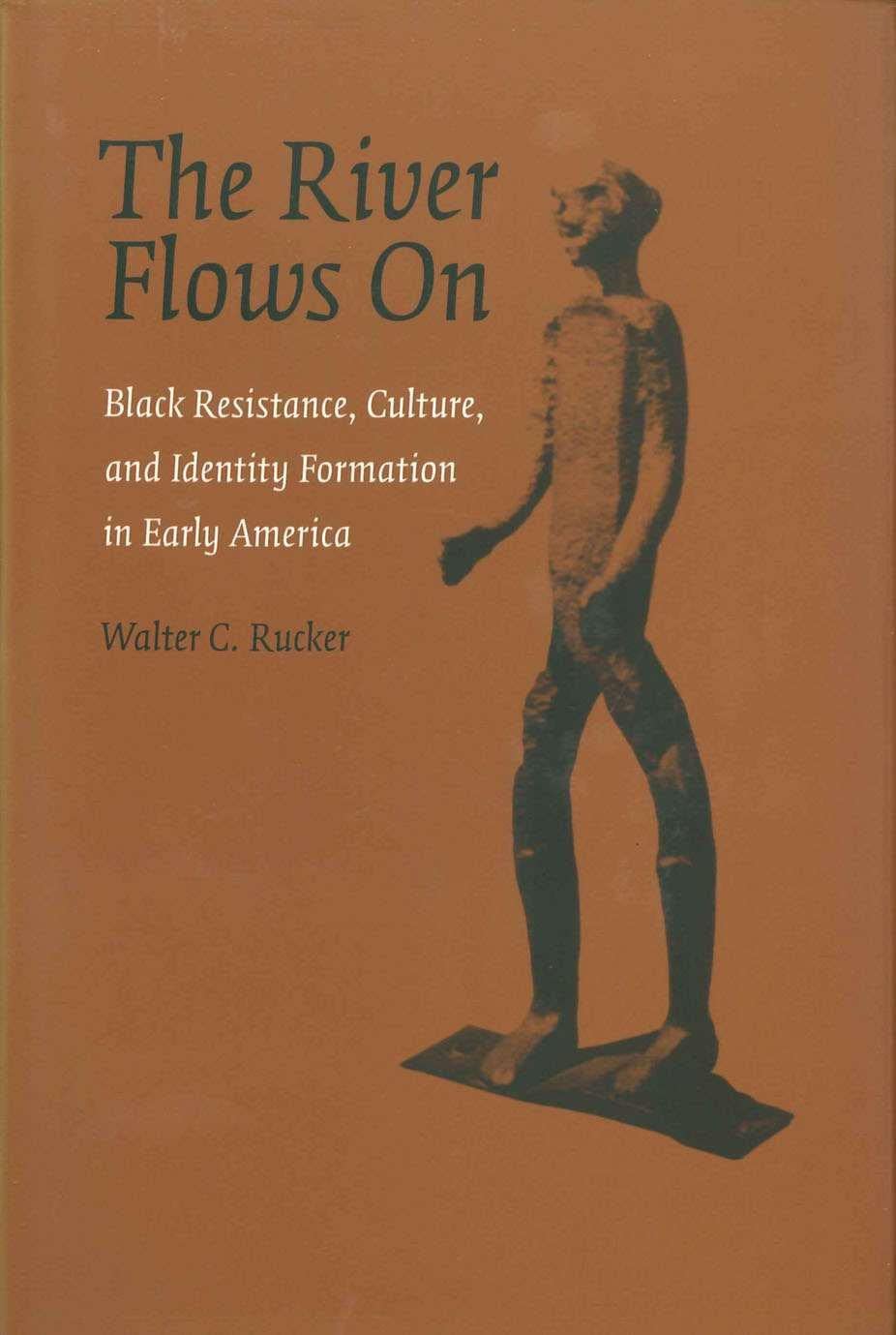
The River Flows On: Black Resistance, Culture, and Identity Formation in Early America (Antislavery, Abolition, and the Atlantic World)
$27.77
by Walter C. Rucker



The River Flows On offers an impressively broad examination of slave resistance in America, spanning the colonial and antebellum eras in both the North and South and covering all forms of recalcitrance, from major revolts and rebellions to everyday acts of disobedience. Walter C. Rucker analyzes American slave resistance with a keen understanding of its African influences, tracing the emergence of an African American identity and culture. Rucker points to the shared cultural heritage that facilitated collective action among both African- and American-born slaves, such as the ubiquitous belief in conjure and spiritual forces, the importance of martial dance and the drum, and ideas about the afterlife and transmigration. Focusing on the role of African cultural and sociopolitical forces, Rucker gives in-depth attention to the 1712 New York City revolt, the 1739 Stono rebellion in South Carolina, the 1741 New York conspiracy, Gabriel Prosser's 1800 Richmond slave plot, and Denmark Vesey's 1822 Charleston scheme. He concludes with Nat Turner's 1831 revolt in Southampton, Virginia, which bore the marks of both conjure and Christianity, reflecting a new, African American consciousness. With rich evidence drawn from anthropology, archaeology, and religion, The River Flows On is an innovative and convincing study. "Walter Rucker's book, which examines slave resistance in a variety of revolts in the colonial and early national period, is the first to trace attitudes and actions of the early rebels to African sources...he is able to show that some of the most powerful and effective slave revolts had strong roots in particular African cultures." - John Thornton, author of Africa and Africans in the Making of the Atlantic World, 1400-1800 Walter C. Rucker is Professor of African American Studies and History at Emory University. He is the author of Gold Coast Diasporas: Identity, Culture, and Power (Indiana University Press, 2015). Used Book in Good Condition