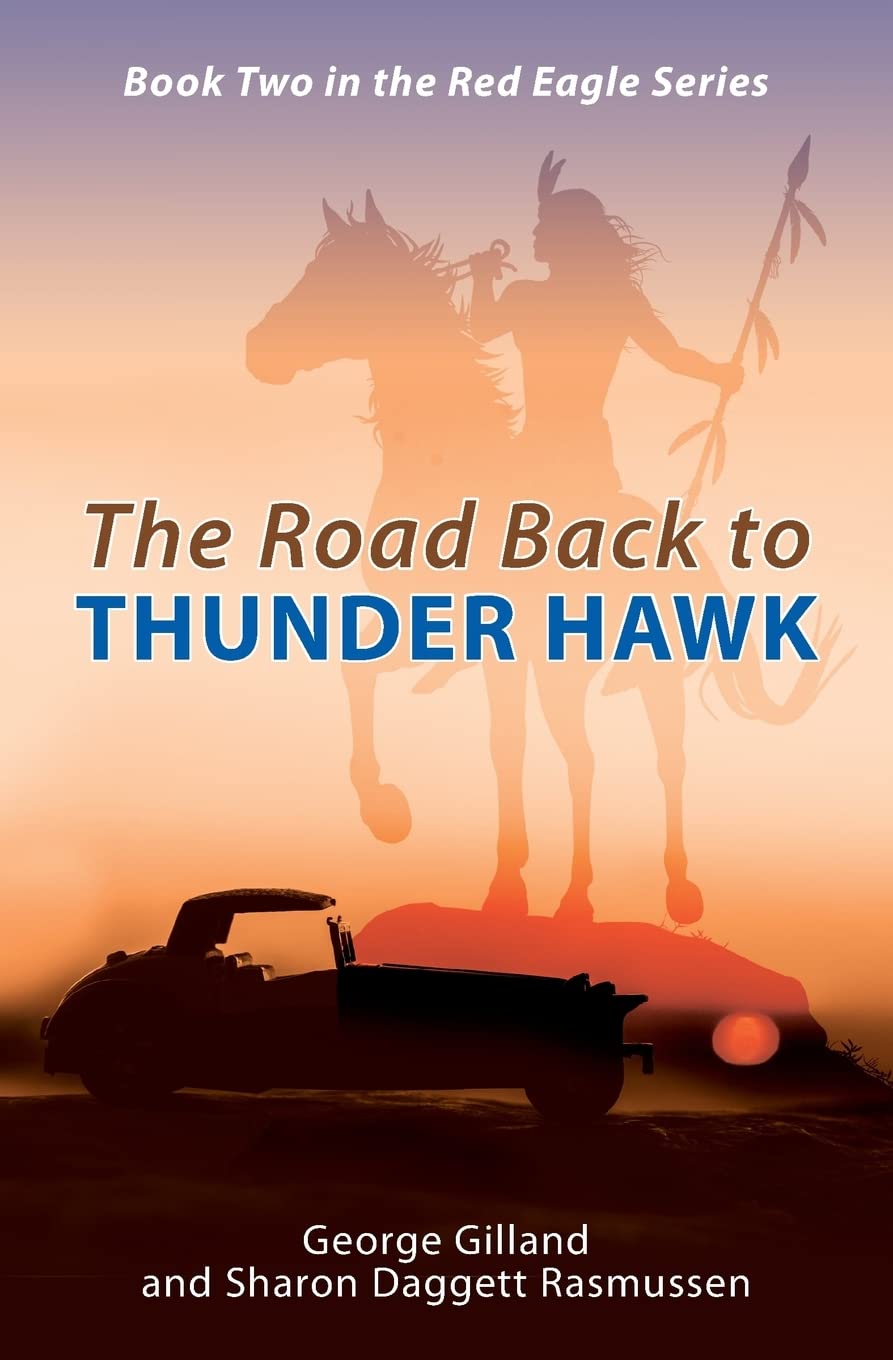



Bob Gilland, also called Wanbli Luta (Red Eagle), is forced to leave Standing Rock Sioux Reservation to fight in the Great War. As he confronts the horrors of the battlefield, he keeps his community safe in his heart. Bob knows that one day he will return. The Great War isn’t the only challenge Bob faces in this thrilling sequel to Along the Trail to Thunder Hawk. The half-Lakota cowboy sees the most important events of the twentieth century pass before his eyes. Bob smuggles illegal moonshine under the noses of Prohibition agents and tries to win the heart of a beautiful new friend. From the trenches of France to the wide-open plains of South Dakota, Bob seeks out adventure and excitement. While Bob looks to the future, writers George Gilland and Sharon Daggett Rasmussen also use him to examine the sins of the past. They chronicle the scars the government’s atrocious treatment of native tribes has left on native culture. The government separated traditional social groups to force the Lakota into following their “civilized ways.” But as Bob learns through the war and his other experiences, there’s nothing civilized about the world beyond the reservation. George Gilland has been raising award-winning cattle on his land at the Standing Rock reservation for thirty years. Gilland is a proud member of the Standing Rock Sioux Tribe. He has been president of the Lakota Ranchers Association and treasurer of the American Indian Livestock Association. In addition to ranching and farming, Gilland writes a column called "Wait a Minute, I Tell You Something" for the Dakota Herald . Sharon Daggett Rasmussen loved stories about her grandmother's and mother's pasts on the Standing Rock reservation. Although she moved to Oregon when she was young, she never forgot her past connection to the land. Rasmussen has worked in communications for several government agencies and nonprofit organizations in Washington, DC, for more than thirty years. Both Gilland and Rasmussen are members of the Western Writers of America. Their writing has been supported by a grant from the Standing Rock Sioux Tribe.