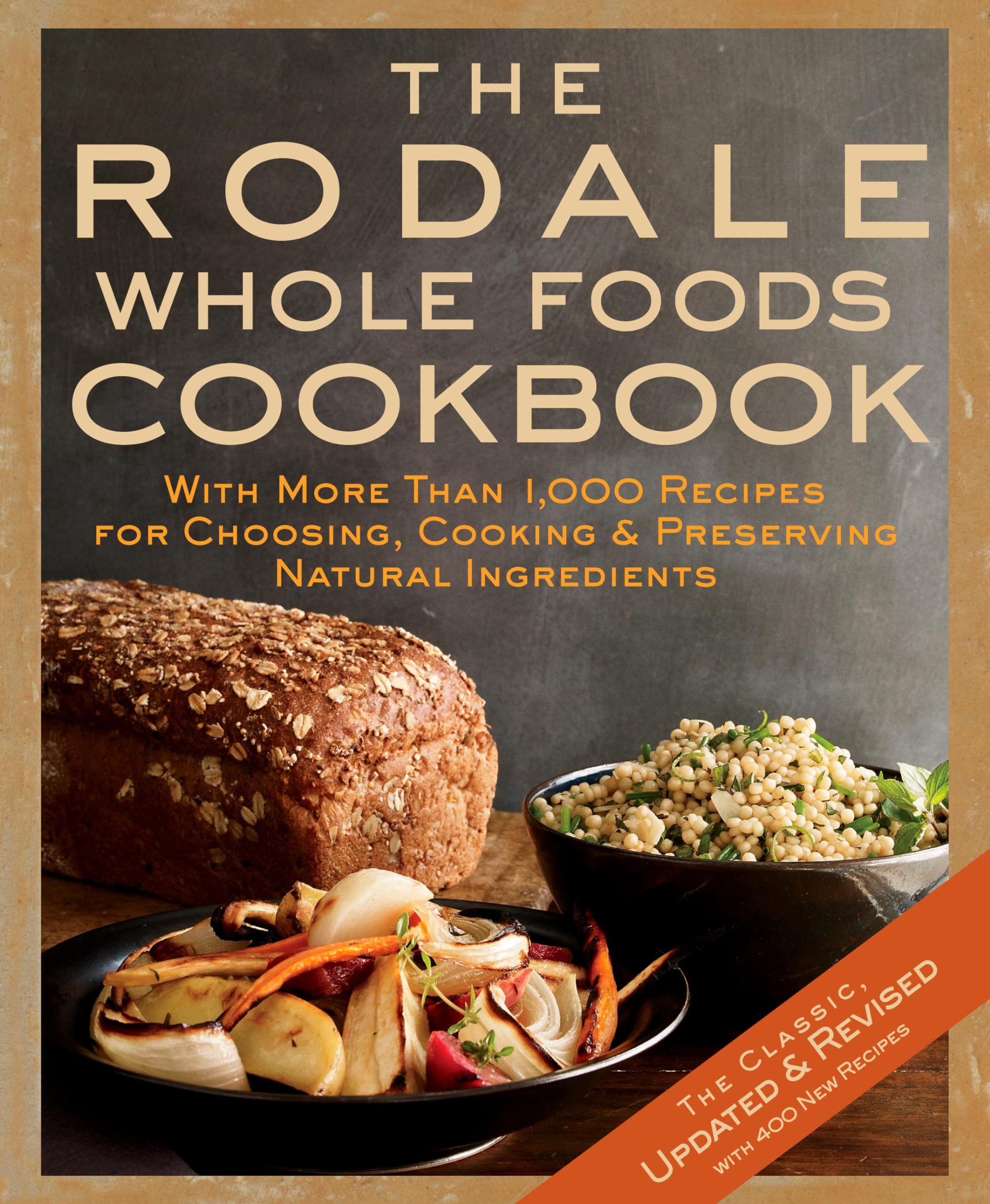
The Rodale Whole Foods Cookbook: With More Than 1,000 Recipes for Choosing, Cooking, & Preserving Natural Ingredients
$24.79
by Dara Demoelt



Farmer's markets, groceries, and natural foods stores today offer a wealth of wholesome ingredients that even a decade ago were considered unfamiliar and exotic. From quinoa to spelt flour to agave nectar and shiitake mushrooms, natural whole foods like these have come into their own as the cornerstone of a healthy, varied diet. Packed with information for purchasing, storing, and serving the full spectrum of whole foods, The Rodale Whole Foods Cookbook by Dara Demoelt is a comprehensive kitchen resource for contemporary cooks. Based on the classic work, this exhaustively revised edition contains nearly 1,400 recipes—more than one-third of them brand new—and updated guidelines for making the most of fresh meats, produce, and pantry essentials, soup to nuts. Here's all you need to know to make spectacular soups, stews, salads, baked goods, and more, using whole foods. You'll find dozens of casseroles (many of which can be made ahead and frozen for no-fuss weeknight meals), quick-and-easy sautés, plenty of meatless main courses, and crowd-pleasing favorites for casual get togethers. Best of all, these recipes are naturally healthful, showcasing the versatility of wholesome whole grains, natural sweeteners, seasonal fruits and vegetables, and other fresh, unprocessed foods in all their delicious variety. Also included are valuable primers on such essential kitchen topics as making stock; putting up jams and preserves; baking yeast breads; choosing cookware; sprouting seeds; making yogurt; and canning vegetables with helpful charts and glossaries on herbs and spices, cheeses, sea vegetables, seasonal produce, roasting meat and fowl, freezing foods safely, and more. A trusted, timeless classic thoroughly updated for the way we cook today, The Rodale Whole Foods Cookbook is sure to become an indispensable resource for health-conscious cooks. This much-loved classic guide to cooking, choosing, and savoring whole foods has been comprehensively revised and updated to include more than 1,000 healthy, modern recipes plus helpful information on canning, preserving, sprouting, baking, and much, much more Eating for Your Health Ask any nutritionist how to get all the important nutrients you need to stay healthy, and you will be told to eat a variety of foods. If you do not exclude any category and do not focus too heavily on any category, you will be fine. That said, the typical American diet has lost its bearings over the years. Because of the fast pace of living that we all seem caught up in, getting variety in our diets has become a challenge. Fast food, takeout food, and convenience food have thrown our dietary balance out of whack. Here's how to get the balance back: * Choose whole foods over refined or processed foods whenever possible. * Eat more whole grains. This is one of the biggest shortfalls in the American diet. * Eat more vegetables, and eat a rainbow of colors, especially the more deeply colored vegetables. They are the highest in antioxidants and other phytochemicals. See "A Short Guide to Phytochemicals". * Choose good carbs over bad carbs. This means choosing complex carbohydrates--such as beans, grains, or potatoes--over simple carbohydrates, which are bascially sugars. * Consume more fiber-rich foods, especially those high in heart-healthy soluble fiber, such as oats, apples, and beans. * Choose good fats over bad fats. This means choosing unsaturated fats, especially mono-unsaturated, over saturated fats. See "Comparative Fats". * Try to get protein at every meal. It keeps your metabolism in good working order. The protein can be from animal or plant sources. * Choose lean animal sources of protein, with the exception of fish because the fattier species are high in healthful omega-3 fatty acids. See "Omega- 3s in Fish" and "The Cholesterol in Shellfish". Eating Organic In 1990, Congress passed the Organic Foods Production Act. The act required the United States Department of Agriculture (USDA) to develop national standards for organically produced agricultural products. The USDA's Agricultural Marketing Service established something called the National Organic Program (NOP) whose task was to develop the standards and to establish an organic certification program. The NOP came up with a definition for organic (below) and then came up with the requirements for food labels. The official definition: To be deemed organic, an agricultural product must be grown without the use of most conventional pesticides, petroleum-based fertilizers, or sewage sludge-based fertilizers. In the case of animals, their feed must comply with the above; in addition the animals must be raised with no growth hormones or antibiotics. The regulations also prohibit genetic engineering, ionizing radiation, and sewage sludge in production and handling. There are also specific regulations about the use of synthetic substances. The NOP has defined three label categories that can use the term organic. Only th