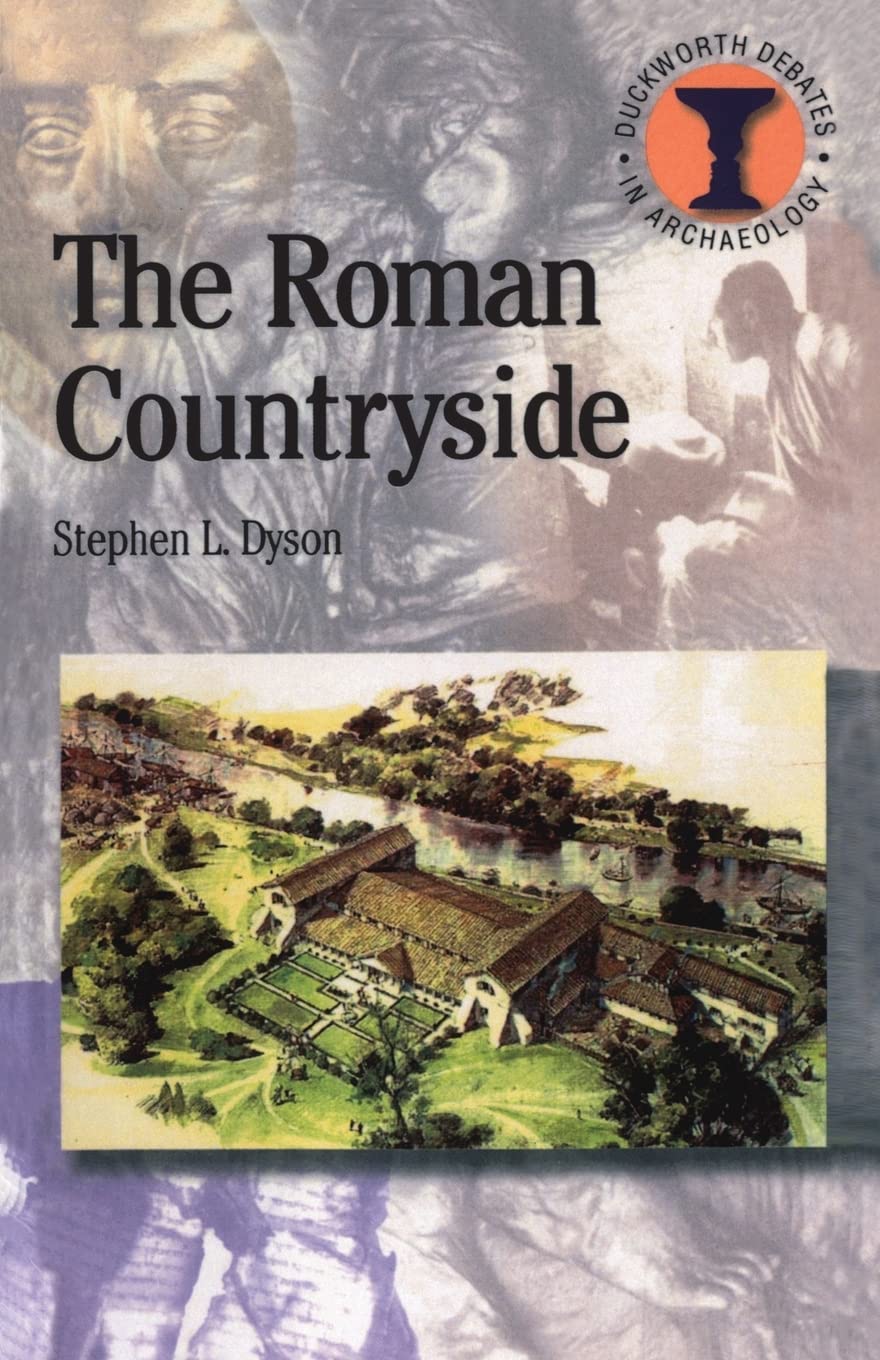



In this work, Stephen Dyson provides a new synthesis, describing current research on the Roman countryside within a topological rather than a geographical or historical framework. He first examines the Roman villa, looking at changing interpretations of the villa and the ways they have been shaped both by new information and evolving interpretative models, relating the survey-settlement evidence to larger questions of landscape use and landscape transformation during the Roman period. Focusing on areas where some of the most innovative rural research has been conducted - Italy, North Africa, Spain and France - he discusses what happened in rural areas in the period of transition between the end of Antiquity and the emergence of medieval society, showing that the period of transition was much longer than previously thought and that there was tremendous variation not only between one part of the Empire and another, but between micro-regions within a single province. “Dyson's study brings together discrete fields of the investigation which have influenced our understandings of aspects of the Roman world . . .” ―New England Classical Journal “Dyson provides a concise description of current research and evaluates discussions on the Roman countryside from a topological rather than a geographical or historical framework. Coverage includes changing interpretations of the Roman villa and the ways they have been shaped by new information and new models; survey archaeology as a tool for rural settlement reconstruction; landscape use and transformation; and active and passive resistance to Roman hegemony in the Roman provinces.” ―Reference & Research Book News Stephen L. Dyson is Park Professor of Classics at the University at Buffalo, New York. He is the author of The Roman Villas of Buccino (1983), The Creation of the Roman Frontier (1985), Community and Society in Roman Italy (1992), Ancient Marbles to American Shores (1998) and The Roman Countryside (2003). Richard Hodges OBE is Emeritus President of The American University of Rome, Italy. He is the editor of the Debates in Archaeology series; and his publications include Dark Age Economics (2012), The Anglo-Saxon Achievement (1991), Towns and Trade in the Age of Charlemagne (2000), Goodbye to the Vikings (2006) and (as co-author) Villa to Village (2003), all published by Bloomsbury Academic. He has previously been Director of Archaeology for the Butrint Foundation, Albania, and Director of the Pennsylvania Museum of Archaeology and Anthropology, USA. Used Book in Good Condition