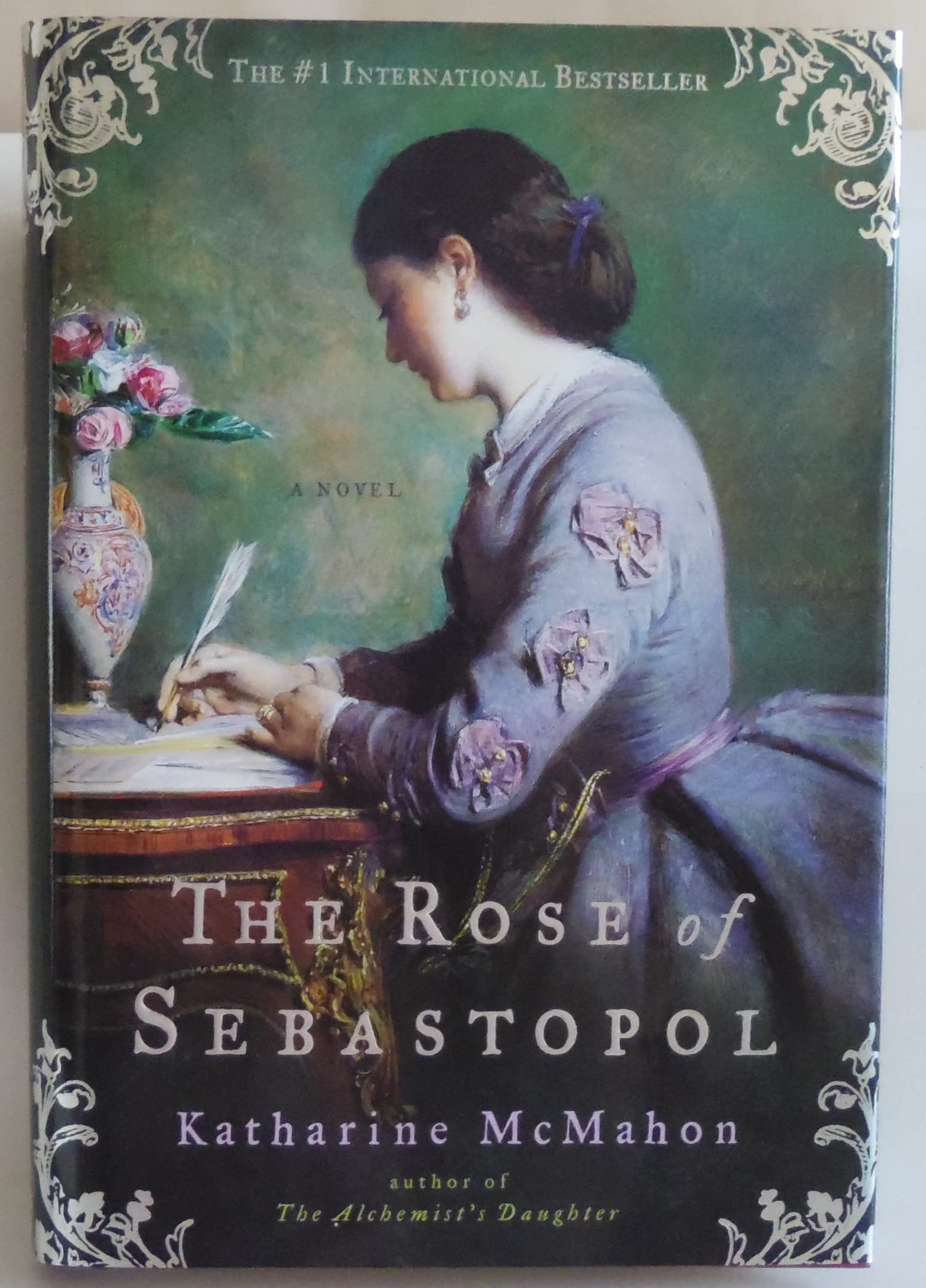



When her surgeon fiancé falls ill while serving in the Crimean War, Mariella Lingwood travels to Italy to care for him only to discover that her cousin, a volunteer in Florence Nightingale's nursing corps, has gone missing; a situation that prompts Mariella's search through multiple countries and challenges her beliefs about her ordered world. This novel works so well on so many levels that it’s certain to appeal to a broad audience. With a practiced hand, McMahon, author of the best-selling The Alchemist’s Daughter (2006), physically and psychologically entrenches her characters in the mid-nineteenth century, providing readers with a fascinating window to Victorian lifestyles, mores, and mind-sets. When relatively sheltered and complacent Mariella Lingwood travels far beyond her well-heeled London comfort zone, her life is forever altered in unexpected ways. Setting out to care for her fiancé, a Crimean War surgeon who has fallen ill, Mariella learns that her cousin Rosa, a battlefield nurse, has gone missing. As the mystery deepens and Mariella attempts to discover what actually happened to Rosa, her investigation morphs into her own journey of self-discovery. Expect high demand for this superbly rendered mix of historical fiction and mystery. --Margaret Flanagan Katharine Mcmahon is the author of The AlchemistÂs Daughter . She is a former English teacher, writing instructor, and actress. From The Washington Post's Book World/washingtonpost.com Reviewed by Philippa Gregory This excellent historical novel is linked to real events in 19th-century England, across Europe and the Crimea. But with remarkable restraint Katharine McMahon has resisted the temptation to re-tell the charge of the Light Brigade, and she also spares us Florence Nightingale. Instead, this is the story of Mariella, a highly conventional girl brought up by nouveau riche parents in London in the 1850s, whose fiance, a promising young surgeon, goes to Crimea to try to improve conditions for troops in the Crimean War. While Mariella waits for his return, her wild-child cousin, Rosa, attempts to enlist with Nightingale's pioneering nurse corps, but is refused and then goes anyway. In turn, her stepbrother is already out there in a cavalry regiment. The deafening silence from these three prompts Mariella to break away from her pleasant life to go find them. London society is beautifully drawn in the early part of the novel, as Mariella goes to church, works on her sewing, obeys her parents and melts with love for her promising young man. Her father is a builder of the new Victorian London, and his interest in drains and their importance to the growing city are nicely explained. Developments in medicine and surgery are part of the backdrop to Mariella's fiance, and McMahon handles this historical detail with easy confidence, too. As the novel is set in the Victorian period, I am also pleased to report that there is a wicked industrialist, guilty of pollution, pedophilia, hypocrisy and hypochondria. But the structure of the novel is unnecessarily complicated. We have three time periods running simultaneously: the first meeting of the cousins Mariella and Rosa, their time in London later and Mariella's journey into Europe to find Rosa. This division teases the reader with the thought that an explanation for all will ultimately be revealed in the childhood of these girls, but there is nothing very nasty in the woodshed that explains the extreme nature of Mariella's cousin. I fear that the author simply fell in love with Rosa and saw her as wonderful heroine material. But she is too wild, too doomed for the modern reader to endure for long: She laughs through her tears, she runs away, she impulsively visits the poor and leaps dangerously from her swing. She is a genre heroine, a Cathy from "Wuthering Heights" without the depth, a Scarlett O'Hara without the grit, all sensibility and no sense. Is she supposed to be lesbian in her passionate attachment to Mariella? They kiss and press their flushed, tear-stained cheeks together in a manner one can only describe as ambiguous. They like to share a bed. Is this sex or sensibility? Does Rosa go to the Crimean War for love of the suffering soldiers or because her Sapphic hopes are disappointed? We don't know, and by the time poor Mariella has trailed after her, through Balaklava, Inkerman and Sebastopol, the story tests our patience. A review should not give away the ending, but I cannot give away the ending of this novel because the author has neglected to write one. It's an absence that damages the very great appeal of "The Rose of Sebastopol." I can tell you that one of the characters is dead, one of them is consumptive, one of them is in action, and one of them is heartbroken. We're only certain of the fate of the dead one -- and we don't really mind -- but what about the rest? Copyright 2009, The Washington Post. All Rights Reserved.