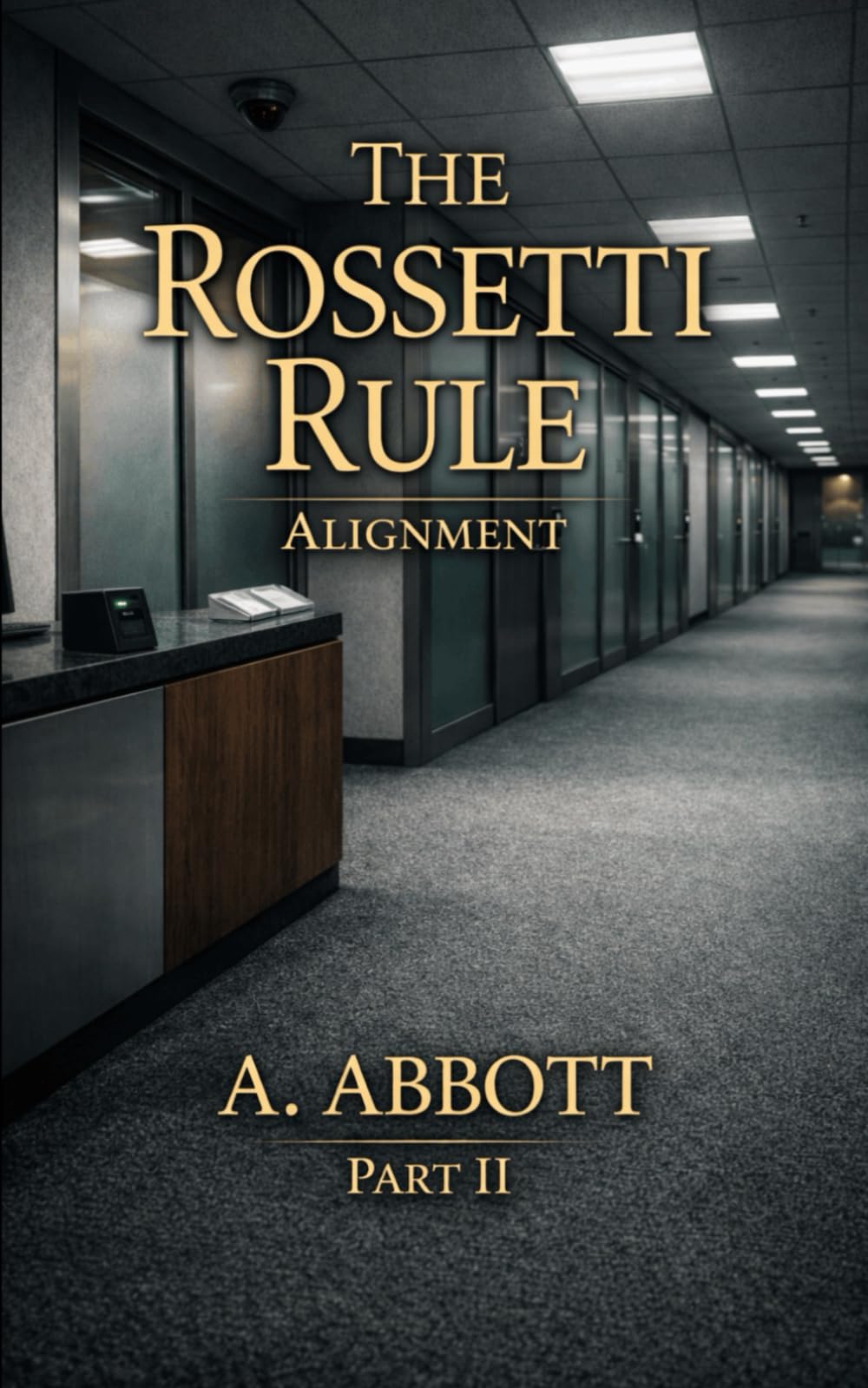



Emma Vale has already been invited inside the Foundation’s world. What she still doesn’t understand is what that invitation requires. Her work continues. Her access deepens. Doors open that she is not meant to linger in, and expectations emerge without ever being stated aloud. Conversations end just before explanations arrive. Elise remains close, attentive and composed, offering reassurance without clarity. Adrian Blackwood stays just beyond reach, shaping outcomes through absence as much as presence. Then Elise shows Emma her name. A list Emma was never supposed to see, at least not yet. A process no one ever explained. A vote taking place without her knowledge or her consent. No one tells her what is being decided. Only that patience is expected. That waiting is sensible. That everything will make sense if she keeps working and trusting the structure around her. It does not. Understanding never comes, only deeper immersion. Each step forward brings fewer answers and sharper consequences. Care begins to feel indistinguishable from control. Silence starts to resemble judgment. Emma has spent years surviving by adapting, by being careful, by letting others set the terms. Inside the Foundation, that instinct is encouraged. Rewarded. Until she begins to recognize the pattern beneath the reassurance. And for the first time, she chooses not to wait. The Rossetti Rule: Alignment is a dark, psychologically charged continuation of Emma’s story, where power is exercised quietly, intimacy is strategic, and being chosen may be far more dangerous than being excluded. A novel of institutional seduction, moral compromise, and the cost of consent when it is never explicitly asked for.