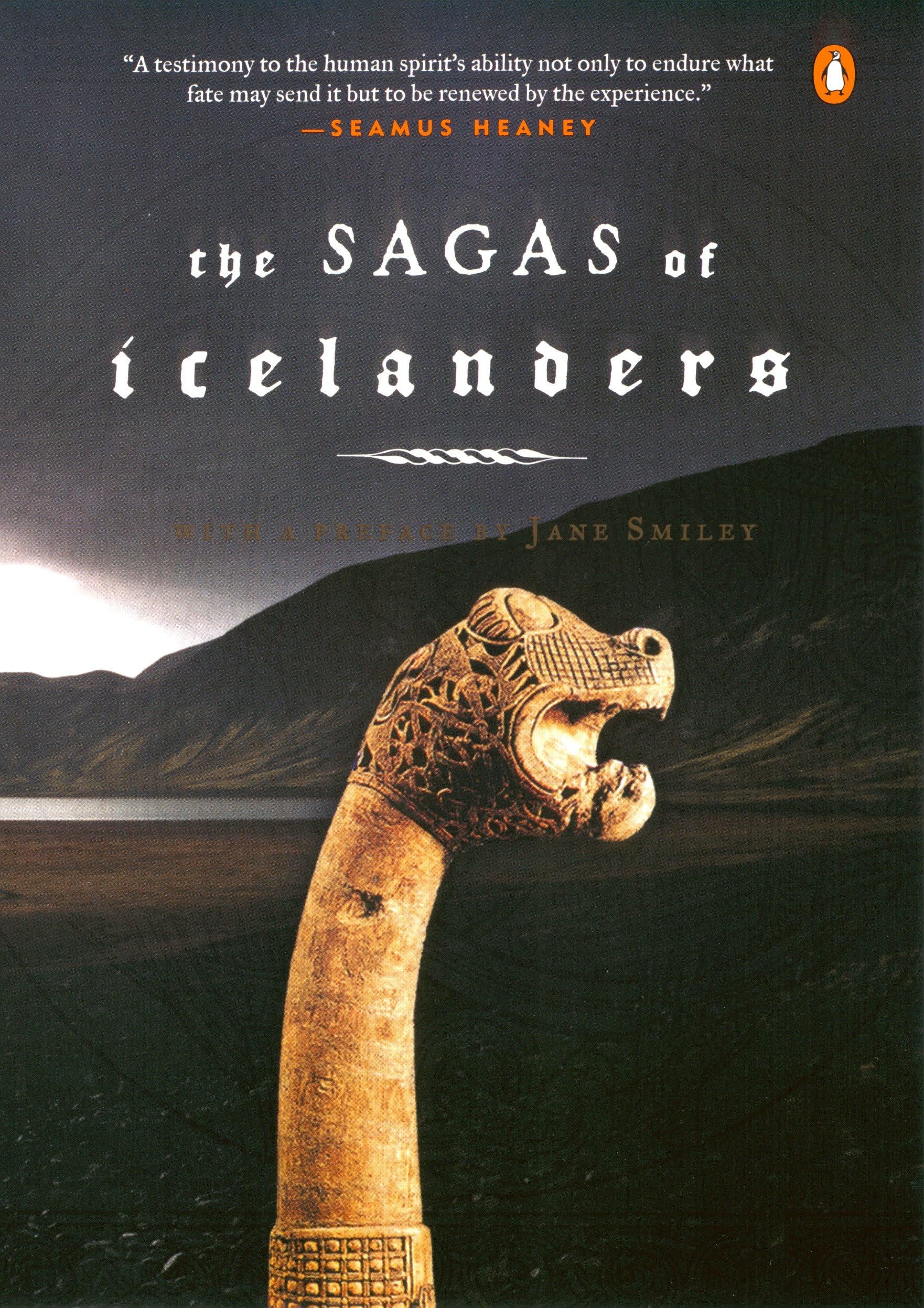



A unique body of medieval literature, the Sagas rank with the world's greatest literary treasures--as epic as Homer, as deep in tragedy as Sophocles, as engagingly human as Shakespeare. Set around the turn of the last millennium, these stories depict with an astonishingly modern realism the lives and deeds of the Norse men and women who first settled Iceland and of their descendants, who ventured further west--to Greenland and, ultimately, the coast of North America itself. The ten Sagas and seven shorter tales in this volume include the celebrated "Vinland Sagas," which recount Leif Eiriksson's pioneering voyage to the New World and contain the oldest descriptions of the North American continent. For more than seventy years, Penguin has been the leading publisher of classic literature in the English-speaking world. With more than 1,700 titles, Penguin Classics represents a global bookshelf of the best works throughout history and across genres and disciplines. Readers trust the series to provide authoritative texts enhanced by introductions and notes by distinguished scholars and contemporary authors, as well as up-to-date translations by award-winning translators. "One of the great marvels of World Literature.... This is a dream come true." -- Ted Hughes "A testimony to the human spirit's ability not only to endure what fate may send it but to be renewed by the experience." -- Seamus Heaney "The glory of the Sagas is indisputable." -- Milan Kundera "Generally excellent, accurate and readable, these translations are sure to become the standard versions." -- The Times Literary Supplement (London) Jane Smiley 's ten works of fiction include The Age of Grief , The Greenlanders , Ordinary Love and Good Will , Moo , A Thousand Acres (which won the Pulitzer Prize), and most recently the bestselling Horse Heaven . Sagas of Icelanders, the (Classics Deluxe Edition) Penguin Classics Deluxe Edition By Jane Smiley Penguin Books Copyright ©2001 Jane Smiley All right reserved. ISBN: 0141000031 Chapter One EGIL'S SAGA Egils saga Skallagrímssonar Time of action: 850-1000 Time of writing: 1220-40 Egil's Saga is acknowledged as one of the masterpieces of the genre, amagnificently wrought portrait of poet, warrior and farmer Egil Skallagrimsson,loosely contained within the framework of the family saga, but with anunusual twist ? the feud that Egil and his forebears wage is with the kingsof Norway. Spanning some 150 years, much of the action takes place outside Icelandand repeatedly returns to Norway, where the saga starts and where its mainthemes are laid out against the background of King Harald Fair-hair'smerciless unification of the realm. Egil's grandfather Kveldulf and fatherSkallagrim refuse allegiance to the king, while Kveldulf's other son Thorolfenters his service but dies at the king's own hands, the victim of maliciousslanders. Beyond the closely mapped sites in Norway, the setting extendsinto vaguer territory elsewhere in Scandinavia, deep into the Baltic andEast Europe, far north to Finnmark, and to England ? much of the knownViking world at that time. Often the adventures and heroics are larger thanlife, but are outrageous and delightfully gross rather than implausible orfantastic. Egil's enemies are motivated by treachery, self-interest and malice,and he confronts them as his forebears did, with the family traits of obstinacy,ruthlessness, animal strength and an instinctive inability to accept authority.To his friend and advocate Arinbjorn in Norway, however, and to otherswhose favour he wins, Egil shows loyalty and unswerving devotion, and heheroically adheres to a brutal but not entirely unappealing sense of justice. The action in Iceland falls into several phases. Skallagrim settles at Borgand is an ideal of pioneer and craftsman, but the social order which he buildsis threatened by the unruly and rebellious Egil. When Egil many years laterinherits his farm, he becomes a respected figure of authority himself, anddoes not engage in feuds in Iceland; his main involvement in a disputeoccurs when he rules in his son Thorstein's favour, acting as a figure ofauthority rather than of force. However, the trick he plans to humiliate thegreedy thingmen in his eighties shows that his relish for provocation hasnever been entirely lost. At intervals he had been drawn away from Borgto pursue his feud with the Norwegian royal family, which escalates into asheer battle of personalities with King Eirik Blood-axe and Queen Gunnhild.After their deaths he seems to realize that Norway is gradually changinginto a world in which he can never be accepted, and Iceland becomes forhim, as for so many other saga heroes, a kind of retirement home for ageingVikings. Although the objective style of the sagas does not allow direct revelationof the characters' thoughts, the portrayal of Egil is exceptionally rich inpsychology. His gestures are dramatic, almost ritualistic, as he sulk