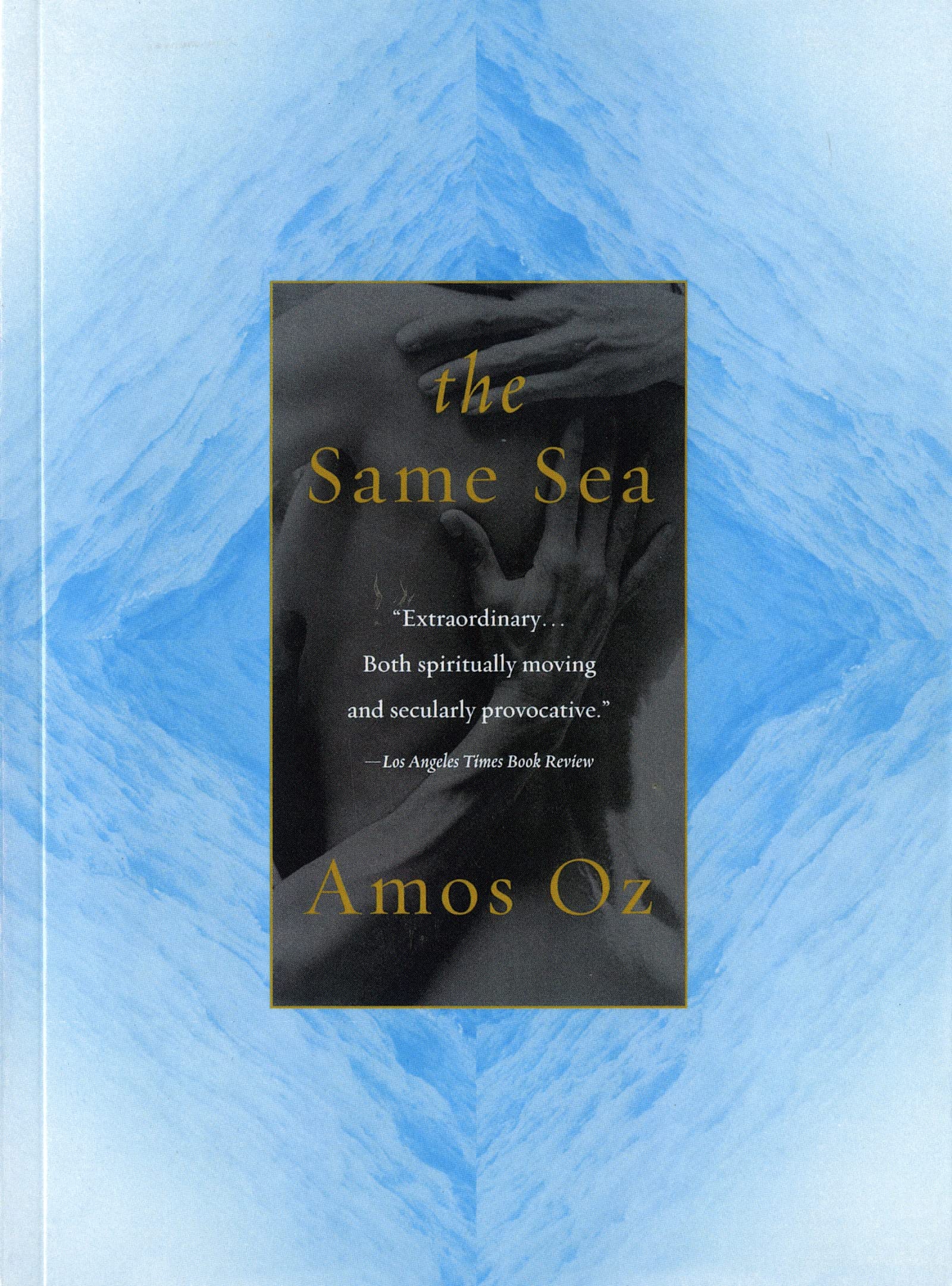



“In a world full of hype, noise, and confusion, the simple lucidity of The Same Sea is totally unexpected.” — New York Times Book Review The Same Sea is Amos Oz’s most adventurous and inventive book, a novel of lyrical beauty and narrative power. We meet the middle-aged Albert; his wife, whom he has lost to cancer; his prodigal son, who wanders the mountains of Tibet hoping to find himself; and his son’s young girlfriend, with whom Albert becomes infatuated. The author himself receives phone calls from his creations, criticizing him for his portraits of them. A fever dream of chaos and order, love and eroticism, loyalty and betrayal. “A prose poem . . . at once melancholic and sensual.” — The New Yorker The Israeli novelist has said that he sees his latest work as a piece of choral music, "a polyphonic assembly of voices." In fact, it is a prose poem describing the lives of four people brought together by death: Albert, an aging tax lawyer whose wife recently died of ovarian cancer; his son Enrico, who flees to Tibet; Enrico's girlfriend, Dita, a voluptuous screenwriter; and Bettine, a widowed accountant who is drawn into an uncomfortable intimacy with Albert. Oz made his name as a political novelist, but this book, at once melancholic and sensual, mentions the peace process only once. Here Oz is more interested in why we choose to live among others, knowing that we die alone: in the end, he suggests, it's for the shared pleasures of our physical existence—whether that pleasure is food, sex, or the sound of waves outside the window. Copyright © 2005 The New Yorker Never has the author's writing been more controlled and polished. . . . An eloquent and thoughtful exposition of human nature, the power of words and the stories they tell."-- The Times Literary Supplement (London) A strange and beautiful book; strange because it's hard to classify, beautiful because it is touching and honest. A book that we wish would never end." -- L'Espresso (Italy) “In a world full of hype, noise, and confusion, the simple lucidity of The Same Sea is totally unexpected.” — New York Times Book Review The Same Sea is Amos Oz’s most adventurous and inventive book, a novel of lyrical beauty and narrative power. We meet the middle-aged Albert; his wife, whom he has lost to cancer; his prodigal son, who wanders the mountains of Tibet hoping to find himself; and his son’s young girlfriend, with whom Albert becomes infatuated. The author himself receives phone calls from his creations, criticizing him for his portraits of them. A fever dream of chaos and order, love and eroticism, loyalty and betrayal. “A prose poem . . . at once melancholic and sensual.” — The New Yorker AMOS OZ was born in Jerusalem in 1939. He is the author of numerous works of fiction and nonfiction, including his acclaimed memoir A Tale of Love and Darkness, which was an international bestseller and a recipient of the National Jewish Book Award. Author photograph © Colin McPherson AMOS OZ (1939–2018) was born in Jerusalem. He was the recipient of the Prix Femina, the Frankfurt Peace Prize, the Goethe Prize, the Primo Levi Prize, and the National Jewish Book Award, among other international honors. His work, including A Tale of Love and Darkness and In the Land of Israel , has been translated into forty-four languages. NICHOLAS DE LANGE is a professor at the University of Cambridge and a renowned translator. He has translated Amos Oz’s work since the 1960s. The Same Sea By Amos Oz Harvest Books Copyright © 2002 Amos Oz All right reserved. ISBN: 9780156013123 Chapter One A cat Not far from the sea, Mr. Albert Danonlives in Amirim Street, alone. He is fondof olives and feta; a mild accountant, he losthis wife not long ago. Nadia Danon died one morningof ovarian cancer, leaving some clothes,a dressing table, some finely embroideredplace mats. Their only son, Enrico David,has gone off mountaineering in Tibet. Here in Bat Yam the summer morning is hot and clammybut on those mountains night is falling. Mistis swirling low in the ravines. A needle-sharp windhowls as though alive, and the fading lightlooks more and more like a nasty dream. At this point the path forks:one way is steep, the other gently sloping.Not a trace on the map of the fork in the path.And as the evening darkens and the wind lashes himwith sharp hailstones, Rico has to guesswhether to take the shorter or the easier way down. Either way, Mr. Danon will get up nowand switch off his computer. He will goand stand by the window. Outside in the yardon the wall is a cat. It has spotted a lizard. It will not let go. A bird Nadia Danon. Not long before she died a birdon a branch woke her.At four in the morning, before it was light, nariminarimi said the bird. What will I be when I'm dead? A sound or a scentor neither. I've started a mat.I may still finish it. Dr. Pintois optimistic: the situation is stable. The left oneis a little