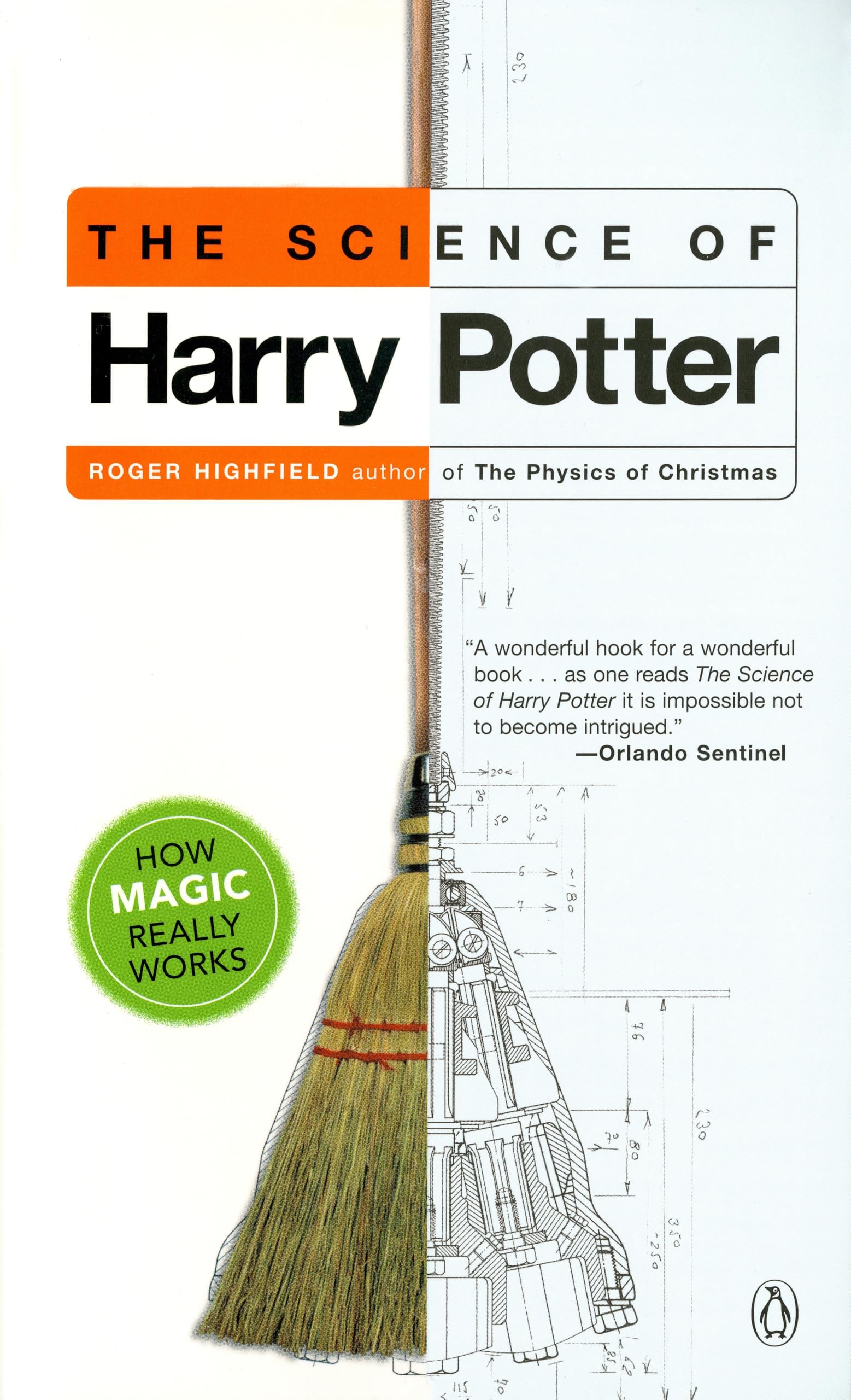



Behind the magic of Harry Potter—a witty and illuminating look at the scientific principles, theories, and assumptions of the boy wizard's world, newly come to life again in Harry Potter and the Cursed Child and the upcoming film Fantastic Beasts: The Crimes of Grindelwald Can Fluffy the three-headed dog be explained by advances in molecular biology? Could the discovery of cosmic "gravity-shielding effects" unlock the secret to the Nimbus 2000 broomstick's ability to fly? Is the griffin really none other than the dinosaur Protoceratops? Roger Highfield, author of the critically acclaimed The Physics of Christmas , explores the fascinating links between magic and science to reveal that much of what strikes us as supremely strange in the Potter books can actually be explained by the conjurings of the scientific mind. This is the perfect guide for parents who want to teach their children science through their favorite adventures as well as for the millions of adult fans of the series intrigued by its marvels and mysteries. • An ALA Booklist Editors' Choice • “Animated by Highfield's enthusiasm for the extraordinary, The Science of Harry Potter is an enjoyably indirect survey of modern science.” —The New York Times Book Review “Far-ranging . . . Enlightens Harry Potter's magical realm, but also the magic taking place in labs and classrooms in our own world.” —Science News “He has interviewed the world's best Muggle scientists to identify the explanations behind everything from the Mirror of Erised to the Invisibility Cloak . . . A great introduction to a whole variety of issues.” —Simon Singh, The Observer “A wonderful hook for a wonderful book . . . as one reads The Science of Harry Potter it is impossible not to become intrigued.” —Orlando Sentinel Roger Highfield was born in Wales, raised in north London and became the first person to bounce a neutron off a soap bubble. He was the science editor of The Daily Telegraph for two decades and the editor of New Scientist between 2008 and 2011. Today, he is the Director of External Affairs at the Science Museum Group. A regular broadcaster on the BBC and the winner of several journalism awards, Highfield is the author of The Physics of Christmas and coauthor of such highly acclaimed books as The Arrow of Time and The Private Lives of Albert Einstein . Broomsticks, Time Travel and Splinching "The Bludgers are up!" yells the commentator. In the airborne stadium with golden goalposts, two teams of seven players zoom around on broomsticks, swooping and weaving as they dodge their opponents' missiles-Bludgers-while trying to score with the red Quaffle. The game of Quidditch enthralls the broomstick-riding Harry, who tries to catch the Golden Snitch and win the game for Gryffindor House. The wizarding world's favorite form of transport, the broomstick, is one of its worst-kept secrets, for every Muggle knows that witches and wizards use them to get about. Even now, scientists and engineers are trying to figure out how they do so. The most prized of racing broomsticks, the Nimbus 2000 and the Firebolt, probably use extremely advanced technology to defy the tug of Earth's gravity, a technology that has massive commercial and scientific implications. Researchers from NASA would sell their grandmothers to obtain Harry's broomstick, not to mention Hover Charms, Mr. Weasley's enchanted turquoise Ford Anglia, the flying motorbike that Hagrid borrowed from Sirius Black, or the candles that hover in the Great Hall of Hogwarts, all of which suggest that witches and wizards must know how to turn gravity on and off at will. Exotic materials that can produce antigravity could also pave the way to wormholes, hypothetical shortcuts between two widely separated points in space-time. You could, for example, step into one end of a wormhole and emerge from the other a million miles away, 10,000 years in the past. There are several episodes in the Harry Potter books where wizards travel through a shortcut to Platform Nine and 3/4, or to visit the Diagon Alley wizard shopping arcade. Maybe they made these quick trips by wriggling through wormholes. Enchanted travel opportunities do not end there. Harry used Floo powder to flit about. Other objects and people can appear out of thin air, whether the Knight bus, the food that fills plates at mealtimes, or a wizard clutching an old boot. Such remarkable materializations could be due to exotic technology, perhaps similar to that used in Star Trek to beam members of the Enterprise down to the surface of alien planets. Today, the possibility of such extraordinary feats taking place can be glimpsed when properties of atoms have been shuffled around the laboratory by practitioners of a leading-edge field called quantum teleportation. The Quest to Fly with Broomsticks It is a dream that is as old as humanity: to step out into thin air and fly like a bird, to cast off the bonds of gravity, to soar free, zooming thr