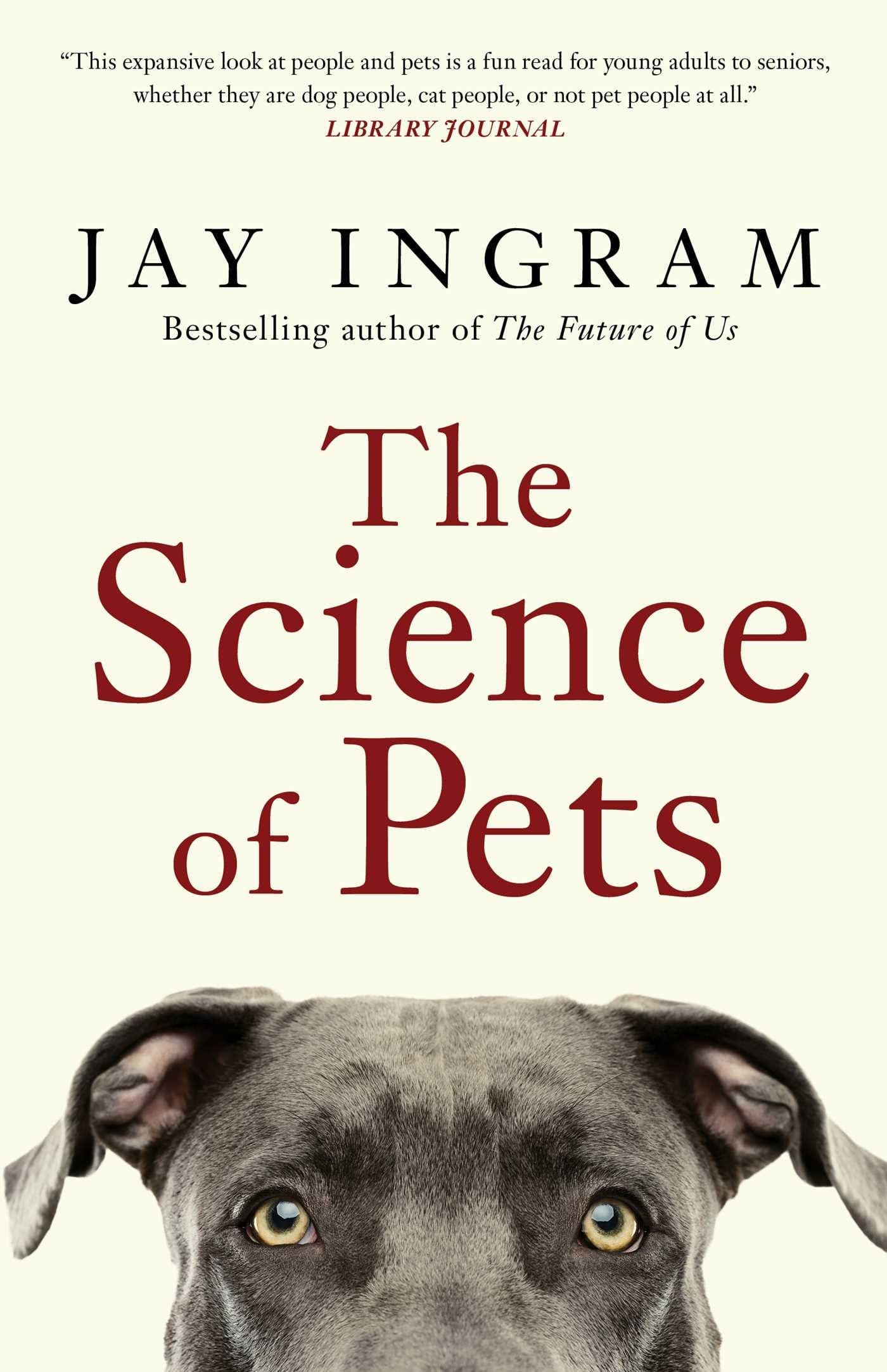



In the tradition of The Inside of a Dog , top science writer and TV personality Jay Ingram shares new insights into the hearts, minds, and bodies of the animals who love us (or do they?). More than one billion pets live in homes around the world, sleeping on dog beds, clawing at cat trees, swimming in bowls, crawling around in aquariums. Canada, the United States, Brazil, the EU, and China make up half of those households, with half of the world’s population owning a pet of some sort. Yet despite the ubiquitous animals that lick our faces and steal food off the counter, we really don’t know a lot about the scientific side of their why do dogs spin around when excited, do our cats really love us, do lizards make good pets, can single-celled organisms be considered pets (you can cut the hydra in two and have two pets!), what are parrots thinking, and can a horse be considered a pet? Or pigs (even those sent to market)? Or praying mantises? Or how about robot pets in Japan, caring for the elderly? Veteran science broadcaster and journalist Jay Ingram, author of twenty popular science titles, including the bestselling Science of Why series, has researched the latest science behind our beloved furry, and not-so-furry, creatures that sleep on our sofas and eat our pizza crusts. Along the way, he discusses the myths and misconceptions about our do dogs always do their business facing north? Why are we seeing a rise in exotic pets such as tigers and bears? Are the deer and foxes we see “rescued” on Instagram considered pets and could they be domesticated? Did dogs entirely evolve from wolves, and why? Can you communicate with a turtle? Do highly intelligent octopi make good pets? And why are baby animals, like baby humans, so darned have they evolved to be born cute as a survival mechanism, and would that cuteness matter to others of their own kind who might consider them their next lunch? Full of fabulous insights, humorous asides, and the wisdom of decades in science reporting, The Science of Pets will elucidate as it entertains. You will never look at your pets the same way again (but be sure they’re watching you closely). Jay Ingram has hosted two national science programs in Canada, Quirks & Quarks on CBC radio and Daily Planet on Discovery Channel Canada. He is the author of twenty books, which have been translated into fifteen languages, including the bestselling five-volume The Science of Why series. In 2015, he won the Walter C. Alvarez Award from the American Medical Writers’ Association for excellence in communicating health care developments and concepts to the public, and from 2005 to 2015 he chaired the Science Communications Program at the Banff Centre. Jay has seven honorary degrees, was awarded the Queen Elizabeth II Diamond Jubilee Medal, and is a Member of the Order of Canada. He is a cofounder of the arts and engineering street festival called Beakerhead in Calgary. He lives in Victoria, British Columbia. Connect with him on X @JayIngram. Chapter 1: Biophilia – CHAPTER 1 – Biophilia In 1984, the renowned biologist Edward O. Wilson, already famed for his studies of ant societies, published a slim book called Biophilia .I Subtitled The Human Bond with Other Species , the book has had a profound impact on how we think about life on earth. Blending his own world travels with the history of biology and the bond between science and the humanities, Wilson built the case that humans are uniquely attracted to all other species, plant and animal. He wasn’t shy about it either. In the first edition of the book, Wilson made statements that strongly suggest he believed biophilia was innate; that is, genetic: “Biophilia… I will be so bold as to define as the innate tendency to focus on life and life processes.”1 Did he really mean that we have genes that underlie our “focus on life”? If so, they are there because they promoted survival in the past—they’ve been naturally selected. You don’t have to rack your brain to think of what might look like obvious examples: being attentive to the movements of prey like deer, or the calls of the wolf, or knowing through learned experience (tuned by genes) where to find food—plants, insects, other animals—as challenging as that might have been. Yet the idea of biophilia being a genetic trait seemed an overreach to some, and concrete evidence for that has been hard to come by. Wilson himself changed his stance somewhat nine years later, with this statement: “Biophilia is not a single instinct, but a complex set of learning rules.”2 That either muddied the waters or opened the door to new ideas, depending on your point of view. A surprise twist to this? You could even use the exact opposite—biophobia—to argue that the much better evidence for the genetic basis of fear of spiders and snakes shows that emotional attitudes toward nature, positive or negative, can be genetic, as Wilson himself believed: “We need to include biophobia under the broad umbrell