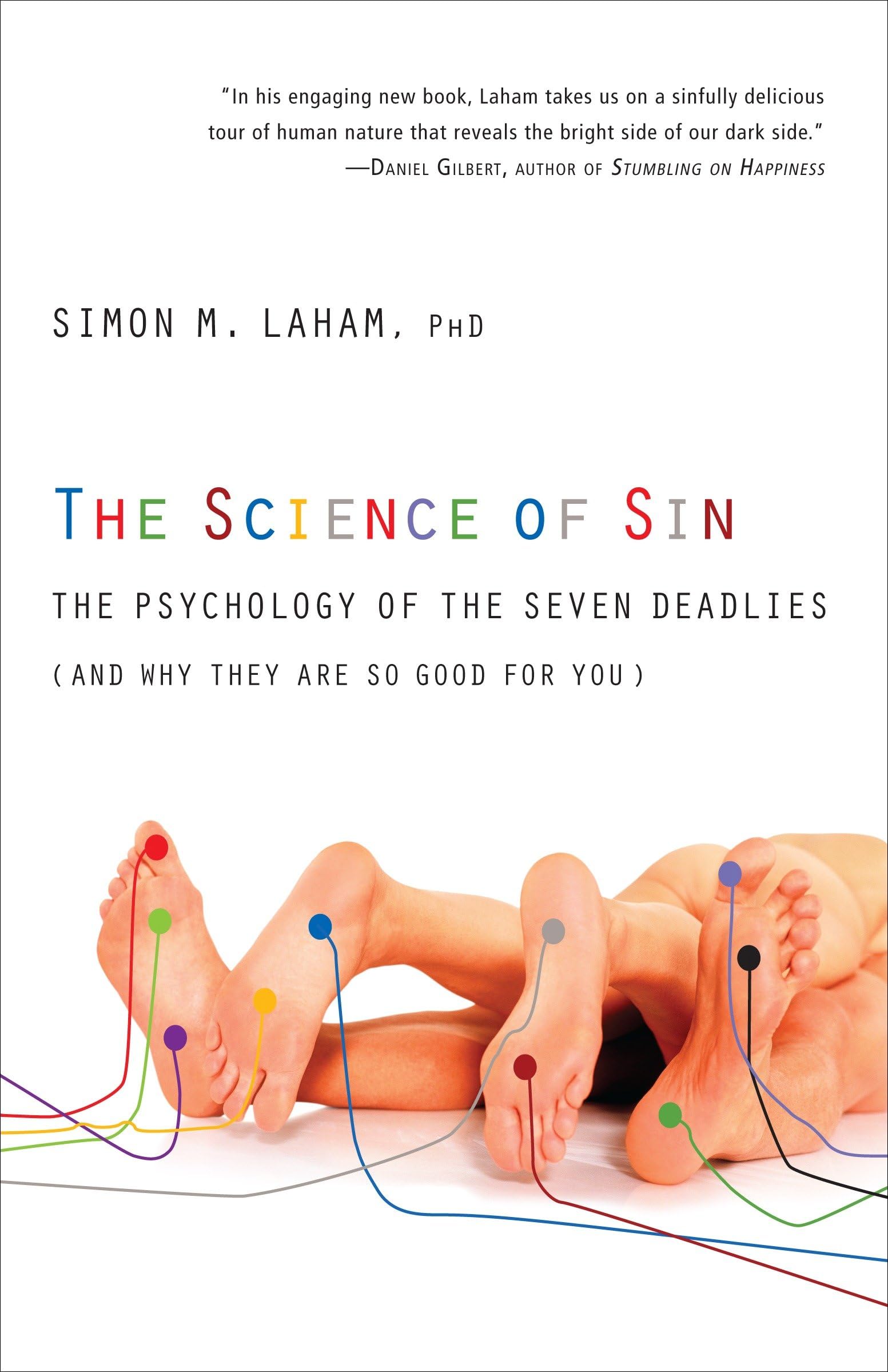
The Science of Sin: The Psychology of the Seven Deadlies (and Why They Are So Good For You)
$12.99
by Simon M. Laham PhD



Pride, lust, gluttony, greed, envy, sloth, and anger. They’re considered “deadly” because of their capacity to generate other evils. The truth is, we all sin and we do it all the time—in fact, usually several times over before breakfast! But human behavior, argues social psychologist Simon Laham, is more complex than “good” or “evil.” In psychology, these sins aren’t considered morally wrong or even uniformly bad, but are treated rather as complex and interesting psychological states that if, indulged wisely, can be functional, adaptive, and lead to a range of positive effects. The Science of Sin takes on these so-called sins one by one and through psychological research shows that being bad can be oh-so-good for you. Did you know that: · Being slow and lazy can help you win the race? · Anger makes you more open-minded? · Coveting what others have not only makes you more creative but bolsters self- esteem? So go ahead, eat that last cookie and kick back on the couch for a day of TV with your neighbor’s boyfriend—from gluttony to greed, envy to lust, Laham shows how even the deadliest, most decadent of vices can make you smart, successful, and happy. You know what they are—lust, gluttony, greed, sloth, anger, envy, and pride, the seven deadly sins. Only, you see, they’re not as deadly as you think. In fact, they can be good for you. For example, lust—more specifically, arousal—heightens one’s sense of urgency about the present moment, not the undefined future. Also, sex in advertising really doesn’t sell; it actually lowers recall of the products being advertised. But arousal stimulates what Laham calls “prosocial,” Good Samaritan–like behavior because, when aroused, one is more apt to want to impress and appear to be an attractive person. Writing in a light, almost breezy manner, social psychologist Laham tries to stay far away from jargon and mumbo-jumbo. Consequently, his book will certainly open readers’ eyes to the unexpected and sometimes very surprising ways in which the seven “deadly” sins can actually enrich their lives and improve their minds. Lots to think about here. --David Pitt “In his engaging new book, Laham takes us on a sinfully delicious tour of human nature that reveals the bright side of our dark side.” – Daniel Gilbert, author of Stumbling on Happiness “A lighthearted foray into motivational research.” - Kirkus Reviews SIMON M. LAHAM, PhD, is a social psychologist whose research focuses on the psychology of morality. He received his PhD at the University of New South Wales, Australia, and is currently a lecturer in psychological science at the University of Melbourne. CHAPTER 1 Lust: Bras, Benevolence, and Better Grades Clothes, rubber, shoes, glasses. This is not a shopping list. These are just some of the myriad and strange objects of lust. Fire and feet, trees and sheep also rate highly on some people's lists of things to do. Not just guys and girls, but animals, vegetables, and minerals of all shapes and sizes are objects of sexual desire. Of course, most of us lust after the regular brand of male or female, with no bells or whistles, no whips or chains or other attachments. But regardless of what turns us on, the consequences of being turned on are much the same. Whether it's after Fred, Fiona, or Fido, when we lust we think differently and we act differently. And much of this thinking and acting is good for us. As the sheer variety of lust objects suggests, this sin is a little more complex than you might think at first glance. We psychologists don't really use the term "lust," at least not often, in professional contexts or polite company. Rather, we talk of "activation of the sexual behavioral system." (I won't do this to you, however. So I'll substitute the simple "lust" for this mouthful.) Such activation consists of a complex of physiological reactions, cognitive and emotional responses, and behavioral changes. The main function of the sexual system, as you might expect, is reproduction. This, of course, doesn't mean that we have sex only to reproduce. In fact, according to a recent count, there are exactly 237 reasons why men and women have sex. These include being drunk, wanting to get a promotion, celebrating a special occasion, and wanting to commune with God, as well as the more mundane wanting to feel loved and simply being horny. Sex can fulfill these sorts of goals, but in evolutionary terms, the sexual system was designed to pass our genes to the next generation. And as you'll see, this system is remarkably well suited for that purpose. When we lust, a cascade of psychological and behavioral shifts is triggered, all aimed at increasing our chances of having sex and, as it turns out, doing much else besides. But before turning our attention to the benefits of lust, let's consider what this sin actually looks like. What Do We Want? "Women want love, closeness and someone who'll be a good father to the