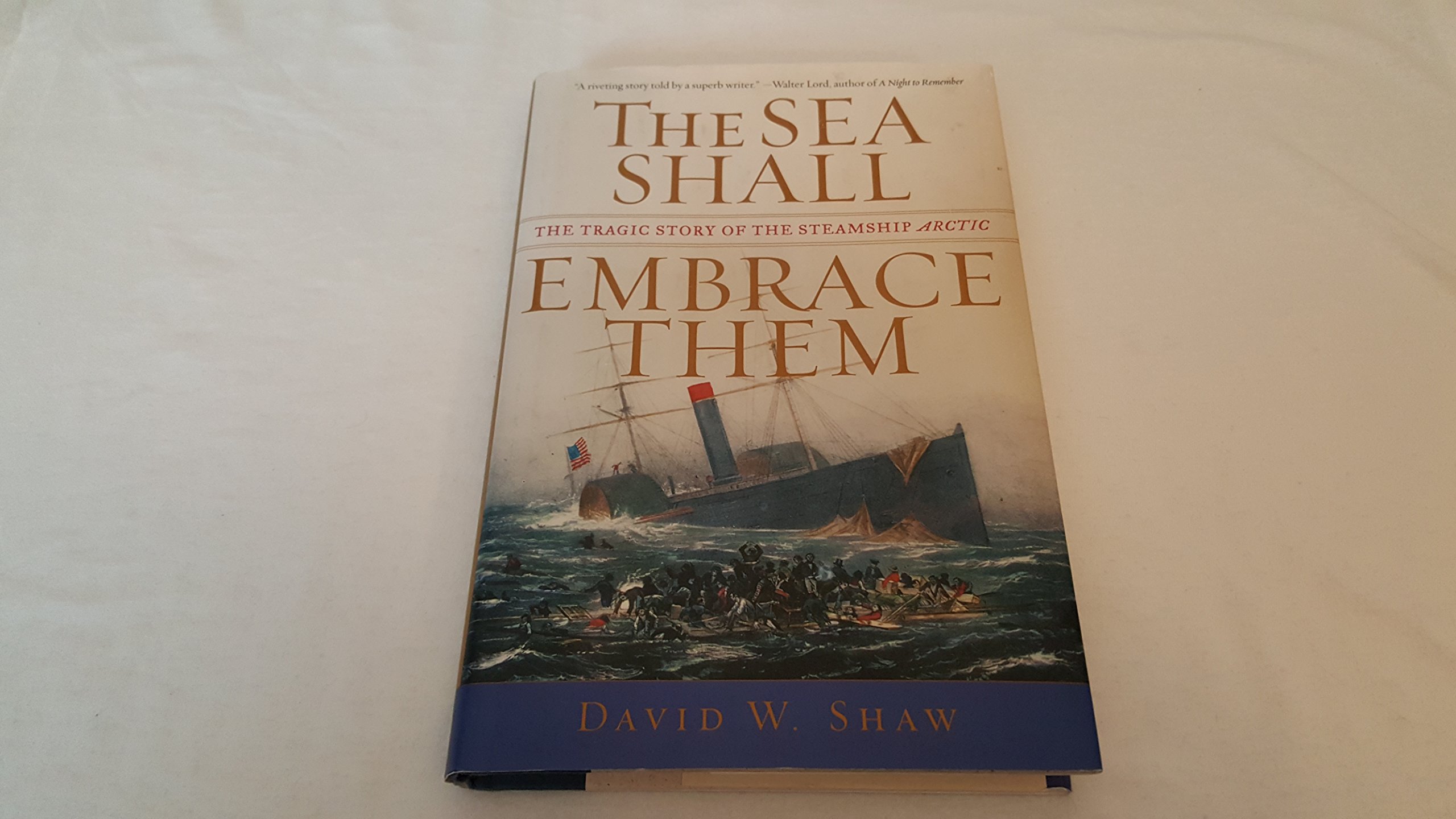
The Sea Shall Embrace Them: The Tragic Story of the Steamship Arctic
$26.85
by David W. Shaw



The 1854 collision at sea between the Arctic and the Vesta, a much smaller French steamship, set in motion one of the most harrowing events in maritime history, with enormous and tragic consequences. David W. Shaw, who brings decades of experience as a seaman to his writing, has based this riveting tale on the firsthand testimony of the few who survived the wreck, including its heroic captain, James C. Luce. It is the story of the brave and dutiful Luce fighting his mutinous crew as they take the lifeboats, leaving hundreds of men, women, and children to suffer a cruel and painful death. It is also the story of those who survived the frigid waters and those who perished -- including Luce's own frail son, who died as the grief-stricken captain helplessly watched. Not only did 400 people die by daybreak, the wreck brought to an end the domination of the seas by the American maritime fleet. Utterly compelling, beautifully written, and a fascinating, heretofore little-known slice of American history, The Sea Shall Embrace Them is a stirring narrative that puts the reader on the deck as a shipful of men, women, and children do battle both with a mighty ocean and with their own baser instincts to survive. By the mid-19th century, steamships were eclipsing traditional sailing ships in the lucrative transatlantic trade. The largest of these, the American Arctic , collided with a smaller vessel in 1854 with a frightful, and unnecessary, loss of life. David W. Shaw's The Sea Shall Embrace Them tells the story of this disaster, eerily similar in many ways to the later sinking of the Titanic . Shaw lays out the immediate and secondary causes of the disaster: bad weather, no established shipping lanes, the ship's owners' preference for speed rather than prudence, and an appalling lack of safety precautions. As well, he describes the suffering and grotesque deaths of many aboard and dozens of acts of pure cowardice on the part of the crew. The writing for the most part is vivid and effective, though the physical layout of the ship is somewhat murky. The story of the Arctic is not only sad and the tragedy avoidable, but one that, as Shaw points out, would be repeated many times in the decades to follow. --H. O'Billovitch Maritime writer Shaw (Inland Passage) believes that the 1850s were the "glory days" of the American transatlantic steamship trade. However, during that same period, the competition among international steamship lines to achieve the fastest transatlantic passage created a " `wicked recklessness of speed' in all weather and circumstances." Shaw suggests that such competition coupled with the common practice of having steamers leave port without enough lifeboats for every person aboard was the overriding cause of disasters like the 1854 wreck of the Collins Line steamship Arctic. Based on firsthand testimony of the few survivors, Shaw's carefully researched account is a vivid portrait of gallantry and cowardice as hundreds of passengers battled for survival in the frigid waters off the coast of Newfoundland; it also provides intriguing insight into an important chapter in the history of the U.S. merchant marine. For Shaw, the collision at sea between the Arctic and the French steamship Vesta is much more than a chronicle of human disaster. The far-reaching consequences of that event foreshadowed the moment in history when, Shaw writes, "Britain, France, and Germany surged ahead in the transatlantic steamship trade" and the United States "turned inward and put her back to the sea." Recommended for all libraries. Robert C. Jones, formerly with Central Missouri State Univ., Warrensburg Copyright 2002 Cahners Business Information, Inc. In the 1850s, the U.S. vied with Britain for commercial supremacy in the waters between New York and Liverpool. American Edward Collins built up a line of steamships and won government subsidies to compete with the British Cunard steamer line. Stretching the company's finances thin and pressing for speed above all other considerations (such as safety or profit), the Collins line was ripe for an accident that would put an end to American contention in the transatlantic arena. On September 27, 1854, the Collins steamer Arctic collided with the French ship Vesta in dense fog. Believing the smaller Vesta to be hopelessly lost, the captain of the Arctic made for shore to save as many of his people as possible. Nevertheless, the Arctic sank, killing every woman and child aboard. Though some crewmen stayed bravely to fulfill their responsibilities, many escaped in near-empty lifeboats, abandoning everyone else to die. Extensively researched, Shaw's reconstruction of the tragedy exposes the villains, praises the heroes, and makes a grim yet gripping story. Gavin Quinn Copyright © American Library Association. All rights reserved Charles Pellegrino coauthor with James Cameron of Ghosts of the Titanic A stunning account, based on logical conclusions and meticulous res