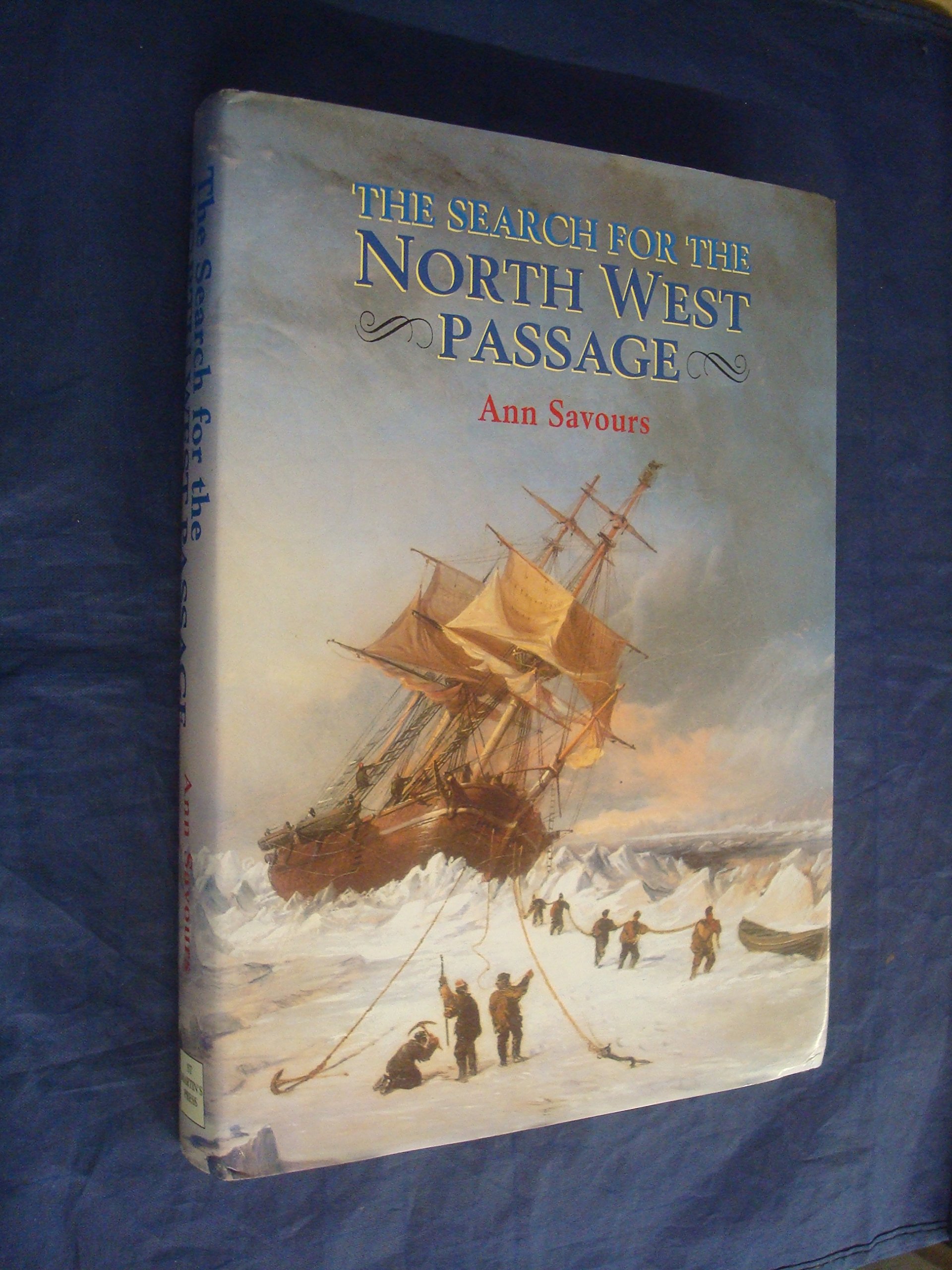



A comprehensive chronicle of the various arctic expeditions, lasting from the sixteenth to the twentieth century, that searched for a Northern route by sea to China, includes accounts of the ill-fated John Franklin effort and Amundsen's eventual success. After Columbus sailed the ocean blue in search of a trading route to China but found his way blocked by North and South America, Britain and Europe's other colonial powers scrambled to find alternate paths to the Far East. Avoiding the south, dominated by Spain and Portugal after the Pope's 1494 Treaty of Tordesillas, the English and the Dutch searched for both a North East Passage, north of Eurasia, and a North West Passage, through the Arctic ice of what is now North America. Although such a passage was to become commercially unimportant (and unviable, thanks to climate), the successful transit of the North West Passage became a Holy Grail and deadly siren for countless exploration teams, and it eluded explorers for nearly 400 years. Ann Savours, one of Britain's leading authorities on this tenacious pursuit, describes in a lively and sprawling account the extraordinary adventures of these courageous expeditions. Drawing heavily on primary sources, including diaries, letters to home, and sketches, Savours's Search makes for engrossing reading: from the Frobisher team's 1570s descriptions of the "countrey people" (later the "Esquimaux") "clad in coates made of the skinnes of beastes" and "sharp-witted, readie to conceive our meaning by signes, and to make answere" to accounts of Sir John Franklin's ultimately successful but completely decimated mission, Savours puts you on the heaving decks of the icebreakers and in the minds of these brave explorers. Excellent illustrations, end notes, and appendices round out the work. --Paul Hughes Once sixteenth-century geographers realized the Americas were a New World, the undying hope for a short water route to the riches of Asia fostered the search for a Northwest passage through the North American land-mass and into the Pacific. Savours is one of Britain's leading experts on the history of polar explorations. In this engrossing and often exciting narrative, she provides in-depth examinations of most of the prominent expeditions that sought the elusive passage. With the skill of a novelist, Savours portrays the steely courage and determination of men who frequently endured great suffering in a frozen, unforgiving environment. She makes effective use of firsthand accounts by the explorers, and the striking illustrations enrich the text. This is a superb rendering of a series of real-life adventures. Jay Freeman Savours (The Voyages of Discovery, not reviewed) provides a thorough and transporting survey of North West Passage explorations, drawn, and laced with excerpts, from primary sources. Using original manuscripts, ship's logs, letters, and diaries, Savours recounts, voyage by voyage, the many attempts to discover a sea route from the North Atlantic to the North Pacific. Savours works in strict chronological mode, proceeding from John Cabot, of whom little is known, up to the expeditions of Sir John Franklin and the eventual navigation through the ice and archipelagoes by Amundsen in his herring boat. The series of voyages, mainly from England, in hopes of tapping into the rumored fabulous wealth of Cathay, are understood here to have comprised three epochs. The first, commercially motivated, sought a route around he Americas to the Far East that avoided the waters controlled by the Portuguese and the Spanish to the south; the second was characterized by a bouillabaisse of scientific curiosity, national pride, and imperial hunger; the last was the era of individual ambition, marked by such personalities as Scott, Shackleton, Amundsen, and Peary. In writing that is formal and unembellished, Savours makes judicious selections from her source material to give each voyage a distinct personality, full of the detail and colorationclothing, food, tools, boas, descriptions of Inuitthat reveal why Hudson's voyage was tragic, Frobisher's misguided, Barrow's endless, Franklin's endlessly popularized. What engages the reader perhaps more than the celebrated voyages of Cook and Davis and Ross are the numerous forgotten sailings by men like George Waymouth, James Knight, Captain Middleton, and Captain Lyon. Savours allows these explorers to rise toward the light, if only briefly, the space they occupy here directly proportional to the paper trail they left in their wake. For so dry a linear narrative, Savours pleasingly manages to summon the atmosphere that attended each phase of the 400-year infatuation with the North West Passage. (85 color and b&w photos and illustrations) -- Copyright ©1999, Kirkus Associates, LP. All rights reserved. No single volume ... covers the history of the elusive stretch of icy water as concisely and comprehensively as The Search for the North West Passage . -- The New York Times Book Revi