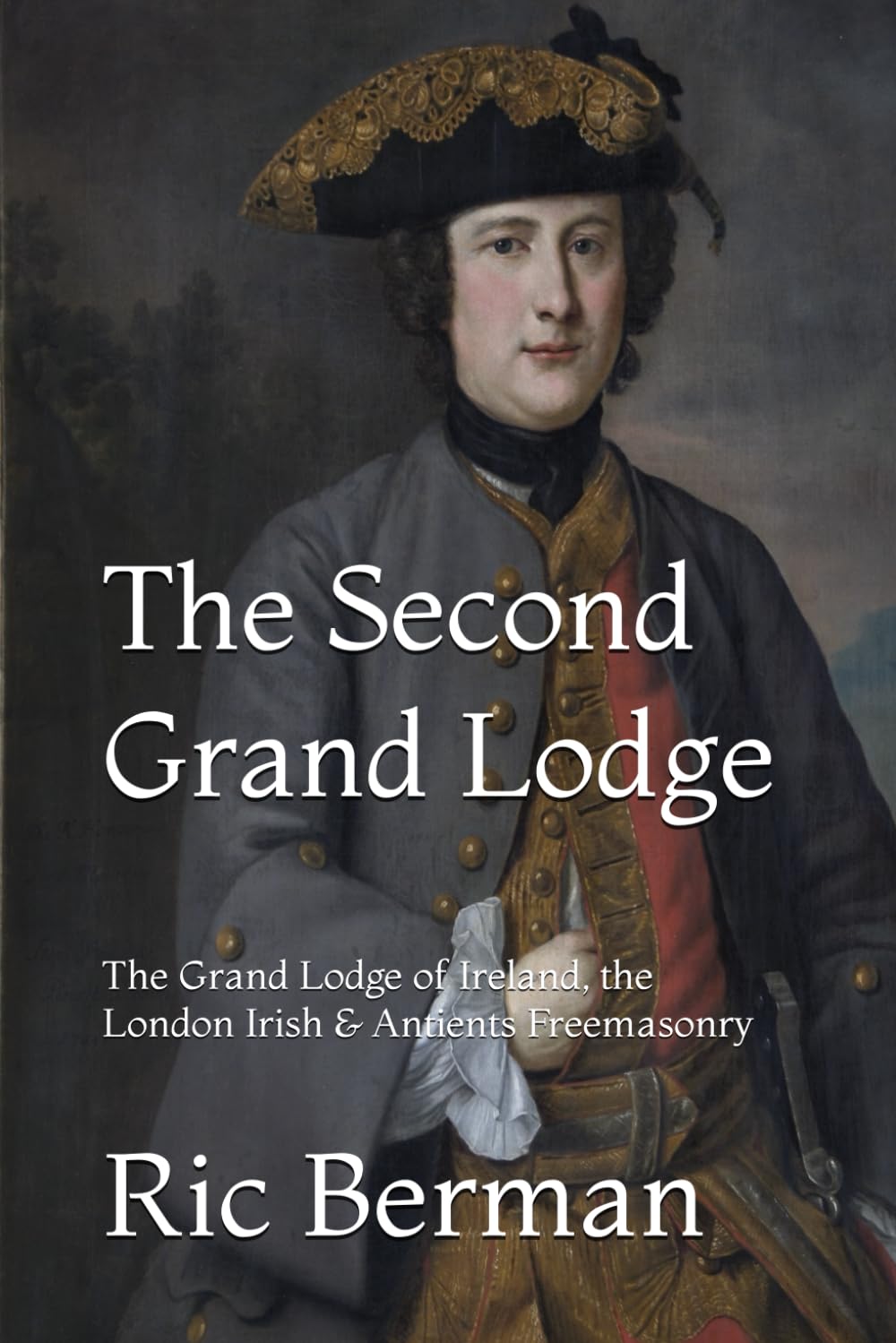
The Second Grand Lodge: The Grand Lodge of Ireland, the London Irish & Antients Freemasonry
$11.00
by Ric Berman



The 2024 Prestonian Lecture. A history of the origins and influence of the Grand Lodge of Ireland, the London Irish and Antients Freemasonry. It might appear when discussing the Union of the Antients and the Moderns that somehow, we get an impression that the Antients might have been the "bad guys" and that the Moderns might be vindicated by the joining together of the two Grand Lodges. Ric Berman's new book The Second Grand Lodge provides an amazing overview of the establishment of the Antients Grand Lodge and the early skirmishes with Premier Grand Lodge back in the mid-18th Century and its subsequent fortunes. More than that it provides a background to the history of the Irish in London at that time and how they became a backbone to the formation of the new Grand Lodge. Berman describes what he calls the Aspirational London Irish and their status in London society which included aristocrats and gentry as well as those of lower rank who worked in London's patchwork of service and manufacturing industry and the working poor. He explains how the Antients' Grand Secretary, Laurence Dermott (1720-1791), an Irishman, " single handedly and virtually from the inception shaped Antients freemasonry ". He was the lynchpin in the new organisation and was responsible for the pejorative description of the rival Grand Lodge of England as the "Moderns". The Antients Grand Lodge was apparently better organised than the Moderns and was the forerunner of many administrative functions which included Grand Lodge Certificates and Lodge warrants. Dermott has his place in the annals of masonic history and is worth serious study even in his own right. This book contains a wealth of information and might possibly require a second reading to make sure that nothing is missed. No doubt the Antients Grand Lodge was highly successful and more egalitarian in outlook with its membership consisting of aspirational middle and lower ranks. The author tells us that this rival Grand Lodge provided prestige, patronage and authority which would be a counterweight to the Grand Lodge of England. Also, the Antients Grand Lodge, he says, " became a focal point for those seeking a more inclusive form of masonic association alongside greater mutuality and spirituality." Of course, from the Antients we get the so called "Atholl Legacy" and many will be familiar with Atholl Lodges in UGLE which had their origins in the Antients Grand Lodge. The 3rd Duke of Atholl had been Grand Master of both the Grand Lodge of Scotland and also of the Antients Grand Lodge and his son the 4th Duke was also an Antients Grand Master. There is an interesting booklet written by Clive Moore which goes some way to explain the Atholl Legacy and also lists those Lodges which have an Antients heritage. Royal Jubilee Lodge No 72 in the Province of Middlesex is given as having this Atholl connection. Reading this book will certainly advance your masonic knowledge and comes highly recommended. Ric Berman is the 2024 Prestonian Lecturer, Indeed, twice apponted, having also served as such in 2016 . WILLIAM O. WARE LODGE OF RESEARCH BOOK REVIEW INVENTING THE FUTURE Dr. Ric Berman Review by Dan M. Kemble Past Master and Fellow William O. Ware Lodge of Research The year 2023 marks the 300th anniversary of the publication of Anderson's Constitutions of 1723. Dr. Ric Berman, a distinguished Masonic author and Past Master of Quatuor Coronati Lodge No. 2076, has produced a work that introduces the reader not only to the contents of the Constitutions of 1723, but also to the consequences of their appearance in Freemasonry six years after the founding of the premier Grand Lodge. Inventing the Future leads the reader through the historical setting for the publication of Anderson's and illustrates just how radical the underlying ideology of the Age of Enlightenment appeared in early 18th Century England. Dr. Berman sets the stage by describing the religious and political chaos that existed in England at the end of the 17th Century. With the English king being head of church as well as head of state, political and religious differences were both intensified and inseparable. The coronation of George I as King in 1714, and the resulting Jacobite Insurrection, settled the question of whether the monarchy would be Protestant rather than Catholic, butthe social atmosphere of the time remained highly charged. In that climate of division and dissent, The Grand Lodge of England, formed on St. John the Baptist's Day, June 24, 1717, provided a haven of respite and civility from the rough and overheated rhetoric of sectarian dispute. Dr. Berman enumerates the five radical concepts that were found in the philosophies of the Enlightenment Era, and which were incorporated into the fabric of the premier Grand Lodge. Those five ideas are: 1. Religious tolerance; 2. Leadership by meritocracy; 3. Civility; 4. Scientific and artistic education; and 5. Societal and personal self-improvement. Each of those