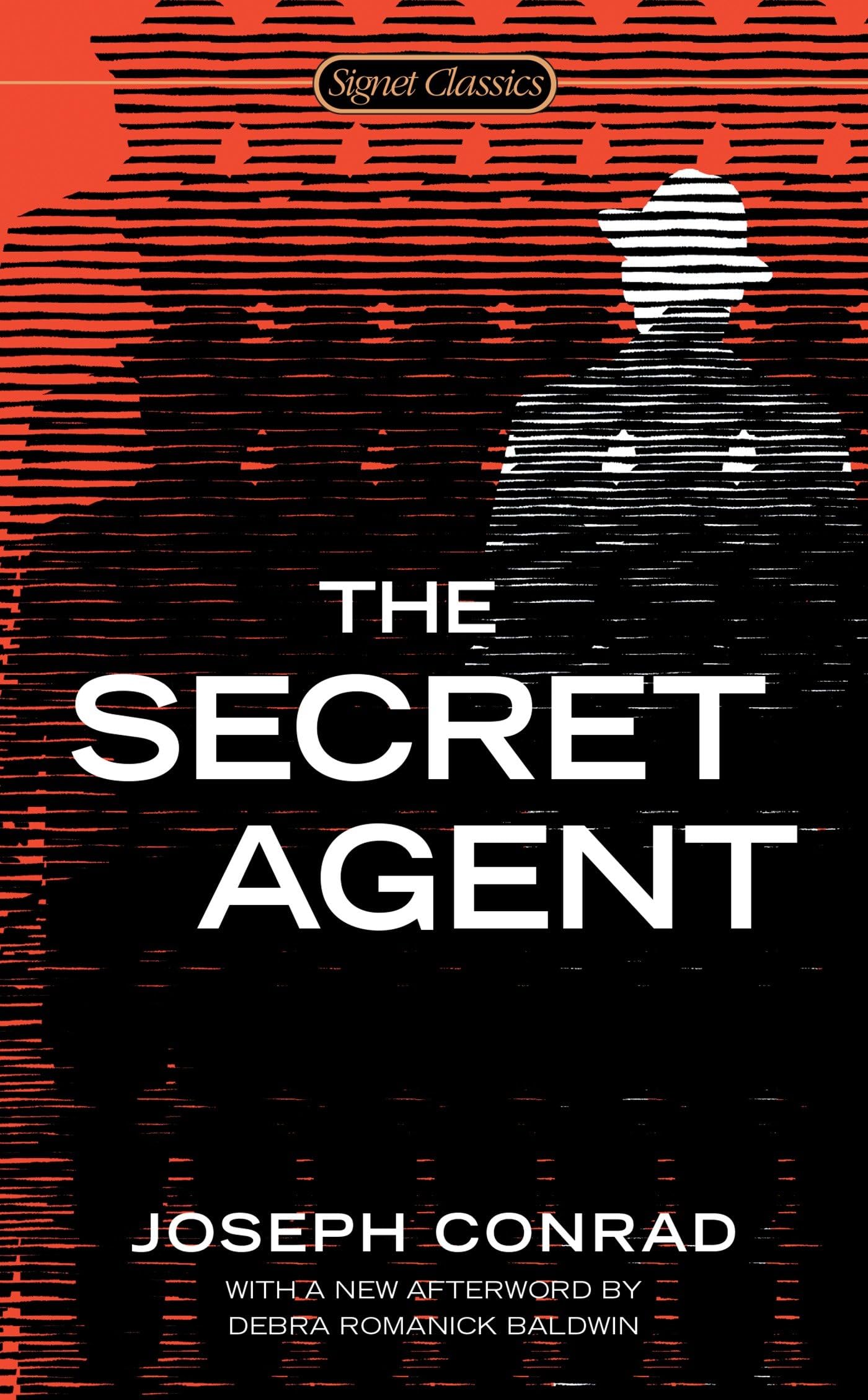



This chillingly prophetic examination of terrorism by the author of Heart of Darkness is the literary precursor to the espionage thrillers of Graham Greene and John Le Carré. Inspired by an actual attempt to blow up the Greenwich Observatory, The Secret Agent portrays the world of late-nineteenth-century London, with its fatuous civil servants, corrupt police, and squalid underworld characters like Verloc, a pornographer acting as a government informant. Verloc’s assignment is to provoke the radicals whose group he has penetrated into committing an act of such violence that they will be discredited and their appeal to the masses destroyed. With its questionable characters and amoral caricatures, the novel is as much a black satire of English society as a frightening mirror of the present day. With an Introduction by E. L. Doctorow and a New Afterword by Debra Romanick Baldwin “ The Secret Agent is an astonishing book. It is one of the best—and certainly the most significant—detective stories ever written.” — Ford Madox Ford “ The Secret Agent is an altogether thrilling ‘crime story’ . . . a political novel of a foreign embassy intrigue and its tragic human outcome.” — Thomas Mann “One of Conrad’s supreme masterpieces.” — F. R. Leavis “[ The Secret Agent ] was in effect the world’s first political thriller—spies, conspirators, wily policemen, murders, bombings . . . Conrad was also giving artistic expression to his domestic anxieties—his overweight wife and problem child, his lack of money, his inactivity, his discomfort in London, his uneasiness in English society, his sense of exile, of being an alien . . . The novel has the perverse logic and derangement of a dream.” —from the Introduction to the Everyman's Library edition by Paul Theroux Joseph Conrad (1857–1924) lived a life as fantastic as any of his fiction. His aristocratic parents were ardent Polish patriots who died when he was a child as a result of their revolutionary activities. Conrad went to sea at sixteen, taught himself English, and gradually worked his way up until he passed his master’s examination and was given command of merchant ships in Asia and on the Congo River. At the age of thirty-two, he decided to try his hand at writing. Although his work won the admiration of critics, sales were small. He was a nervous, introverted, gloomy man for whom writing was an agony, but he was rich in friends who appreciated his genius, among them Henry James, Stephen Crane, and Ford Madox Ford. E. L. Doctorow is the author of numerous acclaimed novels, including Ragtime , World's Fair , and Billy Bathgate . Debra Romanick Baldwin is Associate Professor of English and Director of the Writing Program at the University of Dallas, where she teaches the western literary tradition from Homer and Dante to Woolf and Bellow. Past President of the Joseph Conrad Society of America, she has written over a dozen articles and essays on Conrad, as well as on Flannery O’Connor, St. Augustine, and Primo Levi. I Mr. Verloc, going out in the morning, left his shop nominally in charge of his brother-in-law. It could be done, because there was very little business at any time, and practically none at all before the evening. Mr. Verloc cared but little about his ostensible business. And, moreover, his wife was in charge of his brother-in-law. The shop was small, and so was the house. It was one of those grimy brick houses which existed in large quantities before the era of reconstruction dawned upon London.1 The shop was a square box of a place, with the front glazed in small panes. In the daytime the door remained closed; in the evening it stood discreetly but suspiciously ajar. The window contained photographs of more or less undressed dancing girls; nondescript packages in wrappers like patent medicines; closed yellow paper envelopes, very flimsy, and marked two and six in heavy black figures; a few numbers of ancient French comic publications hung across a string as if to dry; a dingy blue china bowl, a casket of black wood, bottles of marking ink, and rubber stamps; a few books, with titles hinting at impropriety; a few apparently old copies of obscure newspapers, badly printed, with titles like The Torch, The Gong—rousing titles.2 And the two gas jets inside the panes were always turned low, either for economy’s sake or for the sake of the customers. These customers were either very young men, who hung about the window for a time before slipping in suddenly; or men of a more mature age, but looking generally as if they were not in funds. Some of that last kind had the collars of their overcoats turned right up to their moustaches, and traces of mud on the bottom of their nether garments, which had the appearance of being much worn and not very valuable. And the legs inside them did not, as a general rule, seem of much account either. With their hands plunged deep in the side pockets of their coats, they dodged in sideways, one sh