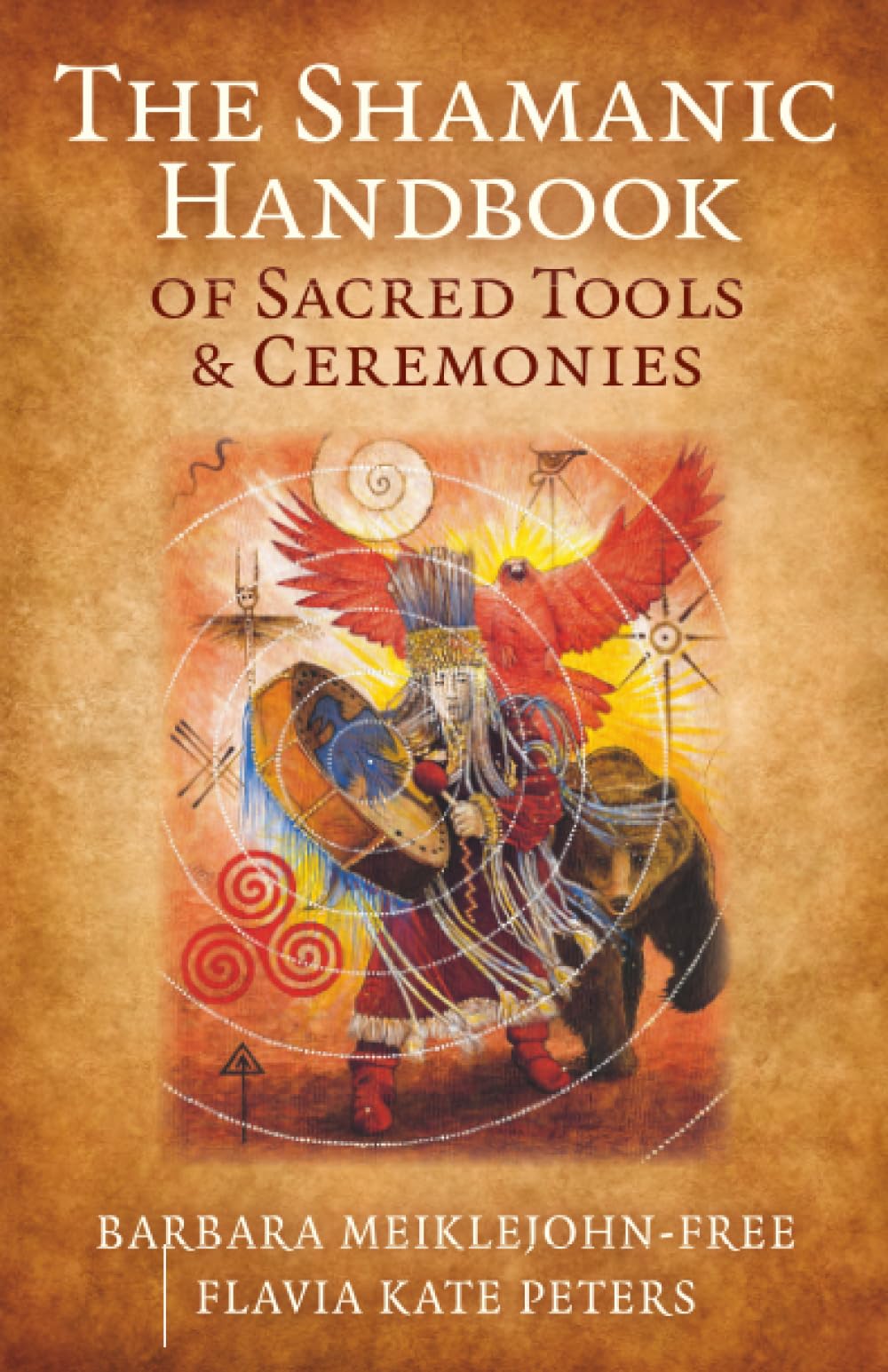



The Shamanic Handbook of Sacred Tools and Ceremonies is the perfect companion book for all budding and well-practiced shamans, wise men and women who partake in sacred ceremonial, ritual and healing work. It also serves as an excellent introduction into the practical side of earth-centred traditions. As you begin your path as a Shaman, of the 'One who knows', your journey will be one of remembrance as you connect with the oldest and most holistic traditions of the ancestors. Barbara Meiklejohn-Free is the UK’s best loved and hardest working ‘Wisdom Keeper’ – teacher, advocate and protector of the great Earth-centred traditions. Best-selling author Barbara also leads people on guided site visits across the globe to meet the native people, to gain an understanding first-hand of the way they live according to the teachings of Mother Earth. Flavia Kate Peters is a best-selling author, speaker, therapist, singer and a natural mystic who connects with the ancient deities of the Celtic British Isles. Known as ‘The Faery Shaman’, Flavia Kate works very closely with the nature spirits and faeries. She offers readings and guidance as well as giving talks and workshops at events and shows throughout the year. The Shamanic Handbook of Sacred Tools and Ceremonies By Barbara Meiklejohn-Free, Flavia Kate Peters John Hunt Publishing Ltd. Copyright © 2014 Barbara Meiklejohn-Free and Flavia Kate Peters All rights reserved. ISBN: 978-1-78535-080-1 Contents Introduction, 1. Altar, 2. Amulets and Talismans, 3. Ancestors, 4. Ceremonies, Rituals and Initiation, 5. Cosmic Tree, 6. Crystals, 7. Directions, 8. Divination, 9. Dreams and the Dreamtime, 10. Drums, 11. Elements, 12. Feathers, 13. Great Spirit, 14. Healing, 15. Herbs, 16. Incense Sticks, 17. Journeying, 18. Medicine Bags, 19. Medicine Bundles, 20. Medicine Names, 21. Medicine Wheel – Creating Sacred Space, 22. Plant Medicine Teachers, 23. Power Animals and Allies, 24. Protection, 25. Rebirthing, 26. Rites of Passage, 27. Shapeshifters, 28. Spirit Guardians and Guides, 29. The Shaman, 30. Trance States, 31. Transmigration, 32. Tree Spirits, About the Authors, CHAPTER 1 Altar Today the altar is often associated with religion. It is often a sacred space of rich, tapestried cloths, upon which lie lavish artefacts of gold in the holiest area of the place of worship where only the priest (or equivalent) has full access, to stand in the presence of God. It can be seen as a place of sacred reverence and also a place of fear, where prayers and confessions are laid bare. Altars are usually found at, and are part of, shrines, temples, churches and other places of worship and were used by ancient cultures such as the Egyptians, Greeks, Norse and the Celts. Today they are used particularly in Christianity, Buddhism, Hinduism, Shinto and Taoism, as well as in Neo-Paganism and Ceremonial Magic. On our worldly travels we embrace the peaceful traditions of the Far East. For in every doorway, on every pathway, in corners of rooms, on beaches, rocks and even in cars are small altars, adorned with flowers and the sweet aroma of burning incense, dedicated as shrines to the spirits. This is the way of the people here, for they honour Great Spirit in all that they do, in their work, in their homes, for life itself and it is wonderful to see. Although nature itself is an altar to the Shaman, having one's own personal altar (Thaan) helps to set one's focus for rituals, ceremonies and prayers. This is a sacred space specifically for the laying out of ritual tools, for holding pictures or artefacts of chosen deities and ancestors; a place of worship, of honouring personal beliefs and a meeting place between the ordinary and spiritual realms. An altar doesn't have to be anything grand, so do not worry if you don't have the room in your home, or other chosen place, for anything lavish. Your altar can simply be made from a table with a cloth on it in a quiet corner, a mantelpiece, window sill or bathroom shelf. It doesn't matter so long as you have set the right intention. You may wish to spend time creating a small space that reflects your journey and to honour the blessings and gifts given by the spirit world and Mother Nature, such as flowers, tobacco, sage, or other representations of what is sacred to you. This gift is a thank you and a pause of reflection on the gifts from the worlds the Shaman walks between. As a Shaman you will be working with and respecting the four basic elements of Earth, Air, Fire and Water combined with the fifth element of Spirit, the life force that runs through all that is living. You will need to find items to represent each of these elements for your altar ... To Represent the Element of Earth: A black candle A bowl of soil from your homeland or a sacred site A potted plant or flowers White Californian sage (this is cleansing and purifying; when lit it can count towards the Fire element too) Cry