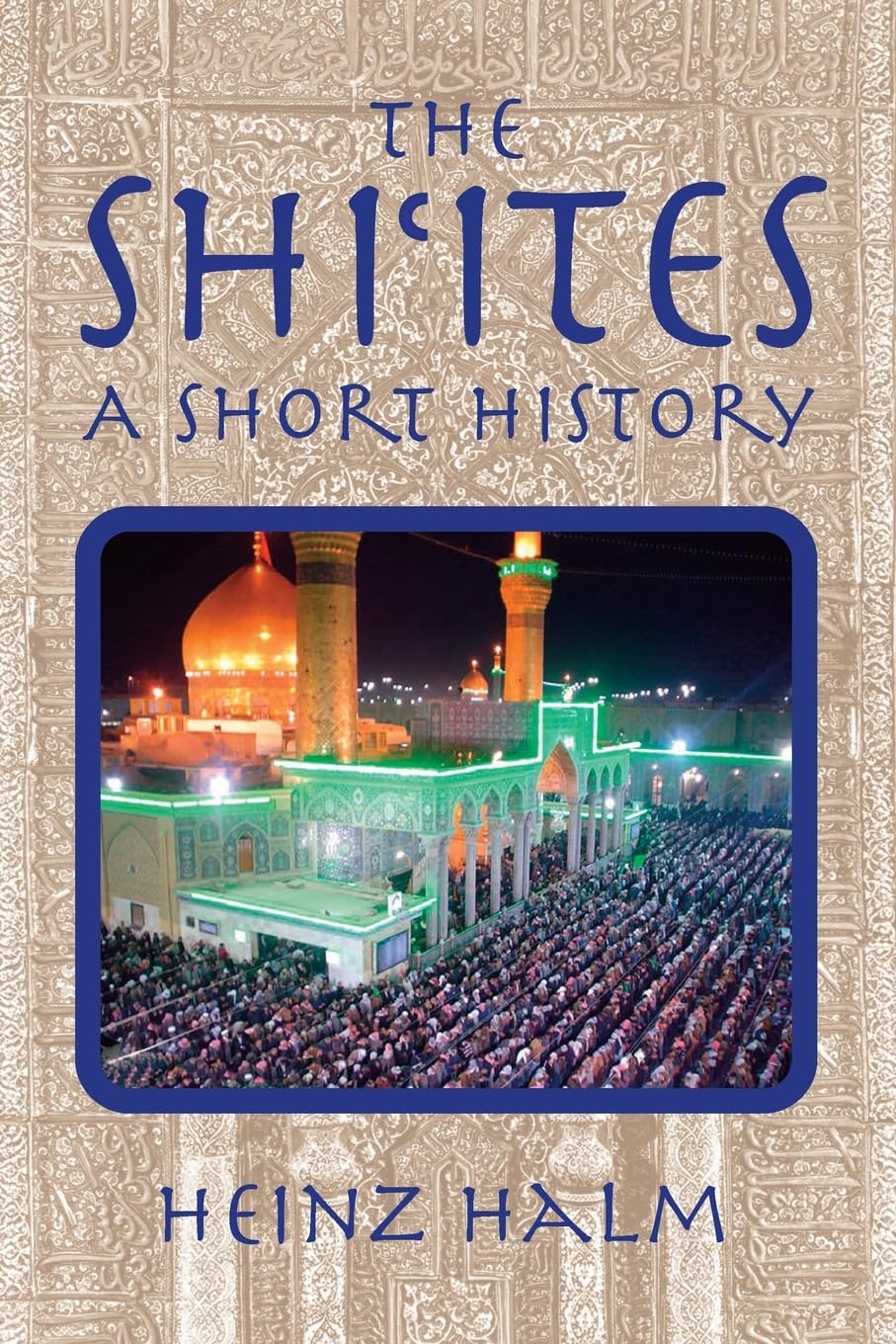



"Combining history, comparative religion, and political interpretations, the author elucidates Shi'ism and political developments in the Middle East for the Western reader. The author highlights three main aspects of Shi'a Islam:its historical development, especially the history of the Imans, the rituals, including flagellation and passion plays, and the rules of the mullahs, known as the "government of experts." Halm explains the exalted position of the religious scholars, the mullahs and ayatollahs, who established themselves as clergy in the Safavid Empire and defined themselves as the "administrators" of the Hidden Iman. The relationship between the rulers of Iran and the mullahs has always been tense.The Khomeini revolution was the powerful culmination of a lengthy historical conflict that has expanded into Iraq and Lebanon after the American invasion in Iraq." "Heinz Halm, an internationally renowned expert on Shi'ism, provides a concise and highly readable introduction to the historical and intellectual development of Twelver (Imamite) Shi'a Islam. He also presents Shi'i rituals as seen by European travelers. Halm considers these rituals as more important than Shi'a legal codes in terms of influencing culture. For example, he maintains that the 1979 Iranian revolution selectively utilized those historical and cultural symbols of Shi'ism that appealed to the sentiments of the masses; these symbols thus became tools in the hands of religious leaders." -- Journal of Palestine Studies "This very readable and useful account of the travails of the Shi'ah begins with the martyrdom of al-Husayn in 680 and advances to the 11th Imam, with the 12th's fate being uncertain. The work is divided into five parts. The first recounts the life and fate of the 12 Imams, including the one in occultation. Part 2 details the lamentations, flagellations, processions, and passion plays associated with the death of Husayn, including the accounts of the earliest Western travelers and their observations. Part 3 focuses on what is termed "The Islam of the Mullahs," who purportedly serve as representatives and spokesmen of the hidden Imam; it includes their formulation of Shi'i law and how they related to the established government. The fourth part deals with the revolutionary ideology of the ayatollahs toward the outside world, focusing on Khomeini's role and on Qom as the center of their authority as mujtahids. The last part treats the Shi'ah outside Iran, including Iraq, the Indian subcontinent, and Lebanon. This all-encompassing short history is illustrated with some print reproductions of Shi'ite rituals. Short bibliography. A concise, timely work that should appeal to those who have no prior knowledge of Shi'ism. Summing Up: Highly recommended. All levels/libraries. -- C. E. Farah, University of Minnesota -- Choice Magazine College library shelves now groan under the weight of Darfur commentary. Policy-oriented in origin, most of these contributions emphasize ethno-racial conflict, governing elite authoritarianism, past discrimination, and internal warfare. If there is one book to put the Darfur crisis in its necessary context, this is it. Collins, a respected historian (Univ. of California at Santa Barbara), has been writing about Sudan since the 1960s; Burr is a former State Department analyst. They locate the crisis in a wider circle of conflict instigated about 40 years ago by Libya's mercurial petty imperialist Muammar Qaddafi to establish a puritanical, Arab Islamic authority in central Africa with the help of ambitious leaders in Chad and Sudan. This volume expands their earlier collaboration, Africa's Thirty Years War: Libya, Chad and the Sudan, 1962-1999 (CH, Jan'00, 37-2912). This volume makes clear genocide in Darfur emerges from an enduring African regional and international crisis involving radical Islamic ideologies, cross-border enmities, and Arab-African tensions. It will require much more than humanitarian assistance and UN-African Union military cooperation to bring peace. The Libya-Chad-Sudan triangle remains an incubator of wider unrest and wars, a major challenge in the present global conflict. Summing Up: Highly recommended. Upper division undergraduates through practitioners. -- H. Glickman, emeritus, Haverford College -- November 2007 Vol. 45 No. 03 CHOICE Magazine. Heinz Halm, an internationally renowned expert on Shi'ism, provides a concise and highly readable introduction to the historical and intellectual development of Twelver (Imamite) Shi'a Islam. He also presents Shi'i rituals as seen by European travelers. Halm considers these rituals as more important than Shi'a legal codes in terms of influencing culture. For example, he maintains that the 1979 Iranian revolution selectively utilized those historical and cultural symbols of Shi'ism that appealed to the sentiments of the masses; these symbols thus became tools in the hands of religious leaders." -- Journal of Palestine Studies J