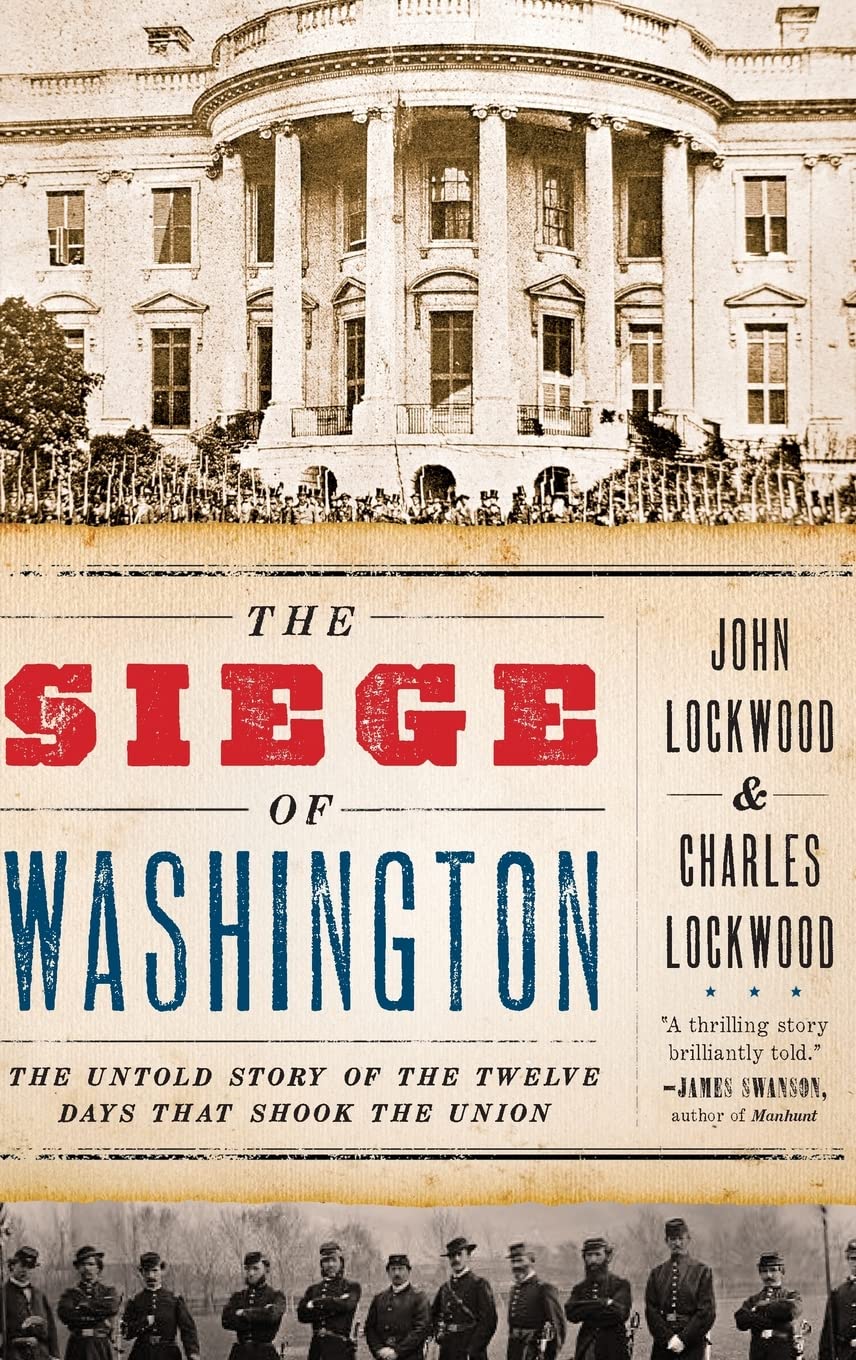
The Siege of Washington: The Untold Story of the Twelve Days That Shook the Union
$16.59
by John Lockwood



Product Description On April 14, 1861, following the surrender of Fort Sumter, Washington was "put into the condition of a siege," declared Abraham Lincoln. Located sixty miles south of the Mason-Dixon Line, the nation's capital was surrounded by the slave states of Maryland and Virginia. With no fortifications and only a handful of trained soldiers, Washington was an ideal target for the Confederacy. The South echoed with cries of "On to Washington!" and Jefferson Davis's wife sent out cards inviting her friends to a reception at the White House on May 1. Lincoln issued an emergency proclamation on April 15, calling for 75,000 troops to suppress the rebellion and protect the capital. One question now transfixed the nation: Whose forces would reach Washington first: Northern defenders or Southern attackers? For 12 days, the city's fate hung in the balance. Washington was entirely isolated from the North--without trains, telegraph, or mail. Sandbags were stacked around major landmarks, and the unfinished Capitol was transformed into a barracks, with volunteer troops camping out in the House and Senate chambers. Meanwhile, Maryland secessionists blocked the passage of Union reinforcements trying to reach Washington, and a rumored force of 20,000 Confederate soldiers lay in wait just across the Potomac River. Drawing on firsthand accounts, The Siege of Washington tells this story from the perspective of leading officials, residents trapped inside the city, Confederates plotting to seize it, and Union troops racing to save it, capturing with brilliance and immediacy the precarious first days of the Civil War. The Siege of Washington: The Twelve Days That Shook the Union A Timeline April 14, 1861 The Union flag is lowered over Fort Sumter in surrender. In Washington, President Lincoln drafts an emergency proclamation calling for 75,000 Union volunteer troops to suppress the rebellion and defend the capital. Lincoln tells his cabinet, “If I were Beauregard, I would take Washington.” April 15 Lincoln formally issues his emergency proclamation. Americans in both the North and South are transfixed by a single question: Who will reach the capital first? Confederate attackers? Or Union defenders? April 16 As militiamen begin to mobilize across the North, General Winfield Scott has only 900 U.S. Army troops and 600 District Militia under his command to defend Washington. April 17 Virginia votes to secede from Union. South Carolina Governor Pickens writes to Jefferson Davis that the “true course is to take Washington city immediately.” April 18 The First Pennsylvania Volunteers arrive in Washington—without weapons—and are quartered in the empty Capitol building. The danger is so extreme that emergency volunteer troops are stationed in the East Room of the White House. An assault on the city is expected that night. April 19 The Sixth Massachusetts are attacked in a bloody riot in Baltimore as they change trains on their way to Washington. Baltimore leaders bar further Union troops from passing through the city, imperiling the arrival of reinforcements for days. April 20 Baltimore secessionists rip up rail lines to Washington. Meanwhile, the Eighth Massachusetts and Seventh New York regiments are stalled in Philadelphia as their leaders debate the best route to the capital. One prominent Virginian telegraphs the Confederate secretary of war: “Lincoln is in a trap.” April 21 Panic seizes Washington, particularly among free blacks, who fear that they will be re‐enslaved if the South takes the capital. Thousands of people flee. April 22 Washington is entirely cut off by rail and telegraph. Food supplies dwindle. According to journalist Henry Villard, it seemed “as though the government of a great nation had been suddenly removed to an island in mid ocean in a state of entire isolation.” April 23 Secessionist forces in Maryland plot an attack on Union troops moving toward Washington. The Baltimore Sun reports that “armed men [are] stationed everywhere, determined to give the Northern troops a fight in their march to the capital.” April 24 The Seventh New York and Eighth Massachusetts set out on an epic march from Annapolis to rescue Washington. April 25 The Seventh New York arrives in Washington and stages a spontaneous parade down Pennsylvania Avenue amid cheering residents and ringing church bells. Washingtonians exclaim their joy that the “Capitol of the Nation is Safe!” The Siege of Washington is a thrilling story brilliantly told. In April 1861, the fate of the nation's capital - surrounded, isolated, and vulnerable--hung in the balance while dread, spies, and conspirators filled its streets. Who would arrive in Washington first? Union troops to save it? Or the rebel army to sack it? The Lockwoods possess an unerring eye for the human drama and illuminating details that make great history."--James L. Swanson, author of the New York Times best-sellers Manhunt: The 12-Day Chase for Lincoln's Killer an