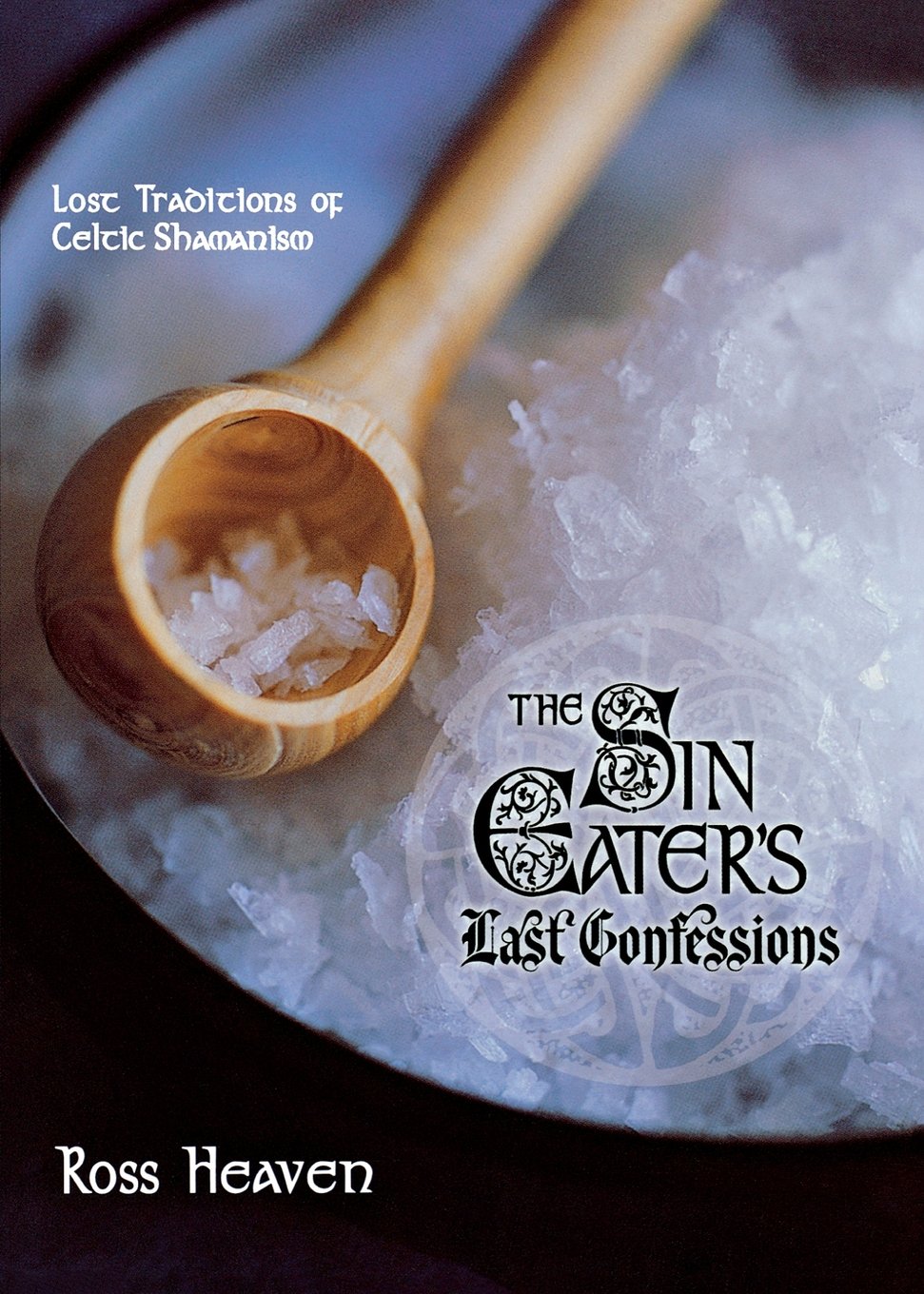
The Sin Eater's Last Confessions: Lost Traditions of Celtic Shamanism
$169.31
by Ross Heaven



As I grew to know Adam Dilwyn Vaughn, it became clear why he lived as he did, where he did, and why he was regarded warily by others, for in his younger days, Adam had been a sin eater (bwytawr pechod in the Welsh, from which this tradition comes)―a devourer of human sins―and his was a story of the soul, what it may contain, and how it can be healed and find purpose. It is only now that I can keep my promise to Adam to make his confession by the telling of his life. Revealed in this remarkable true account are the secrets of a lost tradition of Celtic shamanism, from working with plant medicine and nature allies to deciphering omens and communicating with nature spirits. In this fascinating tale, the sin eater's apprentice shares powerful gifts and lessons from the natural world and explores their relevance to our human quest to discover―and live―our soul's purpose for this lifetime. " The Sin Eater's Last Confessions is a moving memoir...and is highly recommended for anyone interested in Celtic lore and shamanism." -- New Age Retailer , October 2008 "I can heartily recommend this book to anyone interested in healing or Celtic traditions as an engrossing and entertaining read, a moving biography of a powerful, wise and humble man." -- Lauren D'Silva, BellaOnline's New Age Editor Ross Heaven (United Kingdom) is the founder and director of the Four Gates Foundation, one of Europe’s leading organizations that offers courses and workshops in spiritual wisdom and Freedom Psychology. Heaven has worked and trained extensively in the shamanic, transpersonal, and psycho-spiritual traditions. An award-winning author, he and his work have been featured in national newspapers and on radio and television. 1 The Gateway to the Garden … He comes, the human child To the waters and the wild. With a faery, hand in hand, For the world’s more full of weeping than he can understand. W. B. Yeats, “The Stolen Child" Hereford is a Cathedral City―which really means nothing these days. It is another country town struggling to be modern, corporate, and accepted, with the same shops, culture, and concerns of any other town in England. In 1968, though, when I moved there as a boy, it hadn’t quite woken up to the modern world and still slept an ancient rural slumber, where myth and magic flowed through the landscapes of its strange Celtic dreams. The cathedral stood at its center, looking out over white-and black-beamed cottages and quirky alleyways, thin and winding, which led to curiosities and mysteries. Among the town’s more famous remembered citizens was Nell Gwynne, whose tiny cottage, easily missed in a row of look-alike dwellings, squeezed itself into one of these alleys. An impoverished “orange girl,” selling fruit to theatergoers― or, according to others, a child prostitute―Nell was born to the town in 1650. By the age of fifteen, she was an actress herself, although she may have been more courtesan than artist (when asked for her profession one day, Nell described herself not as an actress but as a “Protestant whore”). Three years later, regardless, she was the lover of Charles II, bearing him two illegitimate sons, whom she called the “little bastards.” Despite all of this, her rags-to-riches story was still celebrated in Hereford, along with her unconventional way of achieving fame. Her life created something of a blueprint or a journeyman’s map for how one could escape one’s fate: by using creativity, guile, and, to its fullest advantage, whatever gift that God had bestowed on you, even if it was only the ability to catch the eye of royal blood. No matter how slim a chance, such talents offered the possibility of escape from a town that, enclosed by hills and rivers, felt imprisoned, surrounded by natural walls and under scrutiny from the ghosts of the landscape itself. Perhaps the claustrophobia of this landscape accounted for the sense one had in Hereford of always being watched by some invisible force, and of the town’s almost tangible desire to take a long-frustrated breath. A river ran through it, snaking like a question mark―a fitting image since this river is called the Wye, its name an echo of the seeking-after-purpose that characterized the town itself and its people. It was a place in transition: backward-looking and caught in its web of history, but squinting into the future, unsure of what it would become as rumors of revolution and new values began to breach its city walls from an England poised for change and social upheaval. The people of the town were restless, not quite knowing which way to go, but anxious to begin their journey anyway after so many years of sleepwalking its streets. Despite the developments taking place―“the red brick skin disease,” as D. H. Lawrence called it, of look-alike newly built homes being pasted onto the landscape and layered on top of the black and white―it was two buildings, or, rather, their contents and what they represented, that summed up the