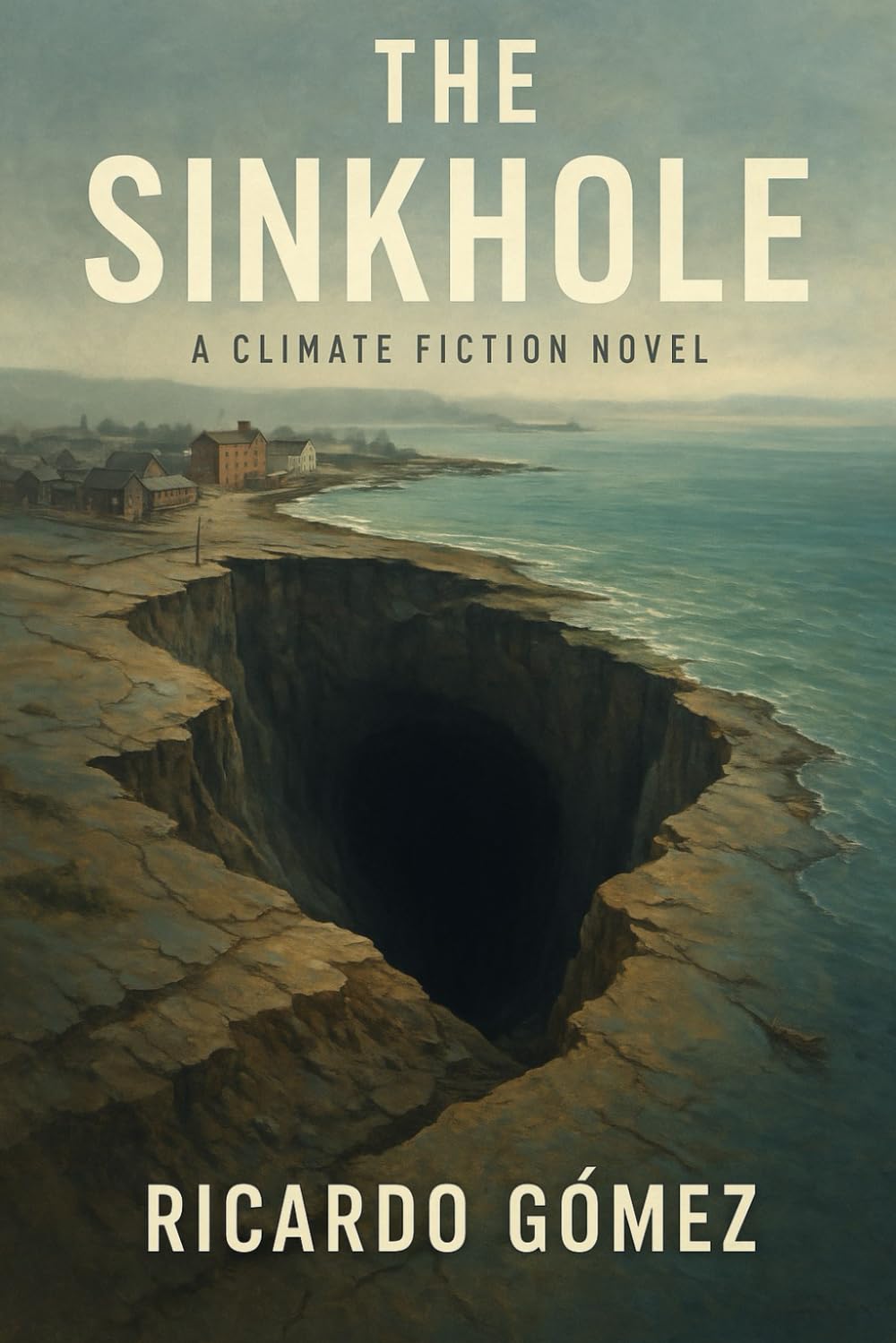



The Sinkhole: A Climate Fiction Novel The earthquake lasts less than three minutes. When the Cascadia Subduction Zone ruptures, the Pacific Northwest is thrown into chaos. Roads collapse, power disappears, communications fail, and the historic waterfront of Port Townsend, Washington sinks into a massive crater where the town center once stood. In the silence that follows, thousands are gone. The outside world is unreachable. And the survivors quickly realize that help may never come. A marine biologist. A climate scientist. A teenager documenting what remains. An Indigenous organizer connecting communities along the coast. Together with a small group of neighbors, they must confront an impossible question: How do you rebuild a society when the systems that sustained it have vanished? Food must be grown. Water secured. Decisions made about scarce resources. Old assumptions about authority, property, and community are challenged as the survivors experiment with new forms of cooperation and shared governance. But survival brings its own conflicts. Scarcity tests solidarity. Trauma fractures relationships. Each new season brings harder choices about who decides, who sacrifices, and what kind of future—if any—can still be built. Set in the real landscapes of Washington’s Olympic Peninsula, The Sinkhole is a gripping climate fiction novel about what happens after catastrophe—when ordinary people must invent new ways of living together despite grief, uncertainty, and the slow realization that the world they knew is gone. This is not a story about heroic rescue. It is a story about people trying, against overwhelming odds, to remain human when the future offers no promise of a happy ending.