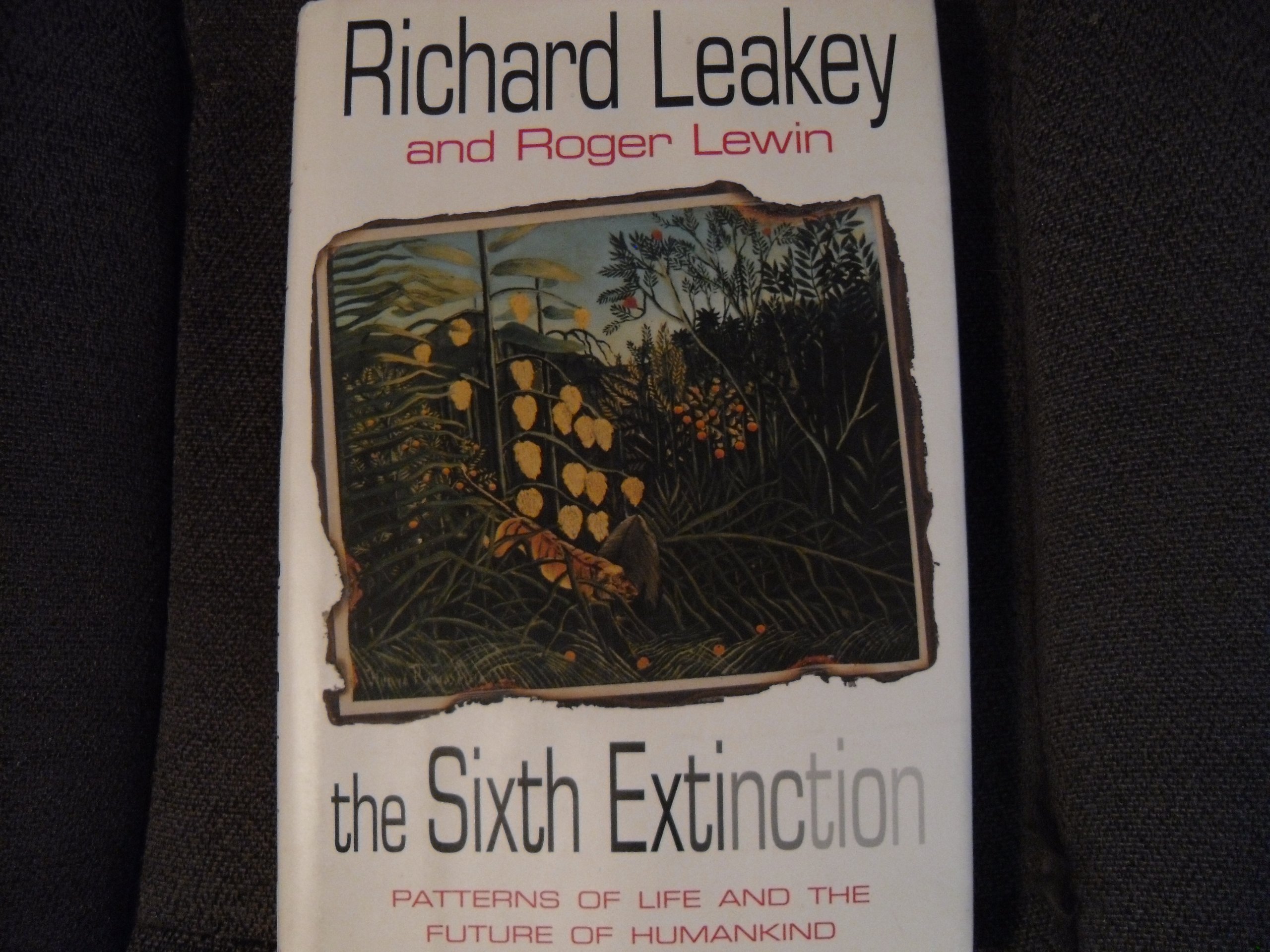
The Sixth Extinction: Patterns of Life and the Future of Humankind
$37.28
by Richard E. Leakey



Richard Leakey, One Of The World's Foremost Experts On Man's Evolutionary Past, Now Turns His Eye To The Future And Doesn't Like What He Sees . To the philosophical the earth is eternal, while the human race -- presumptive keeper of the world's history -- is a mere speck in the rich stream of life. It is known that nothing upon Earth is forever; geography, climate, and plant and animal life are all subject to radical change. On five occasions in the past, catastrophic natural events have caused mass extinctions on Earth. But today humans stand alone, in dubious distinction, among Earth's species: Homo Sapiens possesses the ability to destroy entire species at will, to trigger the sixth extinction in the history of life. In The Sixth Extinction , Richard Leakey and Roger Lewin consider how the grand sprawl of human life is inexorably wreaking havoc around the world. The authors of Origins and Origins Reconsidered , unimpeachable authorities on the human fossil record, turn their attention to the most uncharted anthropological territory of all: the future, and man's role in defining it. According to Leakey and Lewin, man and his surrounding species are end products of history and chance. Now, however, humans have the unique opportunity to recognize their influence on the global ecosystem, and consciously steer the outcome in order to avoid triggering an unimaginable upheaval. Paleoanthropologist Leakey and coauthor Lewin (Origins Reconsidered, LJ 9/1/92) examine biology's traditional viewpoints, which maintain a linear progression from simple to complex species development. In this scenario, survival of the fittest means success, and species extinction indicates failure. The authors also present the current trends in evolutionary science theory suggesting that the world is shaped by mass extinctions (natural catastrophes have caused five) instead of natural selection and that the shape and behavior of biological communities is driven by chaotic interaction rather than the simplistic balance-of-nature concept. Leakey and Lewin argue that Homo sapiens is the result of many chance events in evolution rather than the foreordained culmination of evolutionary excellence. Unfortunately, our self-awareness and mental capacity has given us the dubious capability of triggering a sixth extinction, destroying entire species through overhunting and habitat destruction. As the only sentient creature among animals, we have the duty to protect all of Earth's species. The authors present a powerful message based on years of observation and fieldwork. Highly recommended for all collections.?Gloria Maxwell, Kansas Cty. P.L., Kan. Copyright 1995 Reed Business Information, Inc. A paleoanthropologist and a science writer examine mankind's future, considering the past history of the five great extinctions which have taken place on the planet and arguing that the sixth great extinction pattern is already underway - fostered by mankind itself. A hard-hitting account is presented here. -- Midwest Book Review Readable, exciting and provocative big-sky popular science. -- Washington Post Book World Richard Leakey, One Of The World's Foremost Experts On Man's Evolutionary Past, Now Turns His Eye To The Future And Doesn't Like What He Sees . To the philosophical the earth is eternal, while the human race -- presumptive keeper of the world's history -- is a mere speck in the rich stream of life. It is known that nothing upon Earth is forever; geography, climate, and plant and animal life are all subject to radical change. On five occasions in the past, catastrophic natural events have caused mass extinctions on Earth. But today humans stand alone, in dubious distinction, among Earth's species: Homo Sapiens possesses the ability to destroy entire species at will, to trigger the sixth extinction in the history of life. In The Sixth Extinction , Richard Leakey and Roger Lewin consider how the grand sprawl of human life is inexorably wreaking havoc around the world. The authors of Origins and Origins Reconsidered , unimpeachable authorities on the human fossil record, turn their attention to the most uncharted anthropological territory of all: the future, and man's role in defining it. According to Leakey and Lewin, man and his surrounding species are end products of history and chance. Now, however, humans have the unique opportunity to recognize their influence on the global ecosystem, and consciously steer the outcome in order to avoid triggering an unimaginable upheaval. d Leakey, One Of The World's Foremost Experts On Man's Evolutionary Past, Now Turns His Eye To The Future And Doesn't Like What He Sees. To the philosophical the earth is eternal, while the human race -- presumptive keeper of the world's history -- is a mere speck in the rich stream of life. It is known that nothing upon Earth is forever; geography, climate, and plant and animal life are all subject to radical change. On fi