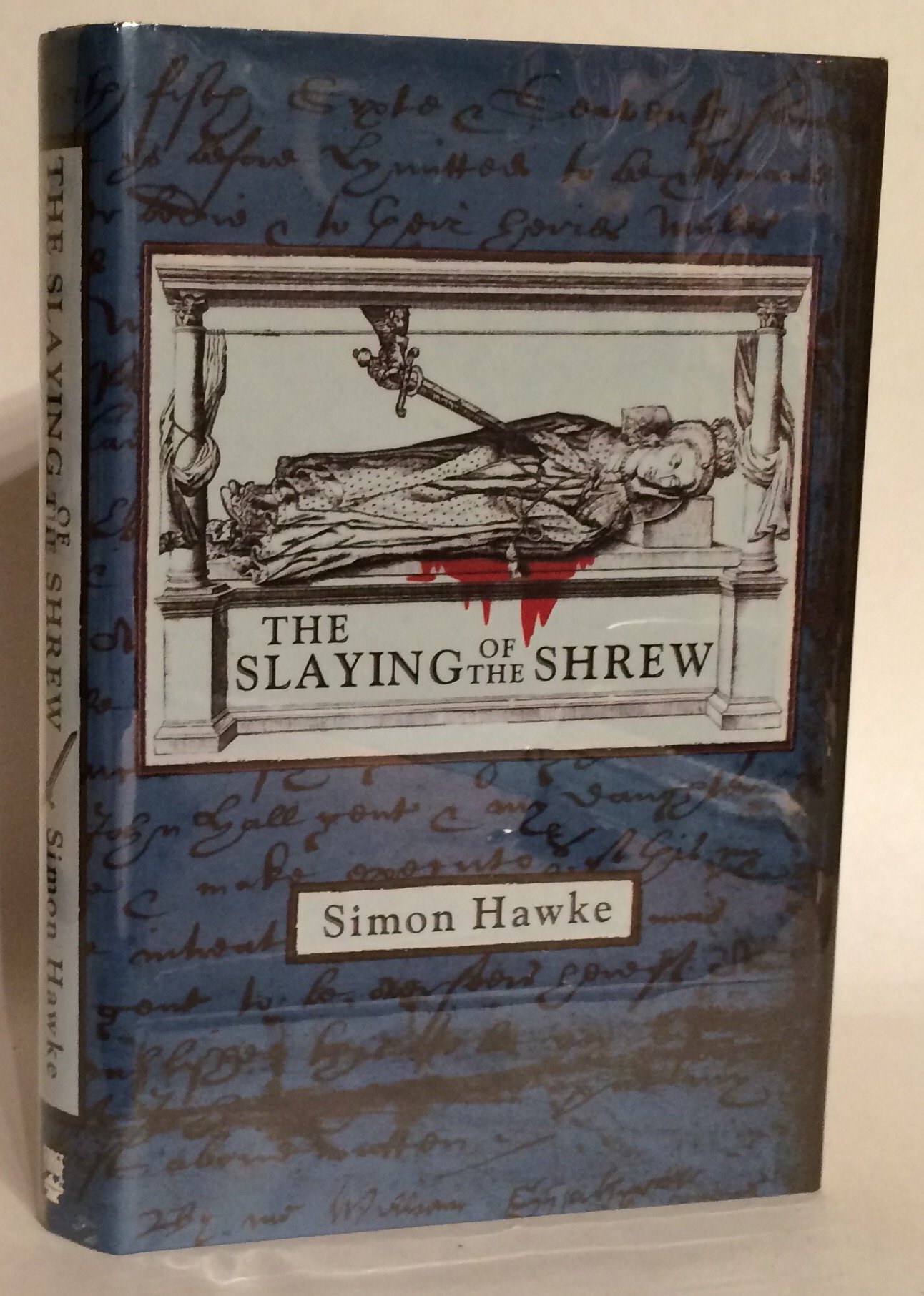



Shakespeare and Smythe are at it again in this entertaining sequel to A Mystery of Errors. Will Shakespeare, Symington "Tuck" Smythe, and their band of thespians are contracted to provide entertainment at a rural estate as part of a large wedding pageant. When the headstrong bride turns up dead, and overheard conversations contain conspiratorial plots against the families involved, Will and Tuck must once again pull double duty as thespians and sleuths to solve the case of The Slaying of the Shrew . Adult/High School-A lively whodunit with William Shakespeare and his bumbling sidekick, Tuck Smythe, an aspiring actor, as detectives. They are part of the entertainment at the wedding of the daughter of a wealthy merchant when Tuck overhears two men plotting a murder. The shrew, a woman who voices her opinions, is slain on her wedding day, and the people around her have secrets and hidden motives. Characters from the familiar play seem like live people. This delightful Elizabethan romp with many plot snippets from Shakespeare's other plays is a great way to get high school students interested in the Bard and his works. Irene F. Moose, Fairfax County Public Library, VA Copyright 2002 Cahners Business Information, Inc. The first installment of this series ( A Mystery of Errors [BKL N 1 00]) was such an immensely enjoyable read that it's hard to imagine the author equaling it, let alone topping it. But topped it he has: the second adventure of those Elizabethanera amateur sleuths, theater apprentice Symington Smythe and wouldbe actor-writer Will Shakespeare, is in every way superior to its predecessor. Perhaps this is because Hawke doesn't have to reintroduce the premise and can jump directly into the story. Perhaps he just has an even firmer grasp of his characters and their time. Whatever the reason, this splendid novel is a pure pleasure to read, from beginning to end. His blending of real and historical events is seamless, and his skill as a storyteller is abundantly evident. William Shakespeare is so famous, we often tend to forget there was a time in his life when he was not the Shakespeare we learned about in school. Hawke's portrayal of the world's most influential playwright as a young man discovering his artistic gifts, looking for a little excitement, is utterly charming and should be a delight for fans of the Bard. This series should be required reading for all fans of historical mysteries. David Pitt Copyright © American Library Association. All rights reserved "The first installment of this series was such an immensely enjoyable read that it's hard to imagine the author equaling it, let alone topping it. But topped it he has: the second adventure of Symington Smythe and Will Shakespeare is in every way superior to its predecessor. This splendid novel is a pure pleasure to read, from beginning to end. This series should be required reading for all fans of historical mysteries."- -Booklist, Starred Review Simon Hawke has been the author of two successful SF/F series (Time Wars and The Wizard of 4th Street), a New York Times bestselling Star Trek novel, and several books for TSR in the Dark Sun and Birthright settings. He currently lives in Greensboro, and The Slaying of the Shrew is his second Shakespeare and Smythe mystery. The Slaying of the Shrew 1 THE PLAGUE SEASON WAS A good time to be out of London, especially since it often meant the closing of the playhouses. And although Smythe much preferred the excitement of the city and working at James Burbage's Theatre to the quiet, uneventful country life he'd left behind, carts passing by outside one's window loaded with stinking corpses rotting in the summer heat had a way of mitigating London's worldly charms. Nevertheless, when he found out that the Queen's Men were going on the road, he was much less concerned about the plague than the possibility that he might not be asked to come along.He was not, after all, a shareholder in the company or even one of the key supporting players. The boy apprentices who played the female parts were of much more value to the Queen's Men than he was as a mere ostler who only played occasional small roles and helped out with odd jobs around the playhouse. He had no stake in the profits of the company, other than wishing they'd do well, and to date, the only roles that he had played were small and insignificant, mere walk-ons of the sort given to ordinary hired men such as himself. Even those, as undemanding as they were, he knew he'd botched, for the most part. If not for his friend, Will Shakespeare, whom the company had learned to value for his versatility, he was convinced they would have let him go by now."Nonsense," Shakespeare said, when Smythe confided his worriesto his roommate. "There's always a place in the theatre for a handsome lad with a good leg, a stout chest, and a fine, strong pair of shoulders." He spoke without putting down his pen or looking up from his small writing desk, whi