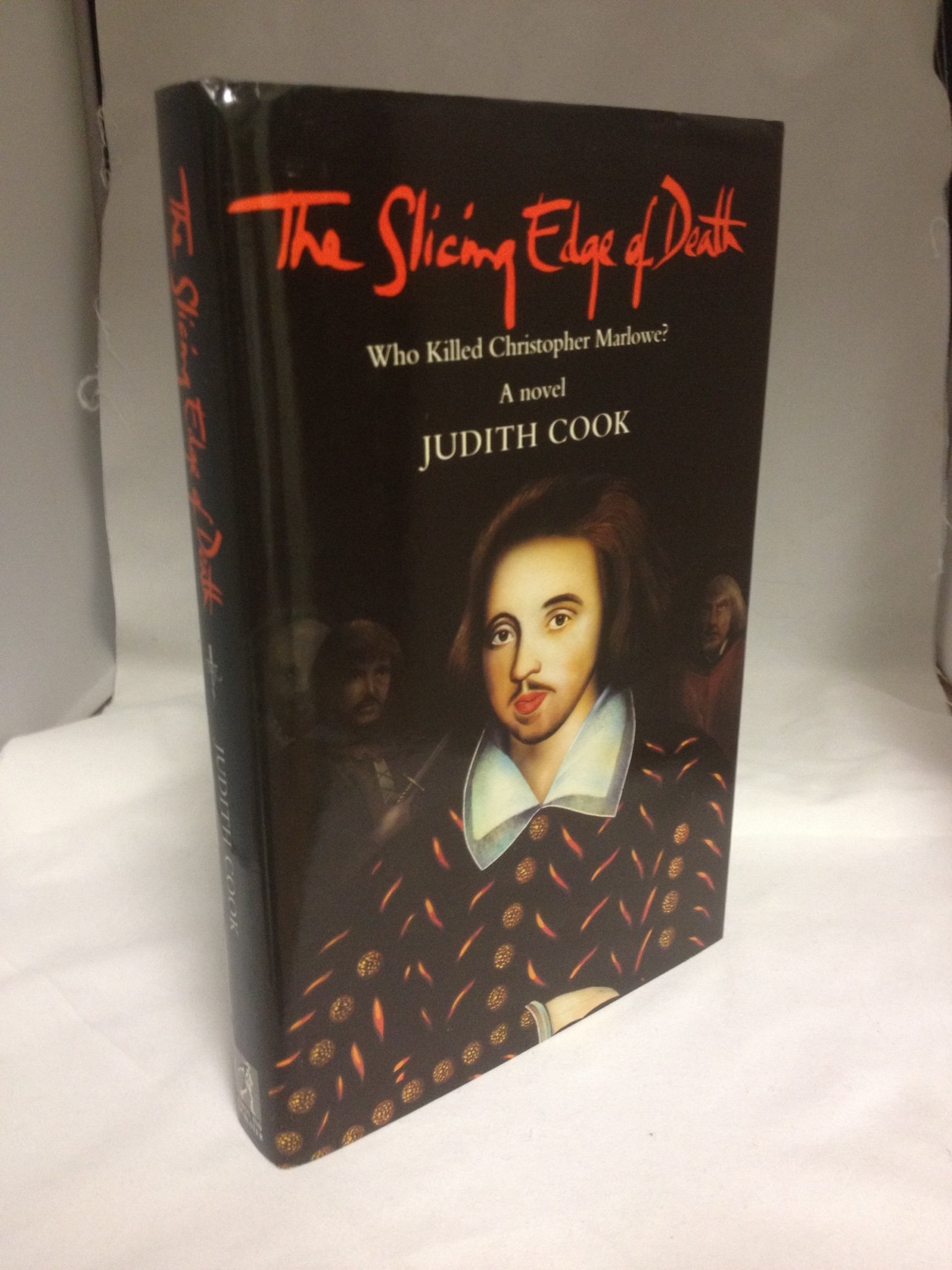



In the tumultuous world of Elizabethan theater, Shakespeare's contemporary Christopher Marlowe is notorious. Recklessly wayward, the dazzling author of plays both blasphemous and scandalous, he is also a member of Sir Walter Raleigh's secret society, the lover of the powerful Thomas Walsingham, and an occasional agent on the Queen's "most secret business." Marlowe knows too much. For there are men - the Queen's Acting Secretary Robert Cecil and his spymaster among them - who want Marlowe silenced. With the aid of a forgotten manuscript, an unknown, unwitting actor, and a mysterious widow, some of Britain's most powerful will conspire to write Marlowe into a plot more complex, deadly, and artfully engineered than anything seen on the English stage.... With the pace and plot of a first-rate thriller, The Slicing Edge of Death is a brilliant evocation of an era, a startling portrait of a tormented man, and a chillingly plausible solution to a mystery that has puzzled historians for centuries. Published to coincide with the four hundredth anniversary of his death, the novel is a triumphant retelling of Christopher Marlowe's life and mysterious demise. This retelling of and fictional solution to the death of Elizabethan playwright Christopher Marlowe does more than rehash an old mystery. The author so vividly evokes a bygone age that readers can almost smell the odors of cheap wine and unwashed clothing in the sordid taverns Marlowe frequents, hear the death knells tolling the onslaught of the plague, and feel the anguish of the characters. Cook, herself a dramatist and author of several books on Elizabethan theater, has so mixed actual historical events with the fictional action that it's easy to forget this is a novel, especially since references to the plague give it an almost surreal tone. (The appendix distinguishing between invented characters and those who actually lived proves most helpful.) For general readers; scholars may find it a bit too broad. - M.E. Chitty, Fairchilde International Lib. Inst., Plainfield. N.J. Copyright 1993 Reed Business Information, Inc. Another look at the tantalizingly unsolved murder of Christopher Marlowe, focusing on the motives provided by the playwright's membership in Sir Francis Walsingham's Cambridge Spies and Sir Walter Raleigh's School of the Night, a coven of dangerously freethinking young bucks. First-novelist Cook, a playwright and historian, posits so many possible reasons for Marlowe's death--his open homosexuality, his well-documented blasphemy, his inconvenient knowledge of state gossip--and so many spies trying to get the goods on him--from unofficial Privy Council Secretary Robert Cecil to crafty agent Robert Poley to two henchmen planted in Marlowe's acting company, the Lord Admiral's Men, who end up spying on each other--that it probably won't matter much to anybody but other historians which of these creatures ends up wielding the fatal dagger; and innocent playwright Thomas Kyd, arrested and tortured in the hope that he'll give evidence against his old roommate, rather steals the show from his more distinguished contemporary. Patient and thorough in sifting the evidence, though not in the same league as George Garrett's deeply imagined, darkly majestic Entered from the Sun (1990). -- Copyright ©1993, Kirkus Associates, LP. All rights reserved.