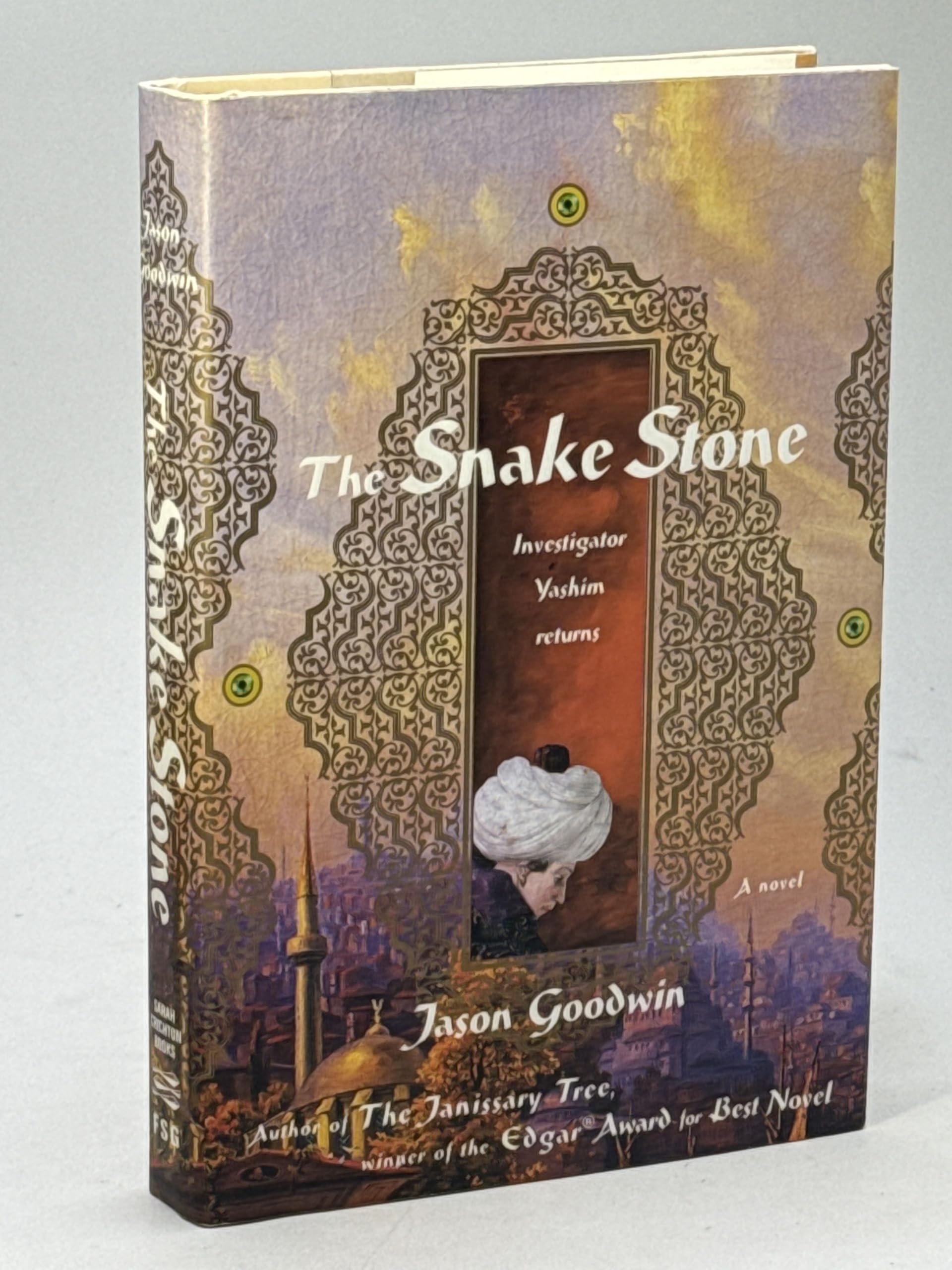



The captivating return of Yashim, the eunuch investigator from the intelligent, elliptical and beguilingly written" (The Times, London) bestseller The Janissary Tree When a French archaeologist arrives in 1830s Istanbul determined to track down a lost Byzantine treasure, the local Greek communities are uncertain how to react; the man seems dangerously well informed. Yashim Togalu, who so brilliantly solved the mysterious murders in The Janissary Tree , is once again enlisted to investigate. But when the archaeologist’s mutilated body is discovered outside the French embassy, it turns out there is only one suspect: Yashim himself. The New York Times celebrated The Janissary Tree as “the perfect escapist mystery,” and The Daily Telegraph called it “[A] tremendous first novel . . . Beautifully written, perfectly judged, humane, witty and captivating.” With The Snake Stone , Jason Goodwin delights us with another transporting romp through the back streets of nineteenth-century Istanbul. Yashim finds himself racing against time once again, to uncover the startling truth behind a shadowy society dedicated to the revival of the Byzantine Empire, encountering along the way such vibrant characters as Lord Byron’s doctor and the sultan’s West Indies–born mother, the Valide. Armed only with a unique sixteenth-century book, the dashing eunuch leads us into a world where the stakes are high, betrayal is death—and the pleasure to the reader is immense. Praise for The Janissary Tree: "The perfect escapist mystery." -- The New York Times "[A] tremendous first novel ... beautifully written, perfectly judged, humane, witty and captivating." -- Daily Telegraph "Intelligent, elliptical and beguilingly written, The Janissary Tree is a rare pleasure." -- The Times (London) JASON GOODWIN is the author of Lords of the Horizons: A History of the Ottoman Empire , among other award-winning nonfiction. The Janissary Tree , his first novel and the first in a series featuring Yashim, was published in May 2006 to international acclaim. Jason Goodwin's new novel begins as the muezzins call the faithful of Istanbul to evening prayer, their mournful ululations shimmering in the gathering dusk. "It was," he observes dryly, "a good time to kick a man to death in the street." As openings go, this one packs a punch. The Snake Stone is the second outing for Yashim Togalu, the 19th-century eunuch detective first encountered in the Edgar-winning The Janissary Tree, and the new novel takes up his story two years later. The Sultan is dying, and Yashim is no longer part of his seraglio. When a shady French archaeologist with a secret comes to him in fear for his life, the eunuch reluctantly helps him flee. He is soon to regret it. The Frenchman is discovered brutally murdered, and Yashim finds himself a suspect. The scene is set for a story that leads us on a dance through 1830s Istanbul, down its twisting, laundry-shaded alleys and its underground water channels, across its wide bays and through its crowded bazaars, in pursuit of mysterious killers, lost relics and an elusive secret society committed to reviving the Byzantine Empire. But despite several more murders, the book does not entirely live up to the promise of its powerful first chapter. Anticipating the movie that Goodwin no doubt hopes will follow, the narrative cuts from scene to short scene, a structure designed to ratchet up tension, but those seeking a knife-edge plot will be disappointed. The Snake Stone is not an edge-of-your-seat whodunit. Although gentle Yashim is an appealing protagonist and the large cast of lesser characters is deftly drawn, the twists of the story lack conviction, and its final resolution comes as something of an anticlimax. The real pleasure of The Snake Stone lies in its powerful evocation of the cultural melting pot that was 19th-century Istanbul. Goodwin is a historian by training, and his sharp eye combines with a poetic style to bring the city vividly to life, from the night boatmen in their lamp-lit caiques to the scents and colors of the bazaar to the food that Yashim lovingly prepares. Bitterly regretting the loss of his manhood, Yashim has sublimated his stolen desires into the sensual pleasures of cooking, and the book is crammed with mouth-watering descriptions of creamy pilafs and delicate mezze. The spice-scented flavor of this book lingers long after its plot is forgotten. Copyright 2008, The Washington Post. All Rights Reserved. Chapter 1 The voice was low and rough and it came from behind as dusk fell. “Hey, George.” It was the hour of the evening prayer, when you could no longer distinguish between a black thread and a white one, in ordinary light. George pulled the paring knife from his belt and sliced it through the air as he turned. All over Istanbul, muezzins in their minarets threw back their heads and began to chant. It was a good time to kick a man to death in the street. The grainy ululations swept in so