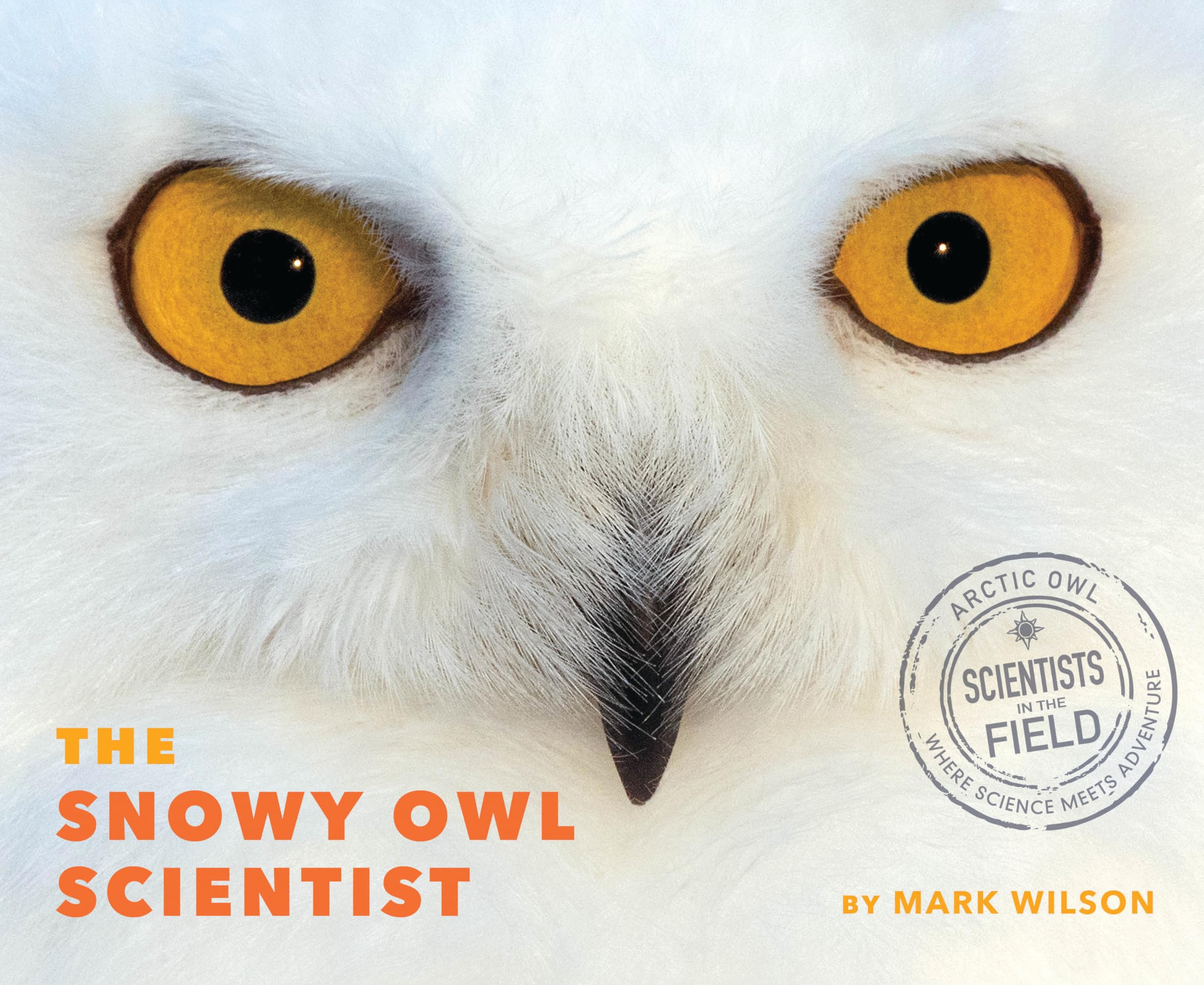
The Snowy Owl Scientist: Exploring Alaska's Arctic Predators, Tundra Ecosystems, and Nesting Mysteries (Scientists in the Field)
$15.19
by Mark Wilson



Are the snowy owls in trouble? Venture into the Alaskan arctic and the summer realm of these predator birds to find out. Discover the diverse species necessary to owl survival, how climate change is affecting the landscape of their nesting site of past millennia, and what it takes to do field research in this action-packed addition to the award-winning Scientists in the Field series. It's July on Alaska's North Slope, and scientist Denver Holt is in Utqiagvik surveying nests. Denver has been coming here since 1992, and the snowy owls he studies have been coming here much longer: thousands of years. With its mix of coastal, low-elevation tundra and a rich presence of lemmings, the North Slope is the only area in Alaska where snowy owls regularly nest. How do snowy owls decide where they will nest? How do they manage to arrive at locations where food will be abundant? What drives the success of these delicate tundra ecosystems? These are the mysteries Denver is trying to solve to help ensure a bright future for these elegant hunters. What does it take to study one of the world’s most iconic predators in a rapidly changing world? Real-World Science: Join scientist Denver Holt on his ATV as he navigates the muddy tundra, dodges dive-bombing jaegers, and gathers critical data to protect a beloved species. - The Lemming Connection: Learn why the entire arctic ecosystem depends on the population cycle of a tiny rodent—the brown lemming—and what it means for the owls. - Stunning Wildlife Photography: Get an up-close look at fuzzy owl chicks, hunting parents, and the breathtaking Alaskan landscape through the author’s incredible photographs. - Ecosystems Under Threat: Understand the effects of a warming Arctic, from melting permafrost to changing animal behaviors, in this essential book for young environmentalists. - Award-Winning Series: A perfect addition to any library, this installment in the acclaimed Scientists in the Field series makes complex ecological concepts exciting and accessible for middle grade readers. Gr 3–6—The latest installment of the consistently excellent "Scientist in the Field" series features the work of Denver Holt, a snowy owl researcher who travels to Alaska's north slope and the town of Utqiagvik, formerly Barrow, each June to survey snowy owl nesting. It may be summer, but the temperature is a brisk 38 degrees Fahrenheit (-3 degrees Celsius), so warm layers are required. So is an ATV as the few roads are gravel and, once off-road, much walking needs to be done to protect the nests, which are made on the ground. Holt and his assistants locate the nests, count eggs and owlets, and monitor food resources. The conversational text is engaging and accessible, but it's the photographs that shine, from the arresting and appealing front cover to the impressive final image on the back. There are images on nearly every page that get readers up close and personal. These include helpful maps and thumbnails, sketches of wing feathering, photos of the flora and fauna of the area, and dramatic action shots. Sidebars include extra pertinent information such as quick facts and what to do if one finds an injured owl. Back matter includes a glossary, references, and an index. VERDICT A first purchase sure to inspire budding scientists and snowy owl aficionados.—Brenda Kahn "Truly astonishing photos appear on nearly every spread . . . . An extraordinary crash course in geography, biology, conservation, and ecology that goes far beyond its wonderful winged subject." - Booklist (starred review) "Wilson, a prolific wildlife photographer, explains his procedures for photographing [snowy owls] in their natural habitat and shares his final products in clear, informative, and often dramatic images." —Betty Carter - The Horn Book "The conversational text is engaging and accessible, but it’s the photographs that shine. . . . A first purchase sure to inspire budding scientists and snowy owl aficionados." - School Library Journal (starred review) “Wildlife photojournalist” is just another name for “mule” because I often find myself in remote places schlepping heavy loads of photography and camping gear. But the end results of my animal quests are usually worth the exertion. I’ve been writing about and photographing wild- life (especially birds) since middle school, where my classmates dubbed me “Birdman” at age twelve. After thirty-plus years of working as a newspaper photographer and columnist, I now host science-based live-owl programs with my wife, Marcia. We care for fifteen non-releasable raptors, including a snowy owl. Check out our website: eyesonowls.com.