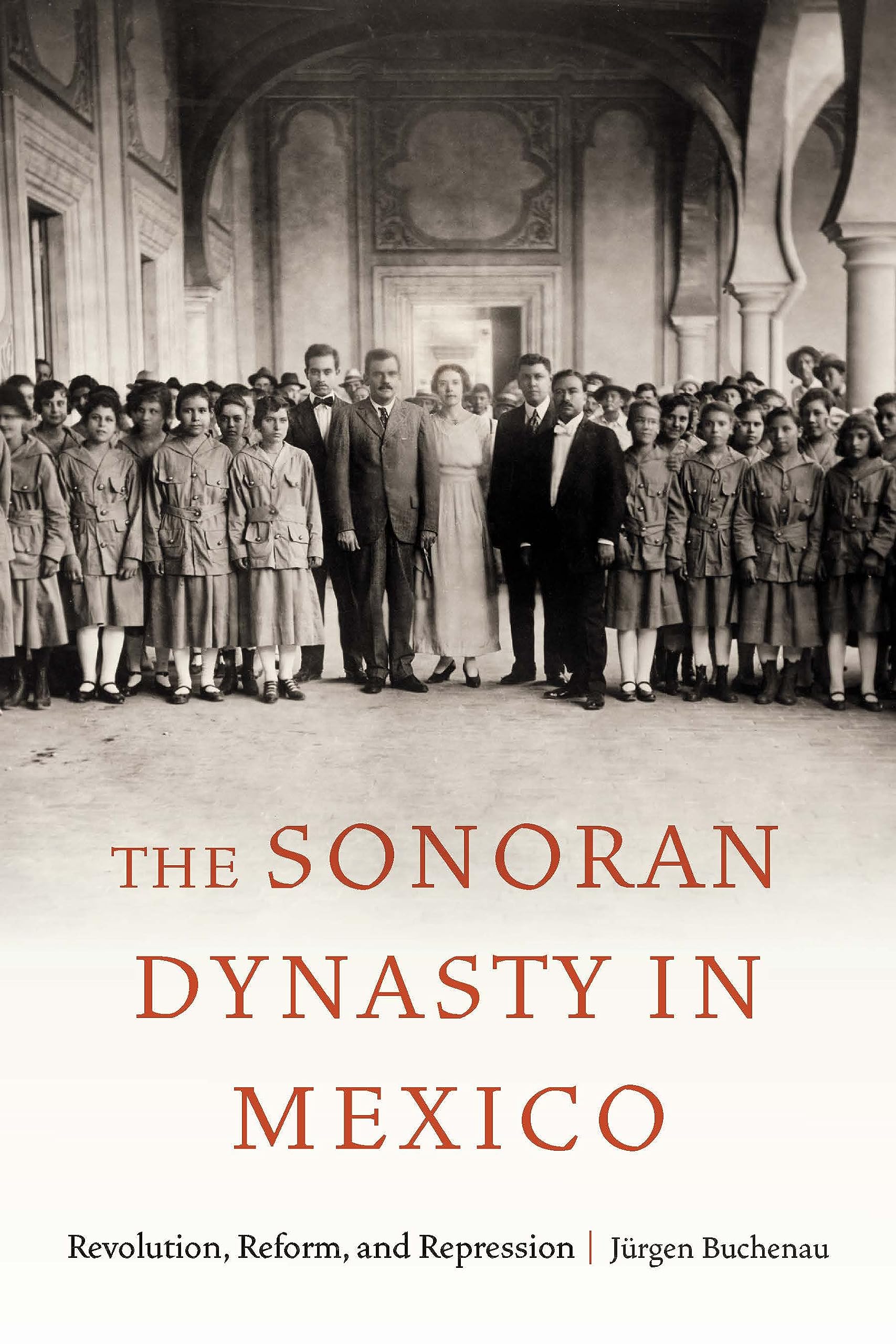
The Sonoran Dynasty in Mexico: Revolution, Reform, and Repression (Confluencias)
$35.00
by Jürgen Buchenau



Honorable Mention for the 2024 Alfred B. Thomas Book Award Two generals from the northwestern state of Sonora, Álvaro Obregón and Plutarco Elías Calles, dominated Mexico between 1920 and 1934, having risen to prominence in the course of the Mexican Revolution. Torn between popular demands for ending the privileges of wealthy foreign investors and opposition by a hawkish U.S. administration and enemies at home, the two generals and their allies from their home state mixed radical rhetoric with the accommodation of entrenched interests. In The Sonoran Dynasty in Mexico Jürgen Buchenau tells the story of this ruling group, which rejected the Indigenous and Catholic past during the decades of the revolution and aimed to reinvent Mexico along the lines of the modern and secular societies in western Europe and the United States. In addition to Obregón and Calles, the Sonoran Dynasty included Adolfo de la Huerta and Abelardo L. Rodríguez, four Sonorans among six presidents in less than two decades. Although the group began with the common aims of nationalism, modernization, central political control, and enrichment, Buchenau argues that this group progressively fell apart in a series of bloody conflicts that reflected broader economic, political, and social disagreements. By analyzing the dynasty from its origins through its eventual downfall, Buchenau presents an innovative look at the negotiation of power and state formation in revolutionary Mexico. "This book is essential reading for scholars of modern Mexico, but it will also interest those studying revolutions, political culture, reform, and state repression."—Ulices Piña, American Historical Review "Essential reading for students of Mexican—and Latin American—modern political history."—Alan Knight, Hispanic American Historical Review " The Sonoran Dynasty should become a required text for established scholars to help them avoid the myths that have grown up around Álvaro Obregón and Plutarco Elías Calles and to better understand the wider Sonoran circle of associates."—Jason H. Dormady, A Contra Corriente "This is an accessible and sweeping history of a crucial yet overlooked and misunderstood subject in Mexican history."—Miles V. Rodríguez, Americas “Buchenau has written a book of clarifying insight that foregrounds the relationships that made and unmade one of the most powerful political alliances in modern Mexican history.”―Aaron W. Navarro, Latin Americanist “ The Sonoran Dynasty in Mexico is a major contribution to the field. As Jürgen Buchenau points out, the Mexican Revolution, in contrast to other modern revolutions, had no overriding ideology, though it did produce a progressive, nationalist constitution. That meant that the priorities of Mexico’s leaders during the 1920s—the crucial period of reconstruction following a bloody ten-year civil war—would determine what ‘the revolution’ meant as they selectively enforced or disregarded the provisions of the constitution. Understanding those priorities is vital to understanding the modern history of Mexico. Buchenau illuminates that theme in an insightful and compelling narrative.”—Timothy J. Henderson, author of The Mexican Wars for Independence: A History " The Sonoran Dynasty should become a required text for established scholars to help them avoid the myths that have grown up around Álvaro Obregón and Plutarco Elías Calles and to better understand the wider Sonoran circle of associates."—Jason H. Dormady, A Contra Corriente "This is an accessible and sweeping history of a crucial yet overlooked and misunderstood subject in Mexican history."—Miles V. Rodríguez, Americas “ The Sonoran Dynasty in Mexico is a major contribution to the field. As Jürgen Buchenau points out, the Mexican Revolution, in contrast to other modern revolutions, had no overriding ideology, though it did produce a progressive, nationalist constitution. That meant that the priorities of Mexico’s leaders during the 1920s—the crucial period of reconstruction following a bloody ten-year civil war—would determine what ‘the revolution’ meant as they selectively enforced or disregarded the provisions of the constitution. Understanding those priorities is vital to understanding the modern history of Mexico. Buchenau illuminates that theme in an insightful and compelling narrative.”—Timothy J. Henderson, author of The Mexican Wars for Independence: A History Jürgen Buchenau is Dowd Term Chair of Capitalism Studies and a professor of history and director of capitalism studies at the University of North Carolina at Charlotte. He is the author or coauthor of several books, including Mexico’s Once and Future Revolution: Social Upheaval and the Challenge of Rule since the Late Nineteenth Century ; The Last Caudillo: Alvaro Obregón and the Mexican Revolution ; and Mexican Mosaic: A Brief History of Mexico .