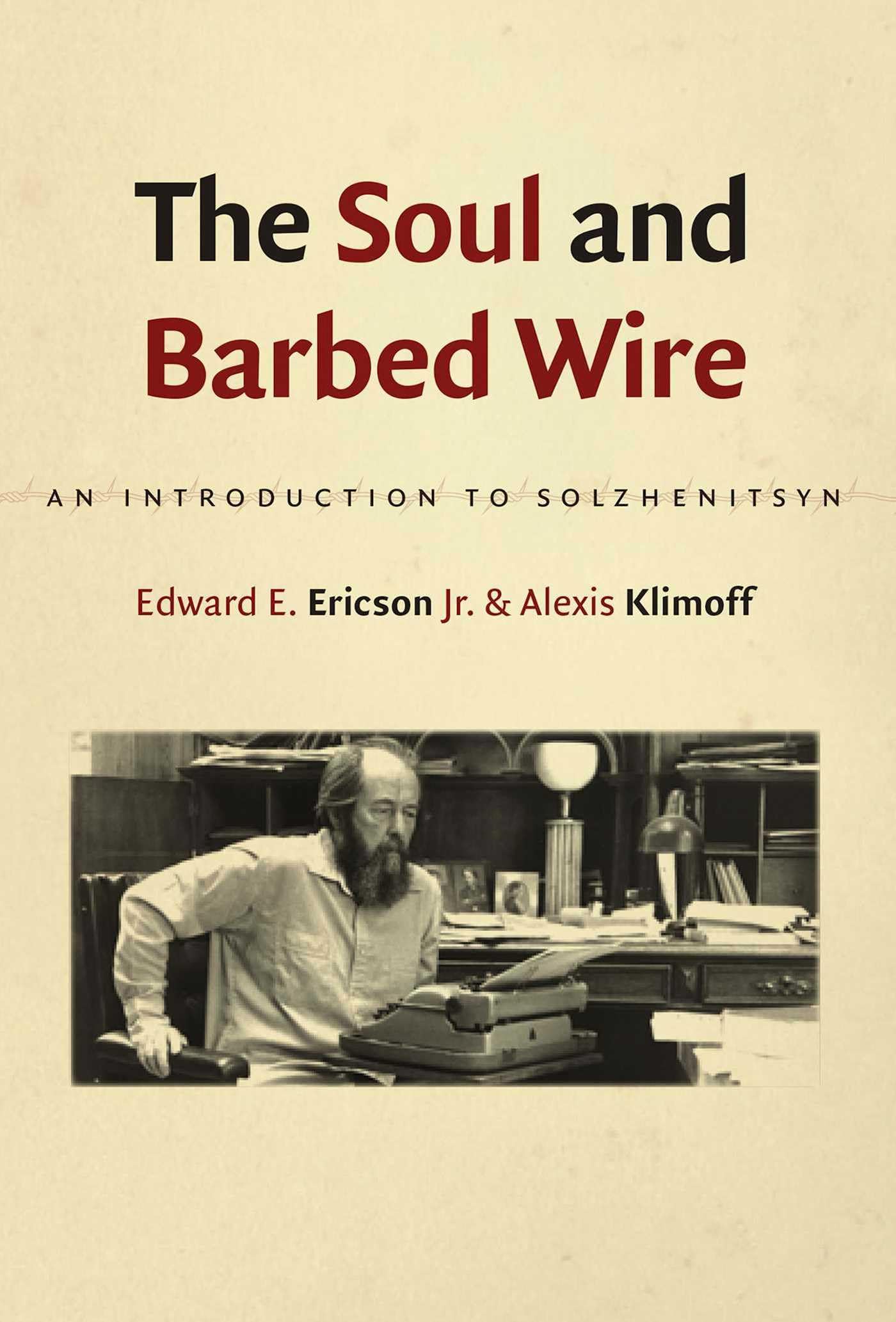



Authored by two eminent Aleksandr Solzhenitsyn scholars, The Soul and Barbed Wire is the first and only book to offer both a detailed biography and a comprehensive appraisal of the literary achievement of the Nobel prize–winning author who became one of the Soviet regime's most formidable foes. The book begins with a detailed biographical survey that traces Solzhenitsyn's evolution from an ardent Communist and loyal Soviet front-line officer into a devastating critic of all ideological distortions of authentic human values and a historian of the many-faceted events that led to, and the tragedy set loose by, the Russian Revolution. This biographical section goes on to portray the writer's strenuous efforts to convey this message to the West during his years of exile, and to his countrymen after his return to Russia. The bulk of the book, however, consists of sharply focused essays on a large number of Solzhenitsyn's writings. Ericson and Klimoff comment on virtually all his works of fiction as well as on a generous selection of texts belonging to historical or journalistic genres. Because the volume assumes no prior knowledge of its subject, it will prove particularly helpful to those who are coming to Solzhenitsyn for the first time, while its well-nigh encyclopedic inclusiveness should appeal even to the most seasoned readers. Drawing upon the best available Solzhenitsyn scholarship, the authors strive to present a balanced and accurate appraisal of the remarkable life and hugely influential works that have often been misunderstood and not infrequently been misrepresented. Edward E. Ericson, Jr. (1939–2017) was Professor of English at Calvin College, where he taught for twenty-six years. He was the author of two books on Solzhenitsyn, editor of the one-volume authorized abridgment of Solzhenitsyn’s The Gulag Archipelago , and coeditor of The Solzhenitsyn Reader: New and Essential Writings, 1947–2005 . Alexis Klimoff is Professor Emeritus of Russian Studies at Vassar College. His publications on Solzhenitsyn include the coeditorship of Aleksandr Solzhenitsyn: Critical Essays and Documentary Materials , the editorship of One Day in the Life of Ivan Denisovich: A Critical Companion , translations of various essays and addresses by Solzhenitsyn, and reviews of translations of his works into English. Chapter One Life When Aleksandr Solzhenitsyn was a mere ten years of age, he launched the literary career that he was to pursue for the rest of his life. It was at this time that the precocious lad established a handwritten journal extravagantly titled The Twentieth Century, with the equally vaulting phrase "On the Meaning of the Twentieth Century" as the subtitle. The earliest actual products of his juvenile pen, however-illustrations and jokes intermingled with verse, science fiction, and a serialized story about pirates-fell well short of fulfilling the grand design suggested by these titles. More than four decades later, the author himself summed up the beginnings of his career thus: "From childhood on I experienced an entirely unprompted inclination toward writing and produced a great deal of the usual adolescent nonsense." But it was not very long before his choice of subject matter started to catch up with the high ambition that framed his boyish exercises. As his eighteenth birthday approached, Solzhenitsyn, by then an ardent convert to Marxism, set himself the goal of describing afresh the Russian Revolution and its glorious meaning for the world. His innate creative drive had become focused and channeled into a sense of mission. Before another decade had passed, however, Solzhenitsyn came to reject utterly the utopian dreams that had so captivated him in his youth, since the Soviet experiment had by then revealed itself as a murderous sham that was evil in its very design. Yet despite this radical turnaround in his views, he continued to look upon the Russian Revolution as the key turning point in modern history, one that cried out for the intense study conceived in his adolescence. So immense did this project prove to be that it absorbed a large proportion of the writer's time even after he had reached the pinnacle of worldwide fame. When he was finished, in 1991, this epic cycle bore the title The Red Wheel and ran to more than six thousand pages. It was life itself that had led to the sea change in Solzhenitsyn's outlook. His experience of arrest, prison, and labor camp had exposed the harsh truth behind the faade of Soviet life and had driven the aspiring author to turn his new knowledge into literary form. Addressing these contemporary realities distracted him from executing his chef d'oeuvre, but he followed the dictates of what he understood to be his duty to his fellow prisoners. The works of fiction that emerged as a result became the most compelling depictions of this information that readers the world over had ever been granted. Nadezhda Mandelstam has written that no work she ha