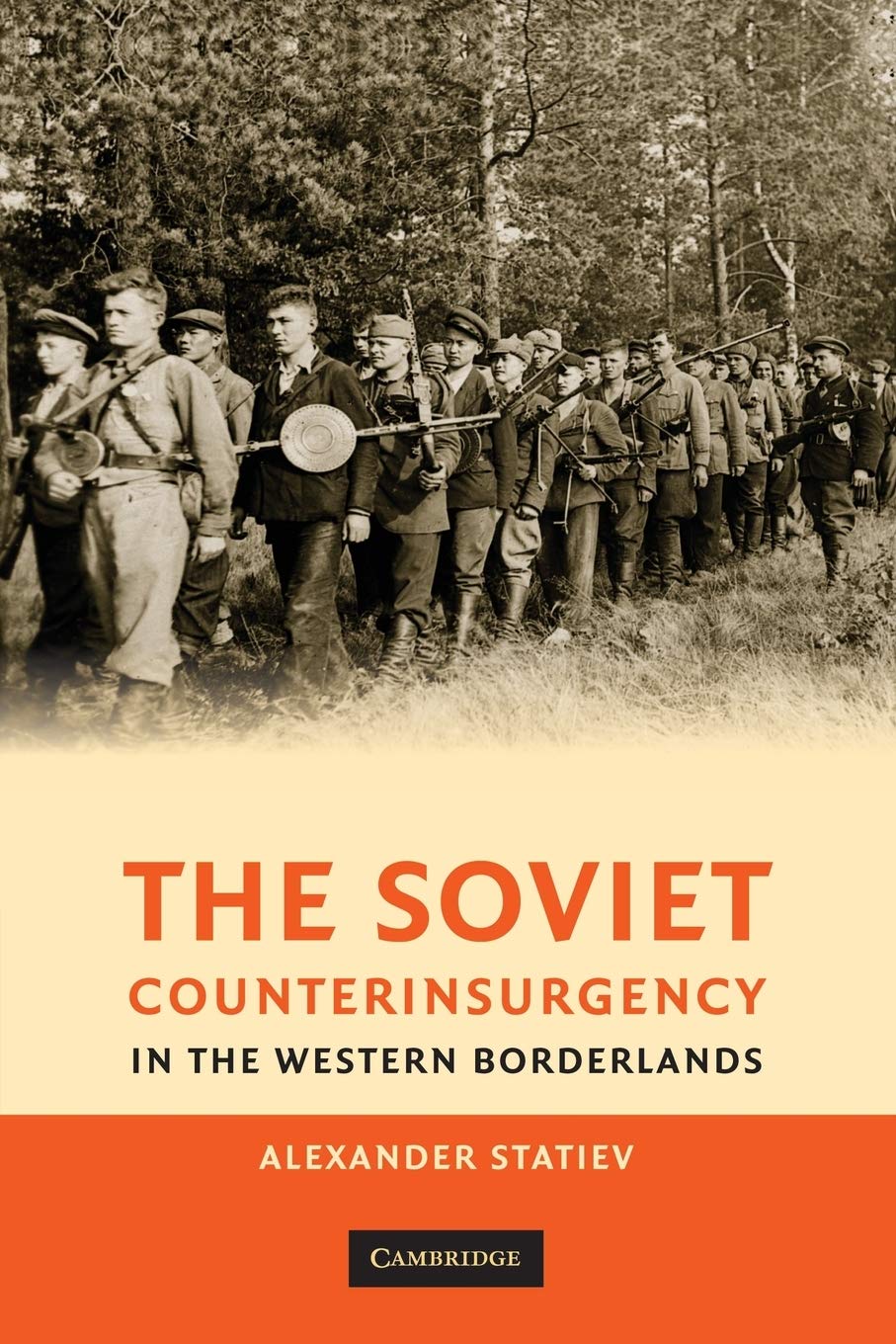



The Soviet Counterinsurgency in the Western Borderlands investigates the Soviet response to nationalist insurgencies that occurred between 1944 and 1953 in the regions the Soviet Union annexed after the Nazi-Soviet pact: Eastern Poland, Lithuania, Latvia, and Estonia. Based on new archival data, Alexander Statiev presents the first comprehensive study of Soviet counterinsurgency that ties together the security tools and populist policies intended to attract the local populations. The book traces the origins of the Soviet pacification doctrine and then presents a comparative analysis of the rural societies in Eastern Poland and the Baltic States on the eve of the Soviet invasion. This analysis is followed by a description of the anti-communist resistance movements. Subsequently, the author shows how ideology affected the Soviet pacification doctrine and examines the major means to enforce the doctrine: agrarian reforms, deportations, amnesties, informant networks, covert operations, and local militias. The book also demonstrates how the Soviet atheist regime used the church in struggle against guerrillas and explains why this regime could not curb the random violence of its police. The final chapter discusses the Soviet experience in the global context. Review of the hardback: 'The Soviet Union’s annexation of western borderlands at the end of World War II sparked fierce insurgencies against Soviet rule, especially in western Ukraine and the Baltic states. Alexander Statiev draws extensively on Russian archival sources to provide a detailed, insightful account of the Soviet regime’s counterinsurgency doctrine in those regions. No previous study in English has addressed this topic in such depth and such breadth. Even those who would challenge some of Statiev’s conclusions and findings can be grateful for the immense amount of research he has done.' Mark Kramer, Harvard University Review of the hardback: 'One of the most obscure aspects of Soviet history has long been the violent pacification of the Soviet borderlands after the end of World War II. Professor Statiev has for the first time produced a strikingly original, honest, and comprehensive account of that hidden history. Free of polemic and prejudice, his account will become the standard work.' Richard Overy, University of Exeter Review of the hardback: ‘Statiev’s book provides an insightful and meticulous look at the postwar counterinsurgency campaigns in the Soviet Union’s western borderlands, shedding new light on the ruthless struggle for control from the Baltics to Ukraine.' Dave Stone, Kansas State University "...Statiev has certainly produced a work that is both a valuable contribution to the literature on Soviet nationalities policy and counterinsurgency, and one that should provide material of interest to a wide academic audience." -Alexander Hill, Canadian Slavonic Papers 'Statiev refutes the historiography’s neat dichotomy between foreign usurpers persecuting the national freedom fighters of Ukraine and the Baltic states. Rather, he characterizes the conflict as a civil war fought on the village level, neighbor against neighbor. He provides numbers transformed into charts from archival and secondary sources to show that Ukrainians and Balts made up not only most of the insurgents but also the majority of counterinsurgents (in destruction battalions and village militias).' Kate Brown, Slavic Review This book investigates the Soviet response to nationalist insurgencies between 1944 and 1953 in the regions the Soviet Union annexed after the Nazi-Soviet pact. Alexander Statiev is Assistant Professor at the University of Waterloo, Canada. He has published articles in the Journal of Military History, Kritika, War in History, the Journal of Strategic Studies, the Journal of Genocide Research, and the Journal of Slavic Military Studies. Professor Statiev's teachings focus on Russian and East European history.